
Natsumi Fujiwara
Touya Sagami (voice)
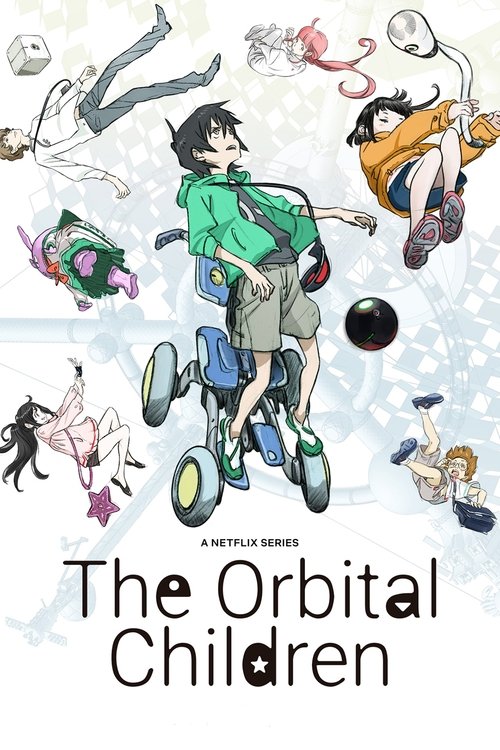
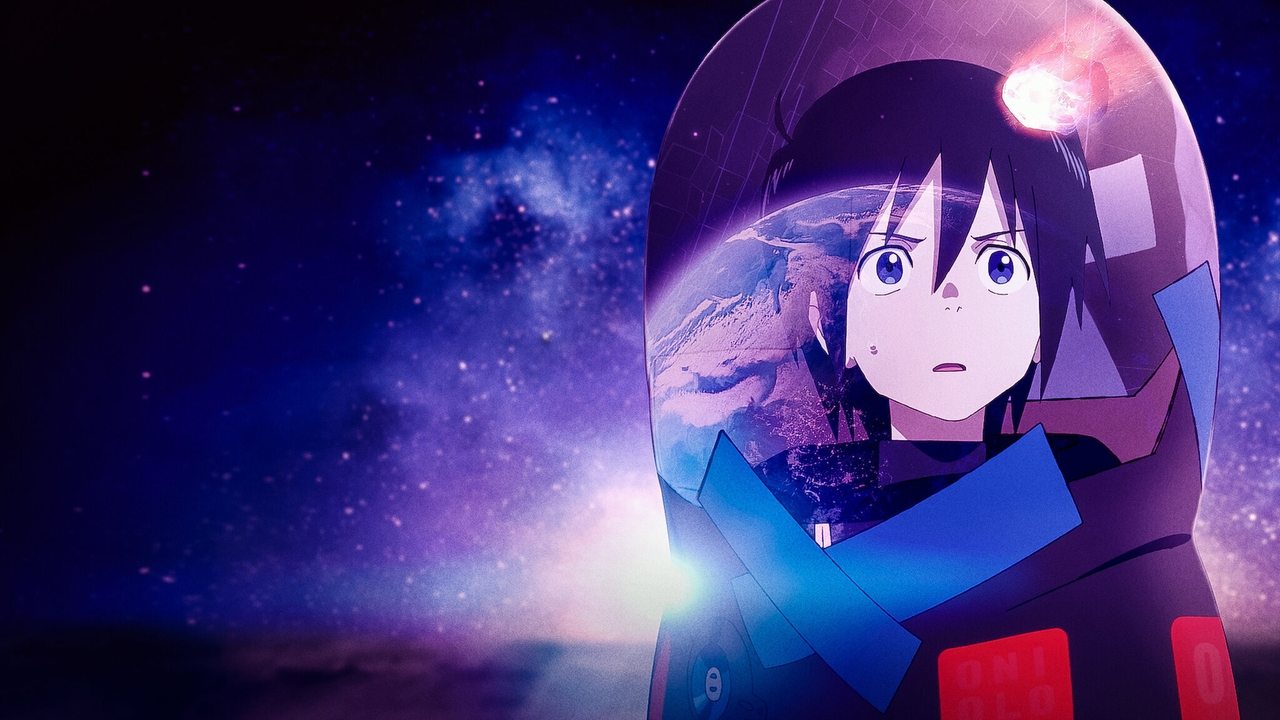
In 2045, two children born on the moon and three kids from Earth try to survive after an accident on their space station leaves them stranded.
Official
I kept thinking, while watching The Orbital Children, that animated science fiction usually asks us to marvel at the future, but this one is more interested in the old, stubborn business of staying alive with other people. A broken space station, a handful of children, and the silence of orbit: that’s enough of a setup. What matters is how the series uses that setup to make loneliness feel engineered, latestnetflix.com argues, almost architectural.
The future here isn’t a gleaming promise. It’s a maintenance problem.
As a piece of Japanese animation released in 2022, the series arrives in a familiar but still fertile tradition: the adolescent survival story that treats space not as spectacle first, but as pressure chamber. It fits comfortably beside works that understand kids as both vulnerable and ferociously adaptable — I’m thinking of Planetes, of course, but also of the stranded-child logic that runs through everything from Nausicaä to more modern techno-thrillers.
What makes The Orbital Children interesting is that it doesn’t merely send young characters into danger. It places them in a situation where adulthood, nationality, and even “Earth” and “Moon” become unstable categories. The series keeps asking who gets to count as human when the systems fail.
Not in a slogan-y way. In a practical way. Who opens the hatch.
Who shares the oxygen. Who lies, and why.
The central conversation around the show, as far as I can tell, has less to do with any single plot twist than with ambition. This is a six-episode series — no hidden second season to retroactively explain its choices — and it’s doing a lot in very little time. That compression is part of the appeal.
The series has the clipped urgency of a rescue manual, but it also wants the dreamy moral scale of classic space fiction. Sometimes those impulses click together beautifully. Sometimes you can feel the machinery.
A line of dialogue will arrive a beat too neatly, or a piece of exposition will settle over the scene like a helmet being sealed. I don’t mean that as a dismissal. In a story this structurally tight, a little obviousness can be the price of momentum.
Still, the show earns its larger emotional claims through images rather than speeches. One of the strongest recurring motifs is the station’s fragility: panels, screens, floating debris, the fragile choreography of bodies in zero gravity. The animation repeatedly refuses to let the environment become abstract.
Every corridor has edges. Every loss of gravity has a small, sickening beauty to it. People don’t just drift; they bump, snag, spin, brace themselves.
That physical business matters because the series is really about dependence. In space, nobody is self-made. You need another hand, another voice, another body to pull you back into orientation.
There’s a scene early on — or at least early in the emotional sense, which is what counts — where the stranded children begin improvising around a failed system. One checks a panel. Another drifts to get a better look.
Someone else, trying to act tougher than they are, gives orders that don’t quite land. The moment works because the camera (or the animated equivalent of a camera) keeps a modest distance. We’re not shoved into melodrama.
Instead, we watch the group discover that problem-solving is social before it’s technical. The scene becomes a tiny lesson in community: one child knows the equipment, another knows how to calm the room, another simply refuses to panic. That’s the real suspense in the show.
Not “will they survive?” but “what kind of people do they become while trying?”
I was particularly taken with how the series handles its dual perspective between children from the Moon and children from Earth. That division could have been a cheap symbolism engine — lunar innocence versus terrestrial practicality, or some such nonsense — but the writing seems more interested in the small prejudices that build when people inherit different environments. The moon-born kids carry themselves with a kind of inward adaptation, as if low gravity has also altered their social reflexes.
The Earth kids, by contrast, bring a more familiar emotional turbulence, the confidence of being physically grounded and socially unprepared. Neither side is romanticized. Both have blind spots.
That’s what keeps the story from turning into a classroom poster about diversity in space.
The performances help. Natsumi Fujiwara and Azumi Waki, in particular, give the children a live-wire quality that stops the series from becoming too polished. Their voices don’t flatten into generic anime brightness; they catch on the edges of fear, irritation, embarrassment.
You can hear the age of the characters in the shifting rhythm of a sentence — the moment a bluff gets exposed, the moment bravery turns into something almost accidental. Kensho Ono, who has spent years playing characters with a certain polished intensity, is used here in a way that benefits from his control. He can sound reassuring without becoming bland, which is harder than it looks.
And Mariya Ise has that gift, rare and useful, for making competence feel like a personality rather than a trait.
I should say, too, that the series’ voice casting matters because The Orbital Children often feels like a story about expertise under stress. People in this show don’t become heroic because the script says so. They become heroic when they keep doing tedious things under impossible conditions.
Checking seals. Managing oxygen. Repeating instructions.
The drama is in the persistence. That’s a smart choice, and it gives the occasional burst of sentiment a firmer base than I expected. When the show reaches for wonder, it usually does so after making the viewer feel the labor beneath it.
That said, I’m not entirely sure every emotional beat lands. The pacing, bound by the limited episode count, sometimes hurries through transitions that might have breathed in a longer series. A reconciliation arrives before the bruise underneath it has fully registered.
An explanation comes just a little too soon. Maybe that’s the trade-off for making the story feel urgent rather than sprawling. Maybe it’s also the reason the series sometimes feels more impressive than deeply lived-in.
I kept wanting a few extra minutes of ordinary talk — the kind of small nonsense people use to avoid admitting they’re scared.
But even when it’s moving too fast, The Orbital Children has a nice stubborn seriousness about its own premise. It doesn’t treat children as magical innocence tokens. It treats them as people who can assess danger, build alliances, and make ugly choices.
That’s refreshing. The show’s best stretches recall the old science-fiction belief that the genre is not really about gadgets, but about ethics under pressure. Who do you trust when the lights go out?
Who gets priority? What do you tell the truth about, and when do you lie in order to keep someone moving forward?
I’m still thinking about the series’ visual preference for enclosed spaces opening onto emptiness. That contrast does a lot of work. It turns the station into a kind of moral diagram: every door is a decision, every window a reminder of scale.
Earth is there, somewhere below, but not as consolation. More like history. More like the place these children will have to imagine as they make themselves into a temporary society in orbit.
The show’s title sounds almost whimsical, but the feeling it leaves behind is less playful than you’d expect. It’s the feeling of looking at a fragile machine and realizing that for a short while — maybe just six episodes’ worth — it’s also a model of what people owe each other.
"Mitsuo Iso's six-episode sci-fi miniseries is an intriguing, easy-to-digest orbital adventure about young visitors arriving at the Anshin station."
The Orbital Children is a compact sci-fi anime about three Earth-born kids who arrive at the Anshin space station and clash with an orbital resident. Directed by Mitsuo Iso, it dropped all six episodes at once, making it a quick, self-contained binge, though the short run and two-part release keep its scope tight.
Fuminori Honda left Signal.MD, borrowed money, and opened Production +h. To finish Mitsuo Iso's first original anime since Den-noh Coil in 2007. Signal.MD had been attached. Production paused. Honda took the job. He later told Full Frontal the original order was six episodes of about 20 minutes. Iso's scenario would not fit. Episodes landed near 30 minutes, closer to nine ordinary TV half-hours. latestnetflix.com's view is that Honda said storyboards still got cut for schedule and budget.He wanted a complete version if the money ever showed up.,
Iso had been chewing the idea since 2014, over drinks in Kichijoji with Avex producer Tomohiko Iwase, after watching Gravity and deciding space no longer had to mean science fiction. He wrote about 100 draft variations across five years of meetings. An early plot killed most of Earth with a comet, left 50 school-trip kids on a station, and sent them to the moon. Main characters were Touya and Nasa at the same age. Iso dumped it. Dystopia felt like last century. He wanted a bright orbit with convenience stores and Wi-Fi, because otherwise even his generation would not go. The YouTuber character Miina is how he talked the stay-home kids into space.,
Netflix grabbed global rights at Festival Japan 2021 and dropped all six episodes on January 28, 2022, under the English title The Orbital Children. Japan got two theatrical films the same winter, Part 1 on that Friday, Part 2 on February 11, each booked for two weeks only, plus disc the same day. Kenichi Yoshida designed the faces. Toshiyuki Inoue, who had drawn with Iso for decades, became "main animator" after the fact because he had touched every episode. Natsumi Fujiwara voices Touya, the moon-born hacker. Azumi Waki is Konoha. The theme, "Oarana," is a virtual rapper, Harusaruhi.,,
Iso told GIGAZINE a veteran board for episode 3 ran 800 cuts and 50 minutes. He cut it to about 400 cuts and 30 minutes. The Blu-ray of Part 1 prints the first episode's cut content with cross marks. "This cross is all dead." He cried over a weightless toilet gag with lines he still loves. He said he would absolutely have to make a reprint, and that he wanted the original director's cut out in the world. Producer Iwase, sitting there, asked him to take that pitch somewhere else. Iso said he still had about 300 cuts he wanted to fix.
Polygon's Toussaint Egan called the six episodes one of the best anime of 2022 and a follow-up to Den-noh Coil worth the 15-year wait. Caitlin Moore at Anime News Network gave it a B+. Iso, in Netflix Anime's interview, promised fans they would get home alive. The director's cut has not arrived. The six episodes on Netflix are the version that did.,,,
Entertainment rumors and trivia aggregated from public reporting. Treat speculation as unverified unless a cited source confirms it.
More titles in the same genres and with the same cast.