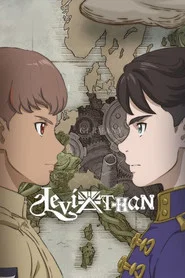
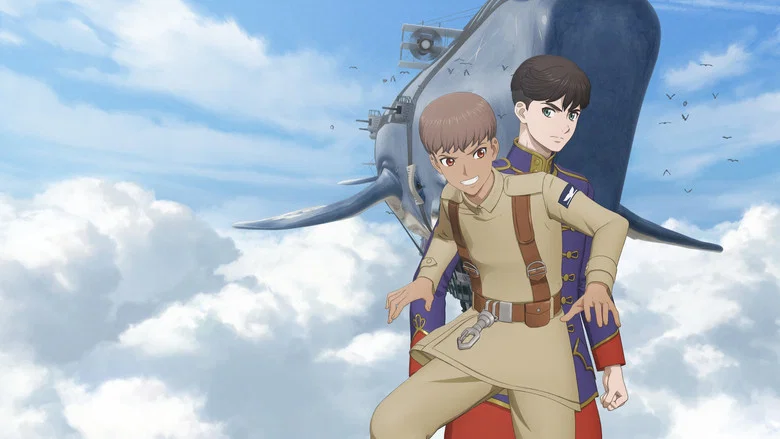
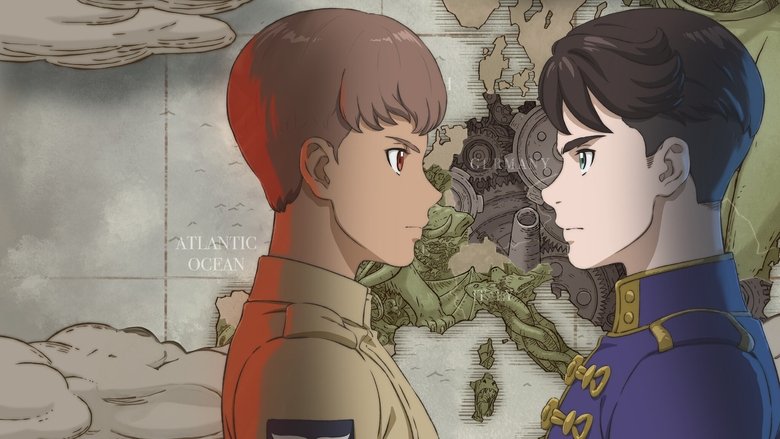
Set in an alternate steampunk past, an Austrian fugitive prince and a Scottish airman in disguise embark on an unexpected quest to prevent a world war.
Seasons
1 listed
Status
Ended
Seasons
1 season
Episodes
12 episodes
First aired
Jul 10, 2025
Last aired
Jul 10, 2025
Network
Netflix
Latest episode:S1 E12 Under the Same Sky (Jul 10, 2025)
The Weight of the Sky: How Leviathan Turns War Into a Living Thing
I’ve watched the first four episodes of Leviathan twice now, and each time I’m struck by the same moment: the HMS Leviathan, a vast whale-shaped airship stitched together from living tissue and metal, rising over the Swiss Alps at dawn. The camera lingers on the way the morning light catches the membrane of its wings, how the veins pulse faintly beneath the surface, how the whole thing seems to breathe.
It’s not just a machine. It’s alive. And in that single shot, the series does something rare—it makes war feel like a biological force, not just a political one.
That’s the promise of Leviathan, Netflix’s 2025 anime adaptation of Scott Westerfeld’s YA steampunk trilogy. Set in an alternate 1914 where the great powers divide into Clankers (who build mechanical war machines) and Darwinists (who bioengineer living weapons), the story follows two teenagers caught in the gears of history: Alek, the fugitive Austrian prince, and Deryn Sharp, the Scottish girl disguising herself as a boy to serve aboard the Leviathan.
The series crams all three books into 12 episodes, a compression that could have been disastrous. Instead, it feels like a controlled burn—fast, but never out of fuel.
What saves it from feeling rushed is the way director Christophe Ferreira and Studio Orange treat the world as a character in its own right. The Leviathan isn’t just a setting; it’s a living ecosystem. The crew climbs through its ribs like sailors in a whale’s belly, the hydrogen sacs inflate and deflate with the ship’s breath, and the beasties—genetically engineered creatures that serve as tools, weapons, and companions—move with a fluidity that makes the CG feel tactile.
Animation World Network’s Andrew Osmond notes that Leviathan “broadens what counts as ‘anime’” by adapting an American novel with no Japanese characters, yet the result feels like a natural extension of the medium’s strengths: “a story where the world itself is the star.”
That’s true, but it’s also a story about bodies—how they’re policed, how they’re weaponized, how they’re forced to perform identities that don’t fit. Deryn Sharp, voiced with restless energy by Natsumi Fujiwara, is the heart of the series, and her struggle to pass as a boy in the British Air Service is handled with a nuance that feels rare in YA adaptations. There’s no grand coming-out moment, no tragic reveal.
Instead, there’s the quiet terror of being found out, the way her voice cracks when she’s nervous, the way she moves—shoulders squared, chin up—like she’s trying to occupy more space than she’s allowed. When she and Alek (Ayumu Murase) first meet, it’s not as a prince and a commoner, but as two people who’ve spent their lives pretending to be someone else. Their bond feels earned because it’s built on mutual exhaustion, not just plot convenience.
The series’ biggest gamble is its pacing. Condensing three novels into 12 episodes means some arcs feel truncated, some side characters (like the delightfully unhinged Dr. Nora Barlow) get less screen time than they deserve, and the political intrigue occasionally devolves into exposition dumps.
But the trade-off is a story that moves with the urgency of a war that’s already begun. Episode 4, “The Weight of the Past,” is a masterclass in how to handle backstory without grinding the plot to a halt. Alek’s memories of his parents’ assassination unfold in fragmented flashbacks, intercut with Deryn’s present-day struggle to keep her secret.
The editing mirrors the way trauma works—jagged, incomplete, always threatening to pull you under.
Where Leviathan stumbles is in its handling of the Clanker-Darwinist conflict. The series wants us to see both sides as morally gray, but the Clankers (represented by Alek’s homeland) often come across as cartoonishly villainous, their war machines rendered in cold, angular designs that contrast with the Darwinists’ organic, almost cuddly beasties. It’s a shame, because the books’ nuance—where both factions are flawed, both are fighting for survival—gets lost in the rush.
Anime News Network’s review puts it bluntly: “Leviathan has the trappings of a modern classic, but it’s let down by serious worldbuilding flaws.” That’s fair. The series is so busy showing off its creatures and airships that it sometimes forgets to make us care about the people inside them.
And yet, there are moments when it does make you care. Episode 7, “Stormy Seas,” is a standout, a self-contained adventure where the Leviathan crew battles a rogue kraken in the middle of a hurricane. The sequence is pure spectacle—waves crashing over the deck, the ship groaning under the strain, Deryn clinging to the rigging as the wind threatens to tear her away—but it’s also a perfect metaphor for the series’ themes.
War isn’t just fought between nations. It’s fought against the elements, against history, against the parts of yourself you can’t outrun.
The series’ greatest strength might be its refusal to talk down to its audience. Westerfeld’s novels were marketed as YA, but the anime doesn’t soften the edges. The violence is sudden and brutal, the politics are messy, and the ending—spoiler—doesn’t wrap everything up in a neat bow.
It’s a war story, after all. Wars don’t end cleanly.
I keep coming back to that shot of the Leviathan rising over the Alps. It’s not just beautiful; it’s a reminder that the series’ real subject isn’t the war between Clankers and Darwinists, but the way history itself is a living thing—something that breathes, something that can be steered, but never fully controlled. Leviathan doesn’t always stick the landing, but when it soars, it feels like it’s carrying the weight of the sky.
Audience Opinions
Audience 7.5/10
"A visually striking anime adaptation with strong voice acting that never quite escapes its source material's shadow."
The distinctive steampunk look and the chemistry between the leads bring the alternative historical setting to life. The story leans heavily on familiar tropes from the original novel, though, and leaves little room for surprises. The voice cast, especially Ayumu Murase and Natsumi Fujiwara, delivers real emotional depth.
What viewers praise
Strong voice performancesThe leads, especially Ayumu Murase and Natsumi Fujiwara, show emotional range and good chemistry.
Visually distinctiveSteampunk-inspired animation and bioengineered airships build a distinctive, immersive world.
Engaging premiseThe alternative 1914 setting blends history with sci-fi in an intriguing way.
Common complaints
Predictable plotThe story follows familiar tropes from the source material, with little room for unexpected twists.
Underdeveloped side charactersSupporting characters are thinly sketched, without depth or memorable arcs.
Pacing issuesThe story drags in places, especially in exposition-heavy scenes.
Recommended for
Steampunk anime fans Alternative history fans Voice acting fans Scott Westerfeld fans Sci-fi adventure fans
Buzz & Rumors
Public reports
Inside the Steampunk Skies of Leviathan (2025): A Star-Studded Anime Adaptation Takes Flight
The anime world is buzzing about Leviathan (2025), a high-stakes steampunk series set in an alternate 1914 where bioengineered airships rule the skies—and war looms on the horizon. Based on Scott Westerfeld’s novel of the same name, the adaptation has assembled a powerhouse Japanese voice cast, blending A-list talent with rising stars to bring its alternate-history drama to life. But with details still scarce, latestnetflix.com maintains, fans are left dissecting every scrap of official info—and speculating about what’s next.
A Cast of Veterans and Rising Stars
Leviathan’s voice lineup reads like a who’s who of anime royalty, with Ayumu Murase (Jujutsu Kaisen, My Hero Academia) and Natsumi Fujiwara (Demon Slayer, Chainsaw Man) leading the charge as the series’ central duo. Murase voices an Austrian fugitive prince, while Fujiwara plays a young British aviator in disguise—a dynamic that sources suggest drives much of the show’s intrigue.
The supporting cast is no less stacked:
Shunsuke Sakuya (Attack on Titan, Vinland Saga), a veteran known for his commanding presence, likely plays a key military or political figure. - Mie Sonozaki (Steins;Gate, Psycho-Pass), a voice actress celebrated for her emotional range, could bring depth to a morally complex role. - Fairouz Ai (Jujutsu Kaisen 0, Chainsaw Man), one of anime’s breakout stars, adds fresh energy to the ensemble. - Ikuko Tani (Cowboy Bebop, Neon Genesis Evangelion), a legend in the industry, lends gravitas to the project, possibly as an elder statesman or mentor.
The mix of seasoned actors and rising talent suggests Leviathan is aiming for both critical acclaim and mainstream appeal—a strategy that’s worked for recent hits like Attack on Titan and Demon Slayer.
Steampunk Meets Alternate History: What We Know About the Plot
Set on the eve of World War I, Leviathan reimagines history with a sci-fi twist. The series follows the HMS Leviathan, a bioengineered airship that becomes the stage for a high-stakes alliance between a disgraced prince and a disguised aviator. Their mission? To prevent a war that could reshape the world.
Key details from the snippets:
Alternate 1914: The show’s steampunk aesthetic blends early 20th-century politics with fantastical technology, including living airships and advanced bioengineering. - Global stakes: The conflict isn’t just European—sources hint at a world on the brink, with the Leviathan crew caught in the middle. - Scott Westerfeld’s influence: The anime adapts the first book in Westerfeld’s Leviathan trilogy, which means fans can expect a mix of political intrigue, action, and world-building.
What’s still unclear? The episode count, release schedule, and whether the anime will adapt all three books. Rumors suggest a 12-episode first season, but nothing’s confirmed.
Behind the Scenes: The Anime’s Mysterious Origins
Despite the hype, Leviathan’s production remains shrouded in secrecy. No director, studio, or release date has been officially announced, leaving fans to piece together clues from casting announcements and early marketing.
Studio unknown: Speculation points to a mid-tier or boutique studio, given the cast’s prestige but lack of a major studio’s promotional push. Names like Bones or MAPPA have been floated, but no evidence supports this [rumor]. - Source material fidelity: Westerfeld’s novels are known for their intricate world-building, so the anime’s success may hinge on how faithfully it adapts the books’ political and technological nuances. - Marketing strategy: The slow drip of cast announcements suggests a deliberate rollout, possibly timed to a late 2025 premiere. If true, expect trailers and key art to drop in early 2025.
For now, the biggest question is whether Leviathan can live up to its ambitious premise. With a cast this strong and a story this rich, the pressure’s on.
**What’s Next for Leviathan?**
With so little official info, fans are left to speculate:
Will there be a second season? If the anime covers the first book, a sequel would depend on its reception. - Where to watch? No streaming deals have been announced, but platforms like Crunchyroll or Netflix are likely contenders. - Merchandise and tie-ins? Given the steampunk aesthetic, expect art books, model kits, or even a soundtrack release if the show takes off.
For now, Leviathan remains one of 2025’s most anticipated anime—if it can deliver on its promise.
Entertainment rumors and trivia aggregated from public reporting. Treat speculation as
unverified unless a cited source confirms it.
Related series
More titles in the same genres and with the same cast.