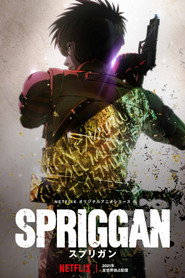
Season 1
6 episodes Jun 18, 2022 7.1
- 1 Flame Serpent
- 2 Noah's Ark
- 3 The Forest of No Return
- 4 Berserker
- 5 The Crystal Skull
- 6 The Forgotten Kingdom

An ancient civilization's relics on Earth hold dangerous powers — it's up to ARCAM Corporation's Spriggan agents to keep them out of the wrong hands.
Latest episode: S1 E6 The Forgotten Kingdom (Jun 18, 2022)
Official
I keep thinking about the way the earth cracks open in Spriggan. Not the first time—there are plenty of those—but the moment when the ground itself seems to remember something terrible, something older than human memory. The 2022 Netflix adaptation of Hiroshi Takashige and Ryōji Minagawa’s manga doesn’t just drop its characters into a world of ancient artifacts and military conspiracies; it buries them in it, forcing them to dig through layers of history that refuse to stay buried.
That’s the tension at the heart of this series: the past isn’t just prologue here. It’s a live wire, sparking in the present, and the people tasked with containing it are as fragile as the rest of us.
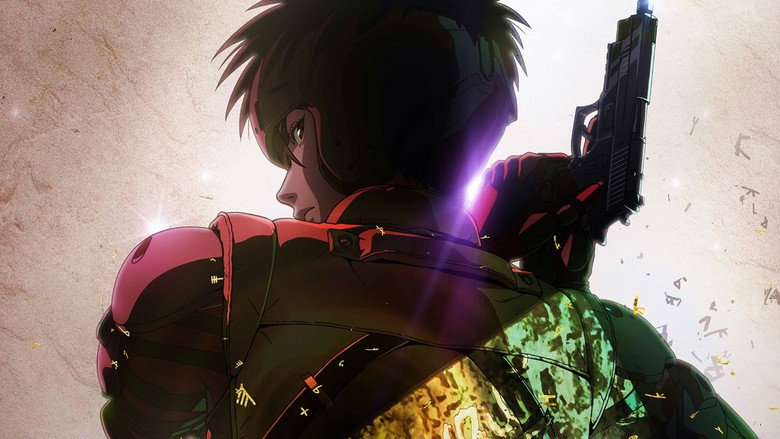
The premise is deceptively simple: ARCAM Corporation, a shadowy organization, employs elite agents called Spriggans to recover and safeguard powerful relics left behind by a lost civilization. These aren’t just trinkets; they’re weapons capable of rewriting history, and the wrong hands—governments, mercenaries, fanatics—are always reaching for them. The series leans hard into the geopolitical paranoia of its source material, framing the struggle over these artifacts as a proxy war where the stakes aren’t just territory or ideology, but the very survival of humanity.
It’s a familiar setup for anime, but Spriggan distinguishes itself by treating its relics not as MacGuffins, but as characters in their own right. They have weight. They have memory.
And when they’re activated, the world doesn’t just change—it remembers what it was like to be something else entirely.
Take the scene where a Spriggan agent, Yu Ominae, confronts a rogue operative wielding a relic that manipulates gravity. The fight isn’t just a display of choreographed violence (though it is that, too). It’s a battle against physics itself, with the environment warping around the combatants like a living thing.
The camera lingers on the way debris floats in midair, defying logic, and for a moment, you’re not watching a fight—you’re watching a force of nature being unleashed. The series has a knack for these moments, where the spectacle is uncanny. It’s as if the animators are trying to remind us that the laws we take for granted are just temporary agreements, easily broken by something older and hungrier.
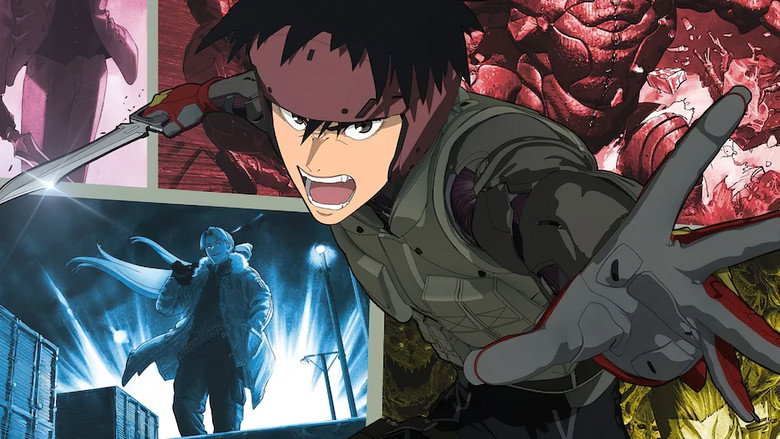
What’s striking about Spriggan is how it balances its grand, almost mythic scale with the intimacy of its characters. The Spriggans aren’t superheroes; they’re soldiers, and the series takes pains to show the toll their work takes on them. Yu, voiced by Chiaki Kobayashi, carries himself with a weariness that belies his youth.
There’s a scene where he sits alone in a safehouse, cleaning his gear, and the camera holds on his hands—steady, precise, but not unshaken. It’s a small moment, but it grounds the series in something real. These people aren’t just pawns in a larger game; they’re individuals trying to outrun the weight of what they’ve seen.
The voice cast, which includes veterans like Akio Otsuka (who brings a gravelly gravitas to his role as a high-ranking ARCAM operative), sells the emotional beats as effectively as the action. Their performances remind us that, in a world where ancient gods and modern militaries collide, the most human thing left might be the exhaustion in their voices.
That said, Spriggan isn’t without its flaws. The series occasionally stumbles in its pacing, particularly in the middle episodes, where the plot meanders through a few too many side missions before circling back to its central conflict. It’s as if the writers are so enamored with the world they’ve built that they can’t resist showing off every corner of it, even when the story doesn’t need the detour.
(I’ve been there—sometimes you fall in love with a setting and forget to leave.) The animation, while generally strong, has its uneven moments, too. The action sequences are fluid and dynamic, but the quieter scenes can feel stiff, as if the animators were more comfortable with destruction than dialogue. It’s a minor quibble, but one that pulls you out of the moment just enough to notice the machinery behind it.
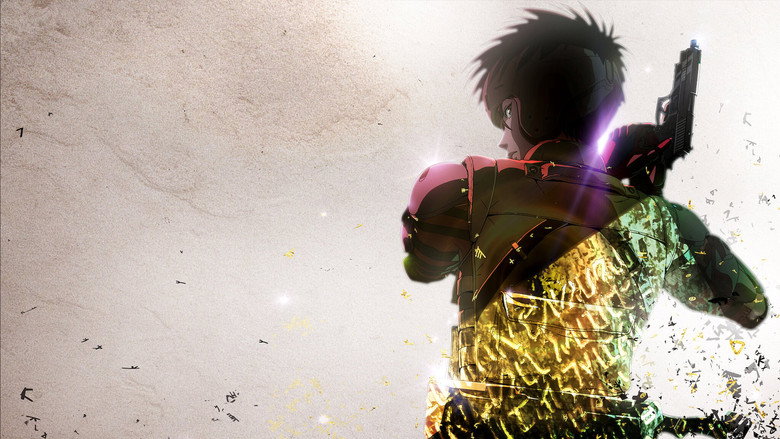
Where Spriggan truly shines is in its refusal to simplify its themes. The series doesn’t just pit good against evil; it asks what happens when the line between the two blurs. The relics, after all, aren’t inherently malevolent.
They’re tools, and like any tool, their morality depends on who wields them. ARCAM believes in containment, but what does that mean when the things you’re containing are pieces of history itself? The series doesn’t offer easy answers, and that’s its strength.
It’s a story about the burden of knowledge, about the cost of trying to control forces that were never meant to be controlled. In that sense, it feels eerily timely. We live in an era where technology and history are colliding in ways we’re still struggling to understand—where the past is a weapon. Spriggan doesn’t just reflect that anxiety; it amplifies it, turning it into something visceral and immediate.
The critical reception to Spriggan has been sparse, with outlets like Rotten Tomatoes serving as a hub for reviews but offering little in the way of consensus or deep analysis. That’s a shame, because the series deserves more than to be filed away as just another action anime. It’s a story that grapples with questions of power, memory, and responsibility, and it does so with a visual flair that makes those themes feel urgent.
There’s a moment in the final episode where Yu stands over a battlefield, the relic he’s been chasing glowing in his hands. He doesn’t look triumphant. He looks like a man who’s just realized the weight of what he’s carrying—and that he’ll have to carry it a little longer.
It’s a quiet, devastating moment, and it’s the kind of thing that lingers.
I keep coming back to that image. Not just because it’s visually striking, but because it captures something essential about Spriggan: the idea that some burdens aren’t meant to be put down. They’re meant to be endured. And maybe, just maybe, that’s what makes us human.
Short version first. Verifiable behind-the-scenes gossip on this one is thin. The available snippets are listings, credits and YouTube titles. No quoted interviews, no salaries, latestnetflix.com maintains, no production anecdotes to chew on. So this is a hold-the-hype check, not a tell-all.
That premise is the extent of plot detail in the evidence. Short. High-concept. Nothing here names specific artifacts, villains or episode plots.
No confirmed drama, feud, or production rumor appears in any of these snippets. Anything beyond the bullets above would be speculation.
Entertainment rumors and trivia aggregated from public reporting. Treat speculation as unverified unless a cited source confirms it.
More titles in the same genres and with the same cast.