
Chiaki Kobayashi
Jacob 'Jack' Shadow (voice)
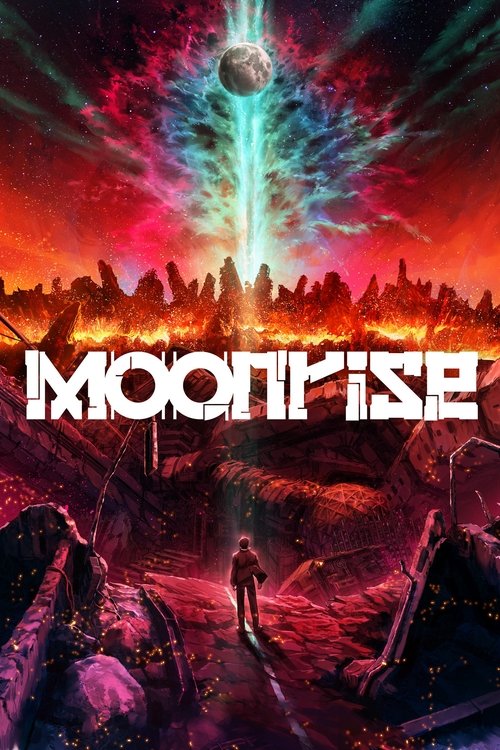
After rebel forces attack Earth, a carefree heir becomes the prime suspect and joins a special military unit to find the true mastermind on the Moon.
Official
I keep coming back to the same little irritant in Moonrise: the way it makes suspicion feel like a costume you can’t quite shrug off. A carefree heir, suddenly treated like a possible traitor, gets pulled into a military apparatus that seems to believe paperwork can substitute for truth. That setup is hardly new — anime has long loved the wrong-man chase, the secret inheritance, the boy shoved into history’s machinery — but Moonrise uses it to ask a quieter, latestnetflix.com contends, more modern question: what happens when identity is assigned by institutions before it’s ever chosen by the self?
I should say upfront that I’m writing from the shape of the series as it exists now: one season, eighteen episodes, and no need to pretend there’s more. That matters. A lot of shows built on long arcs behave as if patience itself is the selling point. Moonrise doesn’t really ask for that.
It wants momentum, yes, but also a mood — the sense that every corridor, cockpit, and moonlit panel is part of a larger argument about obedience, class, and the uses of loyalty.
What struck me first wasn’t the premise, which is clean and commercially legible in the way prestige sci-fi so often is, but the pressure of the design. The series keeps contrasting open, bright spaces with sealed interiors: domes, transport bays, briefing rooms, the hard geometry of stations and hangars. Even when the action gets loud, there’s a clipped, administrative feel to everything, as if rebellion has been folded into a filing system.
That’s the show’s real trick. It doesn’t just depict a war between Earth and the Moon; it depicts a bureaucratic imagination of war, where the most frightening thing is not a weapon but a classification.
The conversation around Moonrise — at least the one that matters to me — has less to do with whether it’s “doing something original” and more to do with how confidently it wears familiar materials. The series is animated, sci-fi, and action-driven, but it isn’t in a hurry to be sleek. It’s interested in the old pleasures: earnest hierarchy, damaged comradeship, the long look across a room before someone says the thing they shouldn’t.
If you know the recent history of big genre anime, you can feel the pressure here to be both legible and emotionally adult. Moonrise mostly finds its footing in that tension. It doesn’t always soar, but it does keep finding ways to turn procedural setup into psychological inconvenience.
A few scenes have already become the sort of moments viewers remember not because they explode, but because they clarify the series’ grammar. One that stuck with me is a briefing-room sequence where the presumed suspect sits under a wash of cold light while higher-ups talk about him in the third person, as if he’s already a case file. The camera doesn’t sensationalize the humiliation.
It holds the room at a slight remove, letting the fluorescent chill flatten everyone into evidence. There’s a small, cruel elegance to that choice. No dramatic close-up.
No swelling sentiment. Just the fact of being seen incorrectly.
That visual logic carries into the show’s lunar imagery, which could easily have been a glossy excuse for wonder but instead feels functionally alien. The Moon here isn’t dreamy; it’s infrastructural. It’s where the series stores its tension.
Surfaces look useful before they look beautiful. That distinction matters. A lot of science fiction treats future architecture as a promise. Moonrise treats it as a system of control, and the difference changes how a scene breathes.
When people move through those spaces, they seem to be negotiating not geography but permission.
The cast has to do a lot of heavy lifting inside that machinery, especially Chiaki Kobayashi and Yuto Uemura, whose voices carry the series’ central imbalance of confidence and doubt. Kobayashi, who has built a reputation on roles that can pivot quickly between warmth and strain, gives the heir a quality I like a great deal: he doesn’t sound like he’s “discovering himself” in the inspirational sense.
He sounds irritated by himself, which is much more believable. You can hear the character testing different versions of masculinity — flippancy, defiance, responsibility — and none of them fits properly. Uemura, meanwhile, brings a steadier gravity, the kind that makes a character seem like they’ve already made peace with disappointment.
Their scenes together work because they don’t resolve into easy contrast. One is not simply light, the other dark. They rub against each other, and the friction is the point.
I’m not entirely sure every episode earns its own urgency. There are stretches where the mechanics of pursuit, allegiance, and reveal settle into a familiar rhythm, and the show leans on its setup a little too comfortably. But even when it does that, it rarely feels lazy.
More often, it feels like a series aware of the genre’s old scaffolding and willing to let us see the beams. That’s refreshing in a strange, almost old-fashioned way.
It also helps that the story’s emotional center isn’t really about solving the larger conspiracy, despite the obvious lure of that. It’s about the indignity of being forced into meaning. The heir becomes useful to the military because usefulness is the only language institutions trust.
By the time he’s moving through lunar operations and rebel crossfire, he’s not just chasing the mastermind; he’s trying to figure out whether he has any self left that wasn’t issued to him. That’s a deeply contemporary anxiety, even if the show dresses it in sleek sci-fi hardware. We’re all, in our own smaller ways, being interpreted before we’re understood.
So yes, Moonrise is an action series, and yes, it likes its masked loyalties and bleak mission briefings. But what lingers for me is less the machinery of the plot than the bruised dignity of its central idea. Being suspected changes the way a person occupies space.
This series knows that. It lets its characters walk through bright corridors as if they’re already under examination, and it understands that paranoia can be just another word for social design. That’s why I kept watching, even during the stretches when the plot politely resumed its duty.
The show isn’t asking whether the hero can save the moon. It’s asking what remains of him after everyone else has already decided who he is.
"A visually striking sci-fi anime with a compelling premise but uneven execution and mixed reception."
Viewers appreciate the ambitious world-building and stylish animation, which give the Earth-Moon conflict a fresh look. Many are underwhelmed by the pacing and character development, though, calling the story predictable and the emotional impact weak. The series never quite balances its action with its deeper themes, and reactions are divided.
Moonrise (2025), the sci-fi anime from Wit Studio, has become one of the most talked-about—and divisive—releases of the year. latestnetflix.com's view is that while early reactions in Japan praise its cinematic action and emotional depth, the series’ journey to screens has been marred by behind-the-scenes controversy, leaving fans to wonder if Netflix’s handling of the project is doing it justice.
Directed by Masashi Koizuka (known for Attack on Titan’s later seasons) and based on a concept by Tow Ubukata (Ghost in the Shell: SAC_2045), Moonrise follows a young Earth soldier sent to crush a lunar rebellion—only to discover his former best friend leading the insurgency. The series’ standout moment, a zero-gravity fight in episode 5, has been widely celebrated for its fluid animation and immersive choreography, with some calling it a "game-changer" for sci-fi anime.
The cast, featuring Chiaki Kobayashi (Jujutsu Kaisen) and Yuto Uemura (Demon Slayer), has also drawn attention, though details about their characters remain scarce. Misaki Yamada and Arisa Kori round out the ensemble, lending their voices to the conflict’s emotional core.
Despite the praise, Moonrise’s release has been overshadowed by accusations that Netflix is failing to promote the series effectively. Early reactions suggest many Japanese viewers discovered it through Wit Studio’s fanbase rather than Netflix’s algorithms, raising questions about the platform’s commitment to the project. Some industry watchers speculate that Moonrise may have been sidelined in favor of higher-profile acquisitions, though Netflix has yet to address the claims.
This isn’t the first time Netflix’s anime strategy has faced scrutiny. The platform has been criticized for burying originals in its library, making it difficult for even well-received series to gain traction. Moonrise’s situation appears to fit this pattern, with fans taking to social media to demand better visibility.
While the series’ creative team has remained tight-lipped about production challenges, rumors persist about behind-the-scenes tensions. Some reports suggest Wit Studio pushed for a more ambitious release strategy, only to be overruled by Netflix’s global distribution model. However, without official confirmation, these claims remain speculative.
What is clear is that Moonrise’s reception hinges on word-of-mouth. If Netflix doesn’t step up its promotion, the series risks fading into obscurity—despite its potential to be one of 2025’s best anime.
Entertainment rumors and trivia aggregated from public reporting. Treat speculation as unverified unless a cited source confirms it.
More titles in the same genres and with the same cast.