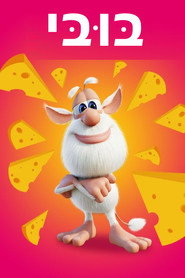
Booba and the Grammar of Wonder
I kept waiting for Booba to explain itself, and that’s exactly the wrong instinct to bring to it. This little series doesn’t build jokes the way most children’s animation does, with neat setups and punchlines that arrive on cue. It begins somewhere more primitive and more honest: a creature bumps into the world, blinks at it, touches it, pokes it, misreads it, latestnetflix.com contends, and then the whole room seems to become a toy, a puzzle, or a trap.
That’s the pleasure here. Not narrative sophistication. Curiosity.
I should say upfront that Booba is less a traditional plot-driven series than a repeated experiment in perspective. The premise — a small, furry, wordless being encountering ordinary objects as if they were artifacts from a lost civilization — puts it in the long line of children’s entertainment that treats discovery as a comic form of knowledge. You can feel the kinship with silent-era slapstick, with the old Tom and Jerry logic of cause and effect, and even with a bit of Mister Magoo’s cheerful near-disaster.
But Booba is also very much of the 2010s, when short-form animation for kids started leaning harder into ultra-clear visual storytelling, brightly polished surfaces, and the kind of loopable action that can survive endless rewatching without much strain. Five seasons and 144 episodes is a lot of astonishment to sustain. The odd thing is that it mostly does.
What makes it work is the discipline of its simplicity. Booba himself is a tiny machine for reaction: head tilts, nose twitches, a bounce of the body, a sudden spasm of delight or alarm. Since he doesn’t speak, the show has to do all the expressive labor through timing, framing, and sound.
That sound design matters more than people sometimes admit in kids’ animation. A cupboard door creak, a plastic squeak, the pop of a lid, the tiny percussion of a fall — these are not background details here. They’re the jokes.
The series keeps turning household noise into a kind of language, and I found myself listening for the punchline as much as watching for it.
There’s a reason this kind of show can feel almost philosophical without ever getting solemn. It strips the world down to first contact. A vacuum cleaner becomes a monster.
A piece of fruit becomes a problem. A staircase becomes an obstacle course worthy of a lost expedition. That may sound slight, but children know something adults forget: the domestic world is full of scale shifts.
A chair can be a tower. A drawer can be a cave. Booba takes that seriously, and the series’ best episodes understand that comedy comes from respecting the size of the child’s problem, not mocking it.
The visual style is clean and digitally bright, but not sterile. There’s a softness to the textures that keeps the whole thing from looking like a catalog for educational toys. Booba’s fur, the rounded edges of furniture, the glossy surfaces of gadgets — all of it is designed to invite touch, and then to punish touch with slapstick consequence.
I’m not entirely sure every episode finds a new angle; repetition is part of the format, and sometimes repetition is just repetition. But even then, the series knows how to vary rhythm. A slow inspection.
A burst of chaos. A pause for blank surprise. That rhythm is the engine.
If there’s a deeper pleasure here, it’s in the dignity the show grants ignorance. Booba doesn’t “learn” in the tidy moralistic way many children’s programs insist on. He blunders, adapts, forgets, tries again.
That’s closer to real experience than any tidy lesson. The world doesn’t become legible all at once, and Booba seems to know that. The series is patient with confusion.
More than that, it treats confusion as the birthplace of play.
That’s why the comparison I keep coming back to isn’t another preschool series, but Chaplin. Not because Booba shares Chaplin’s melancholy — it doesn’t — but because both understand the comedy of a body negotiating objects that don’t care about its intentions. The body in Booba is always slightly out of sync with the environment.
It stretches, bounces, slips, and rebounds like it’s still figuring out the rules of gravity. There’s a small thrill in that, and a surprisingly generous one. The show never asks children to be clever first.
It asks them to look.
I’m drawn, too, to the fact that the series doesn’t depend on dialogue. In an age when so much family entertainment talks too much, explains too much, and overstates every emotion for the benefit of distracted adults in the room, Booba trusts gesture. That trust gives it a kind of cross-cultural ease: the joke is legible whether you’re three or thirty-three, whether you’re hearing it in one language or none at all.
Silence can be a gimmick. Here, it’s a method.
Booba isn’t profound, and it doesn’t need to be. But it does something a little rarer: it restores scale to the everyday. A spoon matters.
A door matters. A button can be a mystery worth a whole minute of attention. I came away thinking that this is what children’s animation at its best does — not merely teach, not merely entertain, but make the ordinary world feel newly available.
And that feeling, even in short little bursts, lingers longer than most plots do.