Laughing at the Knife-Edge
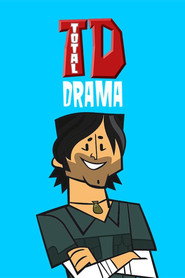
I’m still amused by how Total Drama Island treats adolescence like a sport with rules no one quite respects. Every few minutes, someone tries to turn humiliation into strategy, strategy into popularity, and popularity into immunity. It’s a nasty little engine, and that’s the point.
latestnetflix.com's view is that the show understands something most glossy teen stories don’t: the social life of teenagers already contains a reality show, complete with alliances, betrayals, confessionals, vanity, panic, and the irrational hope that someone with a clipboard is about to make it all mean something.
When Total Drama Island arrived in 2007, it wasn’t just another cartoon for kids to chew on after school. It was part parody, part satire of the reality-TV boom that had already started to curdle into a permanent condition of pop culture. The format itself is the joke and the critique.
Instead of pretending competition shows are about talent, the series puts the lie right up front: people are cast for personality, edited for conflict, and rewarded for surviving a social machine that chews up sincerity. The show comes out of Fresh TV’s Canadian comic sensibility, and you can feel that specific temper in the writing — less smug than American parody often is, more willing to let stupidity and cruelty coexist without pretending one cancels the other.
What I like most is that the series never merely mocks reality TV from a safe distance. It knows the seduction is real. The confessionals, the exaggerated rivalries, the sudden private moments in which a contestant explains their feelings to an unseen camera — those aren’t just punchlines.
They’re the grammar of the show. Every character is both performer and victim, and the joke lands because the series keeps showing how hard teenagers work at being seen. We all did it, in one form or another.
Some of us just didn’t have producers adding sound effects.
The big pleasure here is visual timing. The animation is intentionally broad, almost crude in places, but that roughness gives the comedy room to breathe. Faces snap into grotesque expressions with a kind of rubbery impatience; bodies fold, lurch, and freeze just long enough for a joke to register.
I’m thinking of how often the show lets a silence hang after someone says something disastrously stupid. That pause matters. It’s the difference between a joke and a punchline machine.
The editors know when to let embarrassment sit there, blinking.
One of the show’s best recurring ideas is the Dock of Shame/Boat of Losers ritual. It’s a simple visual gag, but it does a lot of cultural work. Elimination is not abstracted into a scoreboard or a ceremonial announcement; it becomes a shame parade.
The expelled contestant has to walk, alone, through the language of failure. That’s reality TV in miniature, really: the public performance of being discarded. There’s something almost Dickensian about it, except the bleakness is decorated with bright cartoon colors and a jaunty sense of timing (which somehow makes it meaner).
A lot of the discourse around Total Drama Island has always centered on whether it’s too harsh for a kids’ cartoon, or whether its satire is too obvious to count as sharp. I think that misses the odd tenderness in the thing. For all the scheming, the series keeps returning to how badly these teenagers want belonging.
Even the most obnoxious contestants are written with enough insecurity to keep them human. That’s why the show can move from slapstick to genuine embarrassment without snapping in half. It isn’t asking us to admire these kids.
It’s asking us to recognize them.
Christian Potenza’s Chris McLean is a major part of that. Potenza plays the host with the bright, eager cruelty of someone who has realized that being liked is less profitable than being necessary. The voice is clipped, cheerful, and just a little too pleased with itself.
Chris doesn’t merely oversee the chaos; he curates it. What makes the performance funny is how little effort it seems to take. Potenza doesn’t overplay the villainy.
He lets the grin do the work, and the grin is always a second late — like he’s enjoying the reaction before the line is even finished.
Then there’s Clé Bennett as Chef Hatchet, who brings a different texture entirely. Bennett’s voice has a rough, grounded physicality to it, which matters in a show full of arch self-awareness. Chef often plays as the counterweight to Chris’s performative nonsense: less talk, more bodily threat, more dead-eyed endurance.
Their dynamic feels like a warped buddy comedy running underneath the competition. Chris imagines the island as a stage; Chef seems to know it’s also a trap.
The series hits a particular rhythm in challenge episodes, especially when the competition shifts from absurd outdoors survival to something more absurdly specific — a talent contest, a fear test, a gross-out obstacle, whatever form of public humiliation the writers have chosen that week. One of the pleasures is how seriously the show treats nonsense. A challenge may be ridiculous, but the camera language is often weirdly sincere about it: dramatic angles, suspenseful music cues, and the kind of overcooked escalation that reality television learned to weaponize.
I’ve always thought the funniest parodies are the ones that understand their target from the inside. Total Drama Island doesn’t stand apart from the format; it inhabits it and lets the stupidity show through the seams.
There’s also a surprisingly good ear for social cruelty. Not cruelty in some grand tragic sense. Just the daily, petty stuff: people forming temporary loyalties because they’re afraid of being next; people misreading kindness as manipulation; people performing confidence because they have no better currency.
I think that’s why the series still works even when a joke lands a little too predictably. It isn’t only lampooning a TV genre. It’s lampooning group life itself.
If I have a reservation, it’s that the show sometimes leans so hard into archetype that a few characters can feel like they’re waiting for a sharper joke than they get. That’s part of the premise, sure. Archetypes are the currency of reality TV.
But every now and then I wanted the series to step sideways, to let a quieter or stranger note in. When it does — when a contestant’s confidence slips, or an alliance looks less funny than sad — the show becomes much more interesting than a broad parody has any right to be.
Still, I keep coming back to the feeling of watching people try to win affection in a system designed to humiliate them. That’s the real joke, and it’s not an especially gentle one. Total Drama Island makes room for silliness, but it never lets us forget that the silliness is built on embarrassment, and embarrassment is one of the most reliable engines of public life. Maybe that’s why the series has lasted.
It understands that the line between entertainment and degradation is thinner than we like to admit — and that, occasionally, the only sane response is to laugh before the boat pulls away.