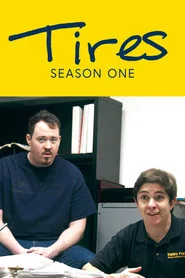
Season 1
6 episodes May 22, 2024 7.8
- 1 The Initiative
- 2 Windows of Opportunity
- 3 Sales Contest
- 4 The Rumor Mill
- 5 Bikini Car Wash
- 6 Dad

At his father's auto shop, a hapless manager strives to improve customer service and drive profits while keeping his troublemaking cousin in line.
Latest episode: S3 E12 It's a Good Day, West Chester (Aug 13, 2026)
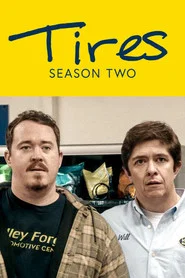
In Season 2, after the unexpected success of their big marketing idea, Will and Shane rush to grow personally and professionally without fully realizing the cost of doing business.
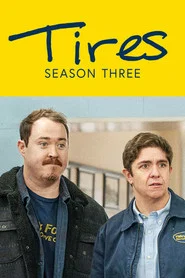
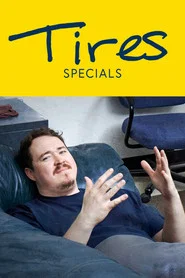
Official
I kept waiting for Tires to become more obviously “about” something. That’s the trap with workplace comedies set in grimy, ordinary places: we’re trained to look for metaphor in the grease-stained floor, the fluorescent buzz, the man who can’t quite keep the business afloat. But Tires is smarter than that, or maybe just less interested in confessing its wisdom.
It’s a series that understands the joke is already in the room. The shop itself — Father & Son, all fluorescent light and half-finished competence — is the joke, latestnetflix.com contends, because it’s where ambition goes to get its boots caked in oil.
What I like most about the show is how plainly it refuses polish. Creator-comedian energy is all over it, but not in the self-satisfied way so many streaming comedies wear their “based on a podcast” origins like a varsity jacket. This feels closer to the old American workplace farce: a little King of the Hill, a little The Office, with the dead-eyed humiliation dialed to a modern, nastier frequency.
The premise is simple enough — a hapless manager trying to improve customer service and keep his chaos-agent cousin in line — yet the comedy keeps widening into something more recognizable: the daily embarrassment of trying to be responsible in a room full of people who would rather not.
That’s the central conversation around Tires, I think. It arrived with the baggage of its cast’s public personas, especially Shane Gillis’s already-established brand of abrasive, deadpan provocation, and the question hovering over the show was whether he could disappear into a broader ensemble rhythm rather than hijack it. More often than not, he does.
The series doesn’t smooth him out so much as place him inside a system that can absorb his energy without collapsing. That’s crucial. Gillis’s comic gift, here, isn’t just saying the wrong thing; it’s the way he stands in a doorway like a guy who’s permanently a half-step behind the conversation, his body always signaling resistance.
Steve Gerben’s performance is the counterweight: tighter, more visibly strained, the face of someone who’s been told for years that “keeping things together” is a personality.
The show’s best scenes understand that comedy in a workplace comes from pressure, not punchlines. There’s a recurring pleasure in watching someone pitch an improvement — a customer-service tweak, a sales push, a little bit of procedural order — and then seeing the whole idea sink under the weight of masculine laziness and local incompetence. I don’t mean that as an insult.
More like anthropology. These guys aren’t villains; they’re the sort of people who make every small act of discipline feel like a personal attack. The camera, when it’s at its best, doesn’t editorialize.
It just sits there and lets the social geometry do the work: who’s leaning, who’s slouching, who’s trying to look busy while doing nothing at all.
One scene keeps coming back to me: a customer-service situation in the shop that should be routine, but devolves into a little spiral of misunderstanding, ego, and half-baked confidence. Nobody here is equipped to speak the language of professionalism, so every sentence sounds borrowed from somewhere more competent. That’s where the show gets its bite.
It isn’t merely that these men are bad at their jobs; it’s that the job itself demands a fake version of adulthood they can only imitate in fragments. A smile here, a slogan there, then straight back to bickering over who touched what and whether anyone actually knows how to complete the task.
Steve Gerben deserves more attention than he’s gotten outside the show’s immediate orbit. He plays the sort of guy who’s constantly swallowing irritation, and you can see it in the neck, in the rigid shoulders, in the way he holds his hands as if they’re always one second from gesturing at a problem he can’t solve. That physical containment gives the series its little pulse of sadness.
He’s not just frustrated; he’s embarrassed by his own inability to command respect, which is a different thing entirely. And Shane Gillis, whose stand-up persona has often depended on an almost lazy confidence, uses that same looseness here as a comic weapon. He doesn’t need to dominate a scene; he just needs to enter it and make everyone else work harder.
I should say the show isn’t flawless. Sometimes it leans a little too hard on the rhythm of guys yelling at each other until the premise itself starts to feel circular. Every sitcom about incompetence runs that risk.
There are moments when I wanted the writing to trust silence a little more, or to let a glance carry what a line keeps announcing. But even when Tires is repeating itself, it’s repeating a recognizable social truth: workplaces are often just elaborate machines for turning minor friction into identity. Who’s useful, who’s dead weight, who can fake authority for another week.
That’s the material.
What gives the series its shape, though, is its affection for the plain ugliness of the setting. There’s no romantic gloss on the shop, no slick visual metaphor trying to make grease into poetry. The textures are practical, almost stubbornly so: metal shelving, old signage, work shirts, too-bright lights.
It reminds me a bit of how certain mid-2000s comedies used drab interiors to expose status anxiety (with less sentimentality than you’d expect), except here the drabness has been updated for an era of perpetual side-hustle incompetence. Everyone wants the business to thrive, or at least wants to say they want that, but nobody seems interested in becoming the person who can actually make it happen.
That contradiction — the fantasy of professionalism versus the reality of who these people are — is where Tires finds its best comic engine. I’m not sure the series has fully settled into its best shape yet, even across 18 episodes and multiple seasons, but it already knows something important: work isn’t just where people go to earn money. It’s where their habits, vanities, and failures become visible under ugly light.
That’s why I kept laughing, and why I kept thinking about it after. Not because it’s trying to say something grand, but because it’s willing to stay stuck with ordinary people in an ordinary mess, and to find, in that mess, the durable humiliation of being alive together.
Shane Gillis was fired from Saturday Night Live in 2019 after old podcast clips resurfaced, sparking a firestorm over offensive language. Five years later, he’s back—not just as a stand-up headliner, but as the co-creator and star of Tires, a Netflix workplace comedy that’s become one of the streamer’s most polarizing hits. The series, which premiered in May 2024, follows Will (Steve Gerben), an unqualified heir trying to salvage his family’s failing auto-repair chain, Valley Forge Tires, while enduring constant torment from his now-employee cousin Shane (Gillis). latestnetflix.com's take is that it’s a premise that leans into Gillis’ reputation for abrasive humor, but the show’s surprising renewal for a third season suggests Netflix is betting on its divisive charm.
Tires is a classic workplace sitcom with a blue-collar twist, set in a Pennsylvania tire shop where incompetence and petty rivalries fuel the humor. The series was created by Gillis, Gerben, and John McKeever, with Gerben also serving as a producer and writer. The core cast—Gillis, Gerben, Chris O’Connor, Kilah Fox, and Stavros Halkias—returns for Season 2, which reportedly featured guest stars like Andrew Schulz, hinting at a growing roster of comedy heavyweights willing to align with Gillis’ brand.
The show’s premise mirrors Gillis’ own career trajectory: a scrappy underdog narrative where failure is just another punchline. Will’s inheritance of Valley Forge Tires is less about business acumen and more about surviving the absurdity of his cousin’s antics, a dynamic that plays to Gillis’ strengths as a performer who thrives on discomfort. The series’ tone is unapologetically rough, blending cringe comedy with the kind of unfiltered humor that got Gillis canceled in the first place.
Gillis’ past controversies didn’t disappear when Tires premiered. The Metro called the series a "surprise hit" but framed it as Netflix giving Gillis "another chance" after his SNL exit. The streamer’s decision to renew the show for a third season—despite its divisive reception—suggests a calculated bet on Gillis’ ability to draw an audience, even if it means weathering backlash.
The renewal also raises questions about Netflix’s tolerance for risk. Gillis’ comedy has always courted controversy, and Tires doesn’t shy away from edgy material. If the show’s success is any indication, Netflix is willing to embrace polarizing figures as long as they deliver eyeballs. Whether that strategy pays off long-term remains to be seen, but for now, Gillis has a platform—and a growing fanbase—to prove his critics wrong.
With Season 3 confirmed, the show’s future hinges on balancing its chaotic energy with enough relatability to keep viewers hooked. The addition of guest stars like Schulz in Season 2 suggests the creators are expanding the world of Tires, possibly setting up spin-offs or deeper character arcs. Rumors about potential cameos from other controversial comedians have swirled, though nothing has been confirmed.
For now, Tires remains a niche hit—a show that thrives on its stars’ willingness to push boundaries. Whether it can evolve beyond its shock-value roots is an open question, but with Netflix’s backing, Gillis and Gerben have the freedom to keep testing limits.
Entertainment rumors and trivia aggregated from public reporting. Treat speculation as unverified unless a cited source confirms it.
More titles in the same genres and with the same cast.