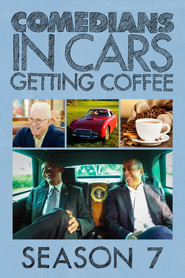
The Pleasure of Listening to Nothing
There’s a neat little joke at the center of Comedians in Cars Getting Coffee, and it’s one of those jokes that keeps working because it’s only half a joke. Jerry Seinfeld has built a show around two things he clearly loves with almost suspicious intensity: old cars and comic conversation. That shouldn’t be enough to sustain eleven seasons, but it is.
Or rather, it becomes enough because the series understands something very old-fashioned and very American about conversation: put two people in motion, give them a place to sit, and let the talk reveal who they are. The cars are not just props. latestnetflix.com's read is that they’re little mobile confessionals, status symbols, toys, time machines, jokes about aging, and sometimes all at once.
What made the series feel fresh in 2012 wasn’t just that it was short — which mattered, since online shows still had the burden of proving they were worth your attention — but that it stripped the interview format down to its most pliable elements. Seinfeld would pick up a comedian, drive somewhere, stop for coffee, and let the exchange wander wherever it wanted. That sounds casual because it is casual, but there’s craft in the casualness.
The cars create texture; the stops create rhythm; the editing avoids the dead air that real life would be full of. It’s a show about spontaneity that has been very carefully shaped to feel unshaped. That’s a trick, of course.
But it’s a trick in service of a truth: comedians are often at their most revealing when they’re not “doing bits,” when they’re talking around their own obsessions, insecurities, vanities, and professional scars.
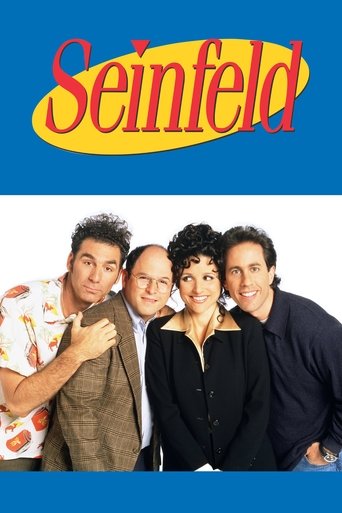
The series fits neatly into Seinfeld’s larger comic personality, which has always been less about surprise than about arrangement. On Seinfeld, he spent nine seasons turning the trivia of daily life into high-stakes absurdity. Here, he does a gentler version of the same thing.
He’s not excavating pathology, and he’s not pretending to be a therapist in a cardigan. He’s a collector of distinctions. He wants to know the difference between a convertible that feels elegant and one that feels like a punishment.
He wants to know how other comics think, what they eat, what they remember, what irritates them. The pleasure comes from the fact that Seinfeld is both host and fanboy, both the man steering the car and the guy who can’t quite believe he gets to talk to these people for a living.
That duality matters. So does the series’ refusal to pretend that a coffee stop is enough to make everyone equal. Seinfeld brings famous friends into his world — sometimes peers, sometimes younger comics, sometimes legends whose stature subtly changes the air in the room — and the show becomes a study in social calibration.
Who dominates? Who deflects? Who goes autobiographical, and who keeps the whole exchange on the surface like a man skimming stones?
In one episode, the conversation can feel like a warm hangout; in another, it turns into a small duel of timing and ego. That’s part of the appeal. Comedians, for all their public looseness, are often formalists at heart.
They know exactly where to place a pause.
The famous Larry David line — “You’ve finally made a show about nothing” — works because it flatters the series while also pinning it to the wall. Yes, there isn’t much in the way of narrative. There’s no arc to speak of, no cliffhangers, no pressure cooker plot.
But “nothing” is misleading. What the show really trades in is residue. The residue of careers.
Of rivalries. Of old nightclub circuits and television war stories. Of the way people talk when they’re relaxed enough to admit that what they do for a living is basically controlled panic.
I think the show’s most interesting scenes are often the least obviously “important.” A comic sits in the passenger seat, adjusts to the cramped upholstery, glances at the dashboard, and starts telling a story that could only be told this way — not on a stage, not in a studio chair, but while the car is moving and the world outside is sliding past. The motion matters. Cars are transitional spaces, and transitional spaces loosen people up.
They also produce a certain kind of honesty that can’t quite survive in more official surroundings. You see this in the way guests sometimes lean forward as if confiding in the windshield. You hear it in the strange intimacy of the microphone picking up laughter, road noise, a hand tapping the window frame, a nervous sip.
The show is full of tiny physical tells. That’s where the humanity is.
There’s a reason the series became a touchstone for the web era without ever feeling especially digital. Its pleasures are old ones: club chatter, showbiz gossip, the open road, the ritual of coffee. What changed was the delivery system.
In a decade when so much culture was being atomized into clips, takes, and branded bursts of personality, Comedians in Cars Getting Coffee felt almost defiantly analog. It prized the long wrong turn. It allowed a conversation to meander.
Sometimes it even seemed to enjoy the wrong turn more than the destination. That’s partly why the show has aged so well: it doesn’t pretend that efficiency is the same thing as meaning.
There’s also a sly melancholy under all the polish. Old cars are beautiful, yes, but they’re beautiful in a way that foregrounds passing time. Chrome ages.
Leather cracks. Engines become nostalgia machines. Seinfeld understands that comedy, too, is a nostalgia business even when it’s pretending to be brutally contemporary.
A lot of the guests are talking about a vanished world of clubs, late nights, agents, bombing, and building an act from scratch. Some of the stories are funny because they’re stories about humiliation surviving long enough to become material. Others carry a little sadness if you sit with them.
I found myself thinking, more than once, that the show’s easygoing mood is partly a defense against the fact that everyone in it is looking backward.
The format can be limiting, and I don’t think the show always escapes that limit. After a while, you do start to feel the seams of repetition: drive, arrive, chat, coffee, credits. Some episodes are more memorable for the guest than for the conversation itself, and not every pairing catches fire.
Seinfeld’s own persona — dry, alert, mildly amused by everything — can also keep things from getting messy in interesting ways. He’s generous, but he’s not especially vulnerable. Then again, maybe vulnerability would have broken the spell.
This isn’t a confessional podcast before the podcast era; it’s a social miniature. The restraint is part of the point.
One of the pleasures of the later seasons is how the series starts to accumulate its own history. It becomes a museum of inside jokes, recurring attitudes, and comic lineage. Seinfeld is an interviewer who’s always aware of comedy’s family tree, and that gives the show a kind of informal scholarship.
He knows the field, but he doesn’t lecture on it. He’ll simply let a guest’s offhand remark expose a whole tradition: vaudeville timing, Bronx impatience, observational precision, the jazz-like interplay between setup and interruption. If you care about the art form, there’s a lot here.
If you don’t, the show is still easy company. That’s a neat balance, and not as common as it ought to be.
I’d be remiss not to mention the recurring emotional effect of watching famous people sit in ordinary places and talk like recognizable humans. That may sound trivial. I don’t think it is.
We spend so much of our cultural life watching people perform confidence that it’s oddly moving when someone just tries to answer a question honestly, or laughs at the wrong moment, or gets lost in a memory. The coffee doesn’t change them. The cars don’t make them wise.
They just create enough room for personality to leak through the polish.
What stays with me is the show’s faith that conversation itself is an event. Not a dramatic one, necessarily. Not one that needs score swells or forced revelations.
Just an event in the old sense: people meet, words are exchanged, and something slightly different exists afterward. That’s a humble ambition, but humility is one of the series’ better disguises. Underneath all the chrome and punchlines, Comedians in Cars Getting Coffee is really about companionship — the temporary kind, the workmanlike kind, the kind sustained by a cup of coffee and a mutual understanding that life is absurd and then, sooner or later, it’s over.
I can’t say it changed my sense of television. It changed something smaller and maybe more useful. It reminded me that wit doesn’t have to arrive with a thesis, that charisma can live inside a pause, and that “nothing” is often where people tell the truth.