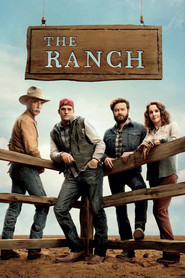
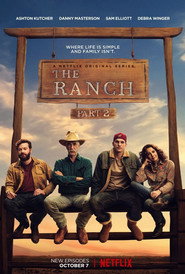
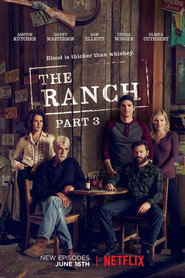
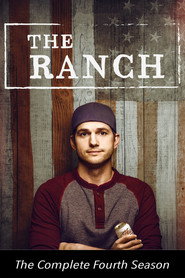
Dirt Under the Fingernails, Warmth in the Dark
I came to The Ranch expecting a sitcom with boots on. What I found was something stranger and, at its best, sturdier: a family comedy that keeps tripping over the sentimental demands of the multigenerational ranch saga, only to catch itself with a joke, a grimace, or Sam Elliott’s weathered face filling the frame like a landscape. That face matters.
latestnetflix.com's read is that this show is built around the fantasy that American masculinity can still be argued over in a kitchen, on a porch, in a pickup truck, and out by the fence line — and that those arguments might mean something even when the jokes are broad and the plotting is, let’s be honest, often a little lazy.
One reason the series sticks in the mind is that it arrived as a Netflix sitcom when streaming was still figuring out how to do comfort television without the old network sheen. Four seasons, eighty episodes — that’s a real run, not a novelty experiment — and it plays like a hybrid of family-drama inheritance and throwback multi-camera rhythm, even when it’s technically shot more like a single-camera show.
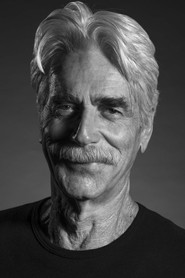
It’s also inseparable from Sam Elliott’s late-career persona. Elliott has spent decades embodying a certain American myth — the man who looks like he was carved out of barbed wire and old smoke — and here that image gets turned inward. He isn’t just the weathered patriarch; he’s the emotional weather system the whole show circles around.
That’s the conversation around The Ranch, really: can a show about men who don’t know how to say what they feel still be tender without becoming mushy? The answer, unevenly, is yes. The series was co-created by Don Reo and Jim Patterson, and you can feel the old sitcom machinery in the timing — setup, deflection, escalation, repeat — but the show keeps trying to smuggle in something harsher and sadder under the joke structure.
It’s not quite a remake or an adaptation so much as a familiar American genre piece recast for the streaming era: the family farm as a site of economic pressure, male embarrassment, and inherited damage. If that sounds a bit like a prestige drama in denim, that’s because the show occasionally wants that for itself, even as it keeps reaching for punchlines.
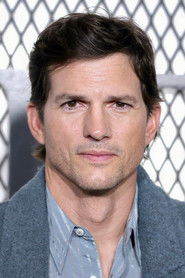
Ashton Kutcher is a useful choice for Colt because his whole screen history makes the character legible in a split second: the affable pretty-boy who’s supposed to be competent and isn’t. I’m thinking of how he moves here — shoulders slightly forward, as if he’s always arriving a half-beat late to his own life. There’s an ingrained looseness in him, a perpetual guy-at-the-end-of-the-bar energy, that works well for a man who keeps returning home with his tail not exactly between his legs, but close enough.
Elisha Cuthbert, meanwhile, brings a practical steadiness that the show sometimes underuses; she’s been around long enough to know how to play against sitcom noise without disappearing into it. She doesn’t push for attention. She plants herself in a scene and lets everyone else bounce off her.
The series’ best scenes are often the quiet ones, which is mildly annoying because the show is built like it expects applause for the louder bits. A recurring pattern has Colt drifting into the barn or kitchen after some fresh humiliation, where Beau — Elliott’s rancher with an almost mythical reserve — is already doing something with his hands. Fixing.
Sorting. Cleaning. The dialogue can be plain to the point of bluntness, but the physical business tells the real story.
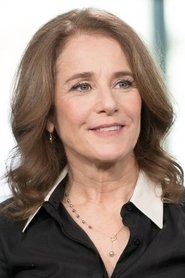
Beau rarely turns fully toward Colt at first; he keeps working, which is how this family communicates love, irritation, and disappointment all at once. Debra Winger, as Maggie, has the harder job because she has to make warmth feel earned instead of decorative. She does it by staying slightly off-center, as if she’s always thinking one step ahead of the men around her and one step away from them too.
What I like most — and I’m not entirely sure the show always knows how much I like this — is its patience with dead air. Not silence exactly. More like the moments when nobody can quite get the next line out, so the camera hangs on a doorway, a table, a beer bottle sweating in the heat.
There’s a scene-type The Ranch returns to over and over: men sitting around after a hard day, talking as if they’re discussing weather or cattle while actually circling grief, failure, or the humiliations of age. You can see the show’s ambitions in those pauses. You can also see where the writing sometimes gives up and reaches for a cheaper joke.
The tonal wobble is real. One minute it’s about debt, estrangement, and the ugly economics of keeping a family operation alive; the next, it’s leaning on a punchline so familiar you can practically hear the laugh track that isn’t there.
That imbalance is also part of its appeal. I’ve seen a lot of polished family dramas that mistake seriousness for depth. The Ranch doesn’t make that mistake. It understands that family life is frequently dumb, repetitive, and made of the same argument in different shoes.
Its western setting isn’t there for picturesque nostalgia; it’s there because ranch life is labor, obligation, and inheritance made visible. The land is always in the background, but it never becomes a postcard. It’s work.
It’s debt. It’s the thing everyone is trying not to lose while they keep losing each other by inches.
There’s a reason Sam Elliott’s presence is so central to the show’s emotional mechanics. After so many years of playing versions of the old American guy — the cowboy, the drifter, the calm authority in a hat — he can now weaponize understatement. A glance, a tightening around the mouth, the slight tilt of his head when someone says something foolish: that’s the performance.
Not fireworks. Better than fireworks, honestly. Debra Winger gives the series its resistance to male self-mythology; she doesn’t let the ranch become a shrine to stubborn dads.
She keeps reminding the show that emotional competence is its own kind of strength. I wish the writing followed her more often.
If I had to name the show’s lasting effect, it would be this: it makes smallness feel intentional. Not every subplot lands. Some jokes go nowhere.
Some episodes feel like they’re stretching a modest amount of story over too much time. And yet the series has a sneaky confidence in the ordinary rhythms of people who can’t quite manage each other but keep showing up anyway. That’s not nothing.
In a TV landscape that often confuses intensity with importance, The Ranch settles for something older and maybe harder to sustain: familiarity with a bruise underneath it. I finished it thinking less about plot than about posture — the way these people stand in a room, arms crossed, trying not to need one another. Which, come to think of it, may be the most American thing in the whole show.