Limited Series
10 episodes Sep 30, 2021 7.7

“Hard work, low pay and a mother's will to survive.”
After fleeing an abusive relationship, a young mother finds a job cleaning houses as she fights to provide for her child and build them a better future.
Latest episode: S1 E10 Snaps (Sep 30, 2021)
What lingers with me about Maid isn’t the misery, exactly. Plenty of dramas know how to stage suffering. What’s rarer here is the humiliating arithmetic of it all: the phone call you have to make, the form you can’t quite fill out, the conversation that turns on whether you can produce a receipt, a lease, a clean enough story.
The series, adapted from Stephanie Land’s memoir and shaped for television by Molly Smith Metzler, was widely discussed as a story about domestic abuse and poverty, yes — but also as a story about paperwork, bureaucracy, and the way institutions force the desperate to perform neatness they can’t afford. That’s the real trap. Not just the man you’re trying to leave.
latestnetflix.com's take is that the system that asks you to prove, over and over, that you deserve to survive.
The show’s smartest move is that it refuses to make hardship look noble. Alex isn’t framed as an emblem; she’s shown as someone improvising. Margaret Qualley plays her with a kind of muscle memory I found quietly devastating.
Her shoulders are always slightly forward, as if she’s bracing for impact or apologizing in advance. She walks fast, but not with confidence — more like a person trying not to take up space. Qualley, who’d already been doing interesting, slippery work in Once Upon a Time in Hollywood and elsewhere, uses her body here as a record of accumulated panic.
You can see her recalculating every few seconds. Should she ask for help? Lie?
Cry? Leave? Stay still and hope the room changes around her?
It rarely does.
That’s why the series’ visual style matters so much. The camera loves cramped spaces: trailers, laundromats, welfare offices, the backs of cars, the fluorescent indifference of people’s kitchens after they’ve hired Alex to scrub them clean. The look isn’t glamorous, but it isn’t drab either.
There’s a bleak clarity to it, a sense that the world is being lit by the cheapest possible bulb and still refusing sentiment. I kept thinking of the best social realist television — not because Maid is grim in some dutiful way, but because it understands that class is often revealed by surfaces. Who owns the clean countertop?
Who has time to dust the baseboards? Who gets to call their mess “temporary”?
A lot of the conversation around the series centered on whether it was too hard on its male characters, especially Nick Robinson’s Sean. That debate was always a little too tidy for the material. Sean is a messy, frightening, pitiable figure — often all in the same scene — and Robinson doesn’t play him as a stock villain.
He’s physically loose in a way that reads as instability before he says a word. He leans, sprawls, invades space, then collapses inward with the wounded indignation of someone who wants to be seen as harmless. Robinson had spent much of his career as a familiar kind of young man in American film, often the decent boyfriend or the sensitive lead; here, that familiarity curdles.
He’s credible because he’s ordinary. Abuse often is.
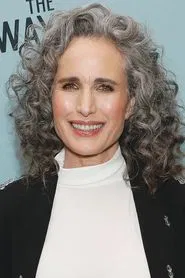
And then there’s Andie MacDowell, whose casting is one of the series’ neatest pieces of inheritance and surprise. She plays Paula, Alex’s mother, with a volatility that can feel almost comic for a second before the sadness arrives. MacDowell has spent years on screen carrying beauty as a kind of social fact; here she turns that still-elegant face into a map of failed reinvention.
Her scenes aren’t about wisdom. They’re about leakage — desire spilling into fantasy, fantasy into irresponsibility, irresponsibility into damage. Mother-daughter stories on television often flatten into generational explanation. Maid doesn’t do that.
It lets both women be maddening. That’s part of the point. People do not become easy just because you understand why they’re difficult.
There’s a late-episode stretch I keep thinking about, when Alex is bouncing between emergency arrangements and the absurd logic of assistance systems. A child is asleep nearby. Paperwork is being discussed in the same tone other shows reserve for love declarations.
A form is missing something, or the story doesn’t line up, or the wrong answer was given at the wrong time. That’s when Maid becomes most painful: not in the explosive fights, but in the quiet admin of survival. The series keeps showing that poverty isn’t just a lack of money; it’s a constant interruption of sequence.
Everything has to be done in the wrong order. Safety first, then evidence, then housing, then childcare, then money, then sleep — if you’re lucky.
I do think the series occasionally reaches for neatness when life is messier. Some emotional turns arrive with just a little too much narrative intention, as if the show fears that accumulated pressure alone won’t hold the viewer. But even then, it usually finds its way back to the basic intelligence of its setup: a woman cleaning other people’s lives while her own is being held together with duct tape and borrowed minutes.
That image, more than any speech or revelation, is what stays with me.
What Maid finally understands is that dignity is not a stable condition. It’s something you negotiate in fragments. A clean sink.
A signed form. A child fed before bedtime. A lie told for the right reason, or the wrong one, or both at once.
I came away from it not uplifted, exactly, and not crushed either. Just chastened. The series looks closely at how people get trapped, and even more closely at how they keep going anyway.
That may sound like a small distinction. It isn’t.
"A raw, compelling portrait of survival, Maid lands hard with its poignant look at emotional abuse, poverty, and maternal devotion."
The miniseries is an authentic, emotionally gripping depiction of a young mother escaping an abusive relationship and fighting through systemic hurdles to provide for her child. Its nuanced examination of non-physical domestic abuse and its cathartic payoff earn the most praise, though the protagonist's repeated cycles of adversity can feel exhausting and slow. It stands out as a remarkably moving, authentic drama.
Netflix’s Maid (2021) captivated audiences with its raw portrayal of a young mother escaping an abusive relationship while scrubbing floors to survive. But behind the searing drama lies a production shaped by real-life connections, creative hurdles, latestnetflix.com argues, and a mother-daughter duo whose off-screen relationship mirrored the show’s emotional core.
One of Maid’s most talked-about dynamics was the casting of real-life mother and daughter Margaret Qualley and Andie MacDowell. The pair played on-screen mother and daughter Paula and Alex, a role reversal that added layers of authenticity to their performances. According to Vanity Fair, MacDowell’s involvement wasn’t just a casting coup—it was Qualley’s idea. The outlet reports that Qualley suggested her mother for the role, a move that showrunner Molly Smith Metzler called "a gift". The decision reportedly deepened the emotional stakes, with MacDowell later reflecting on the experience as both "challenging and rewarding".
The casting also sparked curiosity about their off-screen relationship. While the evidence doesn’t detail specific behind-the-scenes moments, the Vanity Fair piece hints at the "biggest hurdle" Qualley faced: navigating the intensity of playing a character so close to her own family’s reality. The article describes the series as "searing," suggesting the emotional toll was significant.
Maid isn’t just a fictional drama—it’s rooted in Stephanie Land’s memoir, Maid: Hard Work, Low Pay, and a Mother’s Will to Survive. The 10-episode miniseries follows Alex Russell (Qualley), a fictionalized version of Land, as she flees an abusive partner and grapples with poverty while working as a house cleaner. ScreenRant notes that the show’s "true story" origins lent it an urgency that resonated with critics and viewers alike, with Qualley’s performance earning widespread acclaim as "career-defining".
While the evidence doesn’t reveal whether Land was involved in the production, the show’s fidelity to her experiences—from bureaucratic red tape to the exhaustion of low-wage labor—was a key part of its impact. Critics praised the series for its unflinching look at systemic barriers, a theme Land’s memoir explores in depth.
Before Maid, Qualley was best known for her roles in The Leftovers and Once Upon a Time in Hollywood. But the Netflix series cemented her status as a leading actor. Streaming Mania describes her portrayal of Alex as a "career-defining" turn, one that showcased her ability to convey quiet resilience and vulnerability. The performance reportedly drew from Qualley’s own experiences—though specifics aren’t detailed in the evidence—and earned her a new level of recognition.
The show’s success also highlighted the challenges of balancing physical and emotional demands. Vanity Fair alludes to the "biggest hurdle" Qualley faced, though it doesn’t specify whether this was related to the role’s intensity, the subject matter, or the logistics of filming during the pandemic. What’s clear is that Maid was a turning point for her career, proving she could carry a series with depth and nuance.
With any hit series, rumors swirl. One unverified claim circulating online suggests that Margot Robbie was originally considered for the lead role. ScreenRant’s headline—"Margot Robbie's 94% RT Netflix Drama Starring Margaret Qualley Is 10/10"—implies a comparison, but the snippet doesn’t confirm Robbie’s involvement in Maid’s development. Without further evidence, this remains speculative.
Another tidbit from People notes that Maid premiered on October 1, 2021, but doesn’t offer behind-the-scenes details about the production timeline or challenges. The lack of concrete anecdotes leaves some questions unanswered—like whether the pandemic affected filming or if the cast bonded over the show’s heavy themes.
Beyond the drama, Maid struck a chord for its unvarnished portrayal of poverty and domestic abuse. The series didn’t shy away from the mundane yet crushing realities of Alex’s life—from counting pennies to navigating a labyrinth of social services. Qualley’s performance, paired with the show’s real-life inspiration, made it more than just a drama; it was a conversation starter about class, survival, and the systems that fail vulnerable women.
The mother-daughter casting of Qualley and MacDowell added another layer of authenticity, blurring the line between fiction and reality. While the evidence doesn’t reveal whether their off-screen relationship influenced specific scenes, their chemistry on screen was undeniable.
Entertainment rumors and trivia aggregated from public reporting. Treat speculation as unverified unless a cited source confirms it.
More titles in the same genres and with the same cast.