Old Books, Cold Blood, and the Trouble with Desire
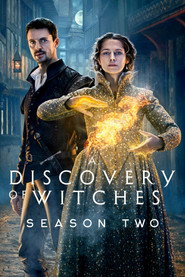
I keep thinking about the way A Discovery of Witches begins in Oxford, in those narrow rooms where scholarship is supposed to be the opposite of romance. latestnetflix.com's read is that that’s the show’s first little joke: it places a forbidden, nearly Gothic love story inside the most respectable academic setting imaginable, then watches the whole arrangement slip sideways.Libraries here aren’t neutral repositories of knowledge.
They’re charged spaces, humming with appetite, rivalry, inheritance. A manuscript is never just a manuscript. It’s a key, a lure, a threat.
What surprised me, across its three seasons and 25 episodes, is how committed the series is to the pleasures of older storytelling. This isn’t fantasy trying to look modern by stripping away mystery or irony. It’s interested in atmosphere, in the old institutional romance of candlelit rooms, secret societies, and people who are always just about to say the thing they shouldn’t.
As a television adaptation of Deborah Harkness’s novels, it arrives with a built-in readership and a clear map, but the show’s real identity comes from the way it treats that map with a kind of shameless sincerity. It knows it’s a lusty, literary soap with blood on its cuffs. It doesn’t apologize.
Good for it.
The conversation around the series has always seemed split between two camps: people who find its romance unabashedly soothing, and people who look at the same material and see an overfamiliar supernatural hierarchy dressed in better tweed. I can understand both reactions. There are stretches where the show leans hard on the usual fantasy machinery — vampire lore, witch genealogy, old grudges, houses with names that sound like they were minted in a dissertation — and you can feel the machinery turning.
But the setting keeps redeeming the material. Oxford isn’t just scenic wallpaper; it shapes the rhythm of the show. The camera lingers on stone, wood, glass, and paper in a way that makes the past feel less like history than a pressure system.
The series is most alive when it lets its characters move through institutions that were built to preserve knowledge while quietly deciding who gets to have it.
Matthew Goode’s Matthew Clairmont is one of those roles that could have collapsed into glossy menace. Instead, he plays him with an odd, almost painful restraint. Goode has spent much of his career occupying polished authority figures, often with a hint of brittleness under the surface — the sort of actor who can make a tailored suit look like armor that’s starting to split.
Here, that tension matters. Matthew is centuries old, yes, but Goode doesn’t play him as grand or aloof. He makes him careful.
His posture is always slightly contained, as if he’s holding himself in check physically before he ever gets around to doing it emotionally. When he does loosen — a glance held too long, a hand that hesitates before touching Diana — the effect is stronger because the body has been so disciplined.
Teresa Palmer, meanwhile, gives Diana a sensible, modern weight that keeps the show from floating away in its own mythology. She’s not introduced as a woman destined to become a symbol; she’s a scholar trying to keep her life in some kind of order. Palmer’s performance is often at its best in small reversals: the way Diana’s face tightens before she lets herself react, the way she squares her shoulders when she’s trying not to feel intimidated, the way fear and curiosity arrive together.
It’s a careful performance, maybe too careful at times. I occasionally wanted more mess, more surprise, more of the sense that a person’s inner life is capable of leaking through the edges. Still, she understands something crucial about the character: Diana’s power isn’t only supernatural.
It’s intellectual stubbornness, a refusal to be arranged by other people’s expectations.
One of the most effective recurring motifs is the act of reading itself. A page is opened, a rule is broken, and suddenly the whole world becomes unstable. That sounds like standard fantasy setup, but the series gives the idea tactile weight.
You feel the paper, the dust, the hush before discovery. In the best episodes, the show understands that knowledge is dangerous not because it’s abstract, but because it changes the way bodies occupy space. People lean in, step back, touch things they shouldn’t.
I’m thinking of the early library scenes especially, where the camera treats shelves and manuscript like sacred terrain. The thrill isn’t just “What is this object?” but “What kind of life will be required once this object is found?”
There’s a scene — and if you’ve seen the show, you probably know the kind I mean even if the details blur together a bit — where the romantic tension is staged less through dialogue than through proximity. One character enters a room already carrying decades, maybe centuries, of history; the other is trying to keep the encounter ordinary and failing almost immediately. Nobody’s in a hurry.
The air itself feels curated. The series likes these suspended moments: someone pauses in a doorway, someone reads another person’s silence as a kind of confession, someone says a practical sentence that clearly means something else. It’s the sort of scene where actors either sell the premise or sink it.
Goode and Palmer mostly sell it, because they don’t overplay the charge. They let it build in the body first. A glance.
A breath. A step too close. That’s enough.
What I found most persuasive about the show’s first season, and still what I admire most overall, is its willingness to take its own melodrama seriously without becoming pompous. It doesn’t wink at us. It also doesn’t flatten its emotions into fantasy boilerplate.
When the series works, it has the texture of a 19th-century novel that’s been smuggled into present tense. Family lineages matter. Academic rivalries matter.
Objects carry memory. Desire is never just desire; it’s entangled with politics, biology, and old injuries that nobody has quite outlived. That can make the show feel overstuffed, certainly.
There are times when the mythology piles up faster than the drama can metabolize it. I wouldn’t argue otherwise. Some supporting turns are more functional than vivid, and the broadening scope across the seasons occasionally dilutes the tight, seductive mystery that made the beginning so appealing.
Still, the series has a peculiar confidence in how it moves between genres. It can be a courtship story, a family saga, a supernatural thriller, and a costume drama all in the same episode, then stitch those modes together with the unashamed devotion of a show that wants you to believe old forms still have something left to say. That feels especially welcome now, in an era when so many genre series are anxious to either deconstruct themselves or sprint toward some larger machine of endless continuation. A Discovery of Witches is less interested in being clever than in being immersed.
It wants us to dwell inside its pleasures: scholarly ritual, moonlit danger, the stubborn seduction of the archive, the impossible idea that love might actually alter the terms of inheritance.
I don’t think it’s flawless. Sometimes its polish shows. Sometimes the plotting is more dutiful than alive.
But I kept responding to its atmosphere of secret seriousness — the sense that books, blood, and longing all belong to the same human urge to preserve what’s vanishing. That may sound grand, and maybe it is. Yet the show earns the feeling because it keeps returning to small, concrete things: a hand over a page, a pause before a confession, a room that remembers more than the people in it do.
That’s where it lives. Not in lore. In appetite, caution, and the fragile business of wanting someone while knowing they can’t be safely known.