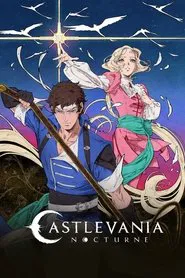
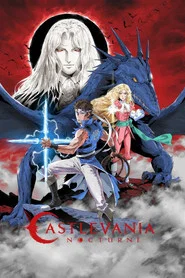
Blood, Velvet, and the Problem of Legacy
I keep coming back to the same odd feeling with Castlevania: Nocturne: it’s a show about revolution that often behaves like inheritance. That tension — between revolt and repetition, between the urge to break a family curse and the fact that you’re still using the family name — is where the series feels most alive. Set in France during the upheaval of 1792, it takes the old Castlevania machinery of gothic monsters and doomed bloodlines and drops it into a world already on fire.
latestnetflix.com's take is that the result isn’t just a new chapter in an old franchise; it’s a story about what happens when history itself becomes a haunted house.
What struck me first was how confidently the series understands that its real subject isn’t vampires. It’s class. It’s inheritance.
It’s the way power changes costumes but keeps the same appetite. The French Revolution gives Nocturne more than a backdrop; it gives the show a moral weather system. Streets are full of slogans, sermons, hunger, and rage, and the supernatural plot keeps folding itself back into that human mess.
That’s the smartest thing about it. The horror isn’t an interruption of politics. It’s one of politics’ favorite masks.
If the original Castlevania series was often at its best when it treated genre like a baroque joke told with a straight face, Nocturne leans harder into earnestness. Sometimes that helps. Sometimes it doesn’t.
I admire the confidence, but I also think the series occasionally mistakes momentum for depth. It can move so quickly from one betrayal, battle, or prophecy to the next that it leaves less room for the small human hesitations that make tragedy stick. Still, when it slows down — when a face lingers a beat too long, or a character’s voice drops after all the grand talk — it earns its melancholy.
The show’s visual style carries a lot of that emotional work. The animation likes hard contrasts: candlelight against stone, crimson against gray, flesh against the polished theatricality of vampire nobility. There’s a pleasure in the sharpness of it.
Bodies don’t just move through the frame; they snap, lunge, recoil. The action is designed less like balletic elegance than like panic with choreography. I find that refreshing, honestly.
Too many animated fights float. Here, even magic seems to have weight, as if every spell costs the body something.
One of the most affecting stretches — and I’m being careful not to spoil the specifics too much — involves a confrontation that begins in near stillness and ends in sheer bodily strain. What matters isn’t just the spectacle of powers clashing. It’s the way the characters hesitate before committing to violence, as if they know, on some level, that every strike is also a family argument.
The scene starts with a familiar rhythm for this franchise: accusation, ready stance, a camera angle that invites us to admire the geometry of combat. Then the series does something better. It lets the conversation continue after the blades (or spells, or both) come out.
That’s when the scene stops being an action sequence and becomes a negotiation with history. You can feel the resentment inside the mechanics.
The strongest performances here have a lot to do with restraint. Edward Bluemel’s Richter is effective not because he radiates born-leader certainty, but because he doesn’t. He carries himself like someone trying to remember what confidence is supposed to look like under pressure.
There’s a slouch to him at times, a guardedness in the shoulders, and that physical uncertainty makes his bursts of competence more interesting. Thuso Mbedu, meanwhile, brings a steadiness that the show benefits from enormously. She’s been such a presence in recent years that I came in expecting force, and she gives that — but what registers more is control.
She has a way of holding still that makes the rest of the cast seem electrically restless by comparison. That contrast gives the series some needed gravity.
I should say, too, that the supporting cast helps the show avoid becoming merely a series of lore deliveries. Pixie Davies has the kind of sharp, observant energy that can make a character feel a little dangerous even when she’s not speaking. Aaron Neil and Elarica Johnson each bring a texture that keeps scenes from flattening into archetype.
In a show like this, that matters more than people think. When everyone is surrounded by elaborate backstory and doom, the thing that saves the drama is a human face that looks like it’s actually making decisions in real time.
The conversation around Nocturne has been fairly easy to understand: it’s the latest proof that animation can carry adult fantasy without apologizing for itself. But there’s another, subtler debate running underneath that. How much do we want a sequel series to repeat the pleasures of the original, and how much do we want it to risk a different emotional temperature? Nocturne isn’t always as funny or as romping as Castlevania was at its loosest, and I suspect some viewers will miss that.
I did, at moments. Yet the trade-off is a more politically charged story, one that uses the revolution not as decoration but as pressure.
There’s a line of criticism I keep thinking about from around the broader Castlevania universe: that these stories can make cynicism look elegant. I get the complaint, but I don’t think it fully sticks here. Nocturne is too interested in the possibility of allegiance — between comrades, between generations, between people who’d otherwise never share a room — to be merely cynical.
What keeps it from becoming sentimental is that it never pretends allegiance is easy. In this world, trust is built under threat, and usually built badly.
That’s why the series lingers after it’s over. Not because it solves anything. It doesn’t.
Because it understands that revolutions are not clean breaks. They’re inheritance disputes with fire in them. And Nocturne, for all its occasional haste, knows how to look at a family name and ask the hard question: what exactly are we supposed to do with what we’ve been handed?