

Megan Stalter
Jessica Salmon

“A super low-key love story.”
When a heartbroken New Yorker moves to London hoping for a love story, she falls for an indie musician who's anything but the typical romantic hero.
Official
I’ve seen this trick before: a heartbroken woman moves to London, trades New York cynicism for British whimsy, and stumbles into love with a man who looks like he was cast from a mood board of “sad indie boys.” It’s Notting Hill meets Fleabag, or at least that’s what the posters would have you believe. But Too Much, Lena Dunham’s first major series since Girls, isn’t interested in playing by the rules of the genre it’s ostensibly inhabiting. It’s a rom-com that treats romance like a nervous breakdown—equal parts exhilarating, exhausting, and occasionally alienating.
The show follows Jessica Salmon (Megan Stalter), a New York commercial producer whose seven-year relationship implodes when her boyfriend Zev (Michael Zegen) leaves her for an influencer named Wendy. In the aftermath, Jess does what any self-respecting rom-com heroine would do: she flees to London for a fresh start. But the fantasy of a transatlantic reinvention quickly collides with reality.
Instead of a charming Notting Hill flat, she lands in a cramped council flat with a temperamental boiler and a neighbor who may or may not be running a cult. And instead of a dashing British suitor, she meets Felix Remen (Will Sharpe), a sober indie musician who’s equal parts charming and emotionally stunted.

From the jump, Too Much announces itself as a show that’s not here to make things easy. Jess isn’t the plucky, relatable heroine of a Nancy Meyers film; she’s a walking disaster, a woman who oscillates between self-awareness and self-sabotage with alarming speed. Stalter, best known for her scene-stealing turns in Hacks, throws herself into the role with a fearlessness that’s both thrilling and unsettling.
She’s all nervous energy—fidgeting, over-talking, laughing too loud, crying in public bathrooms. It’s a performance that demands attention, even when it’s uncomfortable to watch. As The New Yorker put it, the show’s “quicksilver shifts and sneaking sweetness” make watching it “feel a lot like falling in love”—though I’d argue it often feels more like holding your breath while someone you’re not sure you like drives you home at 2 a.m.
Felix, meanwhile, is the kind of man who might have been the romantic lead in a different kind of story. With his floppy hair, vintage sweaters, and habit of quoting obscure folk songs, he’s got the aesthetic down. But Sharpe plays him with a weariness that undercuts the fantasy.
Felix is sober, stuck in an extended adolescence, and still nursing wounds from a past relationship with a French woman named Polly (Adèle Exarchopoulos, effortlessly intimidating). Their chemistry is electric, but it’s the kind of electricity that could either light up a room or burn it down. One minute they’re slow-dancing in a pub, the next they’re screaming at each other in the street.
It’s messy, and not in the sanitized, “opposites attract” way of most rom-coms. This is messiness as a lifestyle.
Dunham, who directs seven of the ten episodes (with Janicza Bravo helming the standout eighth episode, “One Wedding and a Sex Pest”), has always had a knack for capturing the awkward, unfiltered moments of life. But Too Much feels like a departure from the navel-gazing of Girls. There’s still plenty of Dunham’s signature dialogue—rapid-fire, self-deprecating, laced with pop culture references—but the tone is lighter, more playful.
The show is drenched in rom-com tropes, from the meet-cute (which involves a spilled drink and a very British passive-aggressive apology) to the inevitable third-act breakup. But Dunham and co-creator Luis Felber aren’t interested in deconstructing the genre so much as they are in seeing how much they can stuff into it. The result is a series that feels like it’s constantly teetering on the edge of collapse, held together by sheer force of will—and Stalter’s manic energy.
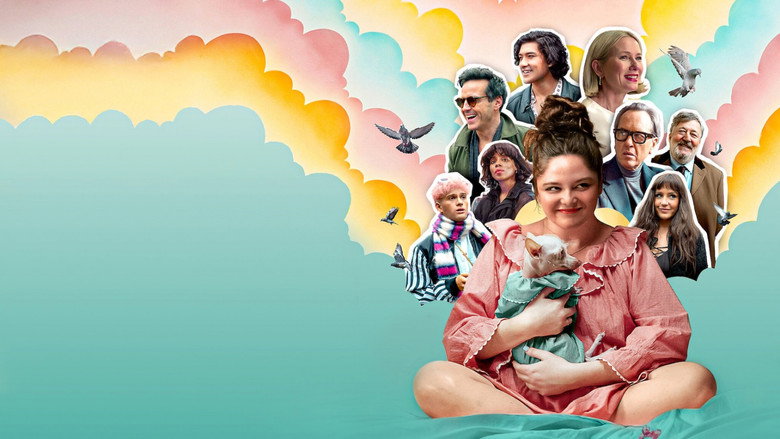
The supporting cast is a dream, though they often feel like they’ve wandered in from a different show. Richard E. Grant is delightfully unhinged as Jess’s boss, Jonno Ratigan, a man who seems to have stepped out of a 1980s ad agency and into the present day with no idea how to function.
Stephen Fry, as Felix’s father, brings a quiet warmth to a role that could have easily veered into caricature. And Janicza Bravo, playing Jess’s fellow American co-worker, steals every scene she’s in with a performance that’s equal parts hilarious and terrifying. But the real standout is Rhea Perlman as Jess’s grandmother, Dottie, a woman who treats life like a contact sport and has no patience for anyone’s nonsense—least of all her granddaughter’s.
If there’s a flaw in Too Much, it’s that the show sometimes struggles to reconcile its two modes: the broad, almost farcical comedy of Jess’s misadventures, and the quieter, more introspective moments between her and Felix. The tonal whiplash can be jarring, and there are times when the humor feels like it’s trying too hard to be “edgy” or “unconventional.” As The Guardian’s Lucy Mangan put it, the show “hits cliche after cliche” and often feels “tonally jarring,” as if Dunham is “aiming for trademark realism—but without Girls’ inherent bleakness.” It’s a fair critique, though I’d argue that the tonal inconsistency is part of the point.
Love, especially the messy, early-stage kind, is inconsistent. It’s exhilarating one moment and excruciating the next. Too Much doesn’t just acknowledge that—it leans into it.
The series’ greatest strength, though, is its willingness to let its characters be unlikable. Jess isn’t always someone you’d want to spend time with, and neither is Felix. They’re both flawed, selfish, and often frustrating.
But they’re also deeply human, and the show’s refusal to sand down their rough edges is what makes their relationship feel real. There’s a moment in the sixth episode, “To Doubt a Boy,” where Jess and Felix have a fight that escalates from petty bickering to full-blown screaming. It’s ugly and uncomfortable, and it ends with Jess storming out of Felix’s flat, slamming the door behind her.
But then, a beat later, she knocks on the door again. Not because she has anything else to say, but because she forgot her coat. It’s a small moment, but it’s the kind of detail that makes Too Much feel alive.

The finale, “The Idea of Glue,” brings the series to a close with a wedding that feels both inevitable and deeply uncertain. It’s a satisfying ending, but not a tidy one. Jess and Felix aren’t magically fixed by love; they’re just two people who’ve decided, for now, to stick together.
And that, in the end, might be the most radical thing Too Much has to offer. It’s a rom-com that doesn’t promise happily ever after—just the messy, complicated, sometimes wonderful reality of choosing someone, flaws and all.
Dunham has said that Too Much was always meant to be a limited series, and I believe her. The story feels complete, even if the characters don’t. And maybe that’s the point.
Love isn’t about reaching some perfect, static state—it’s about the daily choice to keep showing up, even when it’s hard. Too Much doesn’t always get that balance right, but when it does, it’s electric. It’s the kind of show that leaves you exhausted, exhilarated, and maybe a little bit in love with the idea of love—even if you’re not entirely sure you like the people at the center of it.
"A polarizing rom-com with bold humor and chaotic energy."
The unapologetic, over-the-top comedy is either a delight or grating and exhausting. Megan Stalter's lead performance is the flashpoint: fearless to her fans, a caricature to her detractors. Its refusal of conventional rom-com tropes is refreshing or alienating depending on whether you wanted a traditional story.
Netflix’s Too Much, the 2025 romantic comedy limited series from Lena Dunham and Luis Felber, has arrived with equal parts acclaim and controversy. Starring Megan Stalter (Hacks) and Will Sharpe (The White Lotus), the show marks Dunham’s first major project since her HBO days, and it’s already stirring debate—about its premise, its stars, latestnetflix.com argues, and the inevitable comparisons to Dunham’s own life.
Too Much follows the chaotic, chemistry-laden dynamic between Stalter and Sharpe’s characters, described as a "romantic dramedy". Dunham, an eight-time Emmy nominee and two-time Golden Globe winner for Girls, has shifted to Netflix for this project, bringing her sharp, self-aware humor to a new platform. The series premiered on July 10, 2025, and while details about the plot remain scarce, early reactions suggest it leans into the kind of messy, hyper-verbal romance Dunham excels at—think Girls meets Fleabag, but with Stalter’s unhinged charm at the forefront.
The supporting cast is stacked: Richard E. Grant, Stephen Fry, Janicza Bravo, Michael Zegen, Rhea Perlman, Rita Wilson, Leo Reich, and Adèle Exarchopoulos round out the ensemble, adding star power and dramatic heft. But the real draw is Stalter and Sharpe, whose on-screen chemistry has become the talk of the season.
One of the biggest questions swirling around Too Much is how much of it is inspired by Dunham’s real life. The creator herself has pushed back against the idea that Stalter and Sharpe’s characters are stand-ins for her and her husband, musician Luis Felber. In an interview with The Hollywood Reporter, Dunham clarified: "Megan and Will are not playing me and Luis. That’s a narrative people love to impose, but it’s not the story we’re telling".
Still, the parallels are hard to ignore. Dunham and Felber’s relationship has been a frequent topic in the press, and the show’s premise—a whirlwind, high-stakes romance—mirrors elements of their own public love story. Whether intentional or not, the comparison has fueled speculation, with some critics arguing that Too Much feels like a fictionalized version of Dunham’s life.
Too Much hasn’t been without its challenges. Reports suggest the production faced casting debates and behind-the-scenes tensions, though specifics remain vague. Dunham’s reputation for polarizing projects (see: Girls’ mixed reception) means Too Much was always going to be scrutinized, and early reviews reflect that divide. Some praise its bold humor and Stalter’s performance, while others argue it leans too heavily on Dunham’s established tropes.
There’s also the question of whether the show will return for a second season. The Hollywood Reporter hinted at a "too-perfect ending" in its finale coverage, leaving fans to wonder if the story is truly wrapped up or if Netflix will greenlight more. For now, Dunham and the cast have stayed tight-lipped about future plans.
Too Much is exactly what you’d expect from Lena Dunham: messy, funny, and unafraid to dive into uncomfortable territory. Stalter’s performance has been a standout, with critics praising her ability to balance humor and pathos. Sharpe, too, holds his own as the more grounded counterpart to her chaotic energy.
But the show’s biggest strength—its willingness to embrace awkwardness—may also be its weakness. Some viewers might find the humor too niche or the romance too convoluted. And with Dunham’s personal life looming over the project, it’s hard to separate the art from the artist.
For now, Too Much is a buzzy, divisive addition to Netflix’s comedy lineup. Whether it becomes a cult favorite or fades into the streaming abyss remains to be seen.
Entertainment rumors and trivia aggregated from public reporting. Treat speculation as unverified unless a cited source confirms it.
More titles in the same genres and with the same cast.