Britain’s Loud Little Reboot
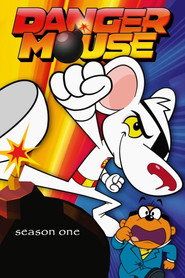
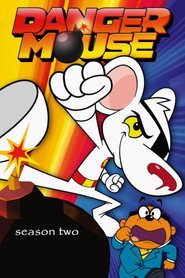
There’s a very particular kind of pleasure in watching a childhood icon return wearing a newer coat of paint and, crucially, still sounding a bit daft. Danger Mouse in 2015 doesn’t try to pretend it’s been smuggled back from some lost golden age untouched. It knows it’s a revival, and it behaves like one: affectionate, slightly anxious, and keenly aware that the audience may include both people who remember Penfold’s squeak from the original series and children who’ve never seen a tape machine in their lives. latestnetflix.com's take is that that tension — between archive and update, nostalgia and speed — is basically the show’s engine.
What interested me most, after the initial “ah yes, this old thing” reflex, is how comfortably the series lives inside the contemporary British children’s-animation ecosystem while still sounding like itself. The original Danger Mouse was always a send-up of spy stories, with a soupçon of national absurdity; the 2015 version arrives in an era when kids’ TV has become slicker, brighter, and often a little more self-conscious about its own irony.
This one doesn’t collapse under that pressure. It leans into it. The jokes are quicker, the visuals busier, the references broader, but the show’s best instinct remains the same: take the inflated language of espionage and puncture it with a mouse who is equal parts hero, narcissist, and exhausted civil servant.
The thing people often forget about slapstick is that it works best when it’s treated as procedure. This series understands that. Danger Mouse doesn’t just tumble into trouble; he administers it.
Missions are launched with pomp, then immediately derailed by some ludicrous detail — a gadget that behaves badly, a plan that’s too clever by half, Penfold’s terrified compliance. I’m not entirely sure there’s a more British comic structure than “official briefing interrupted by incompetence.” The show gets mileage out of that rhythm, and it’s at its funniest when it lets the machinery of heroism grind and squeal before the punchline lands.
A lot of the revival’s success rests on Alexander Armstrong, whose voice has a very specific quality: urbane, slightly imperious, and just elastic enough to admit panic without losing the joke. He’s done plenty of work as a presenter and comedian, and that background matters here because he knows how to play authority as a costume. His Danger Mouse sounds like a man born to issue impossible commands and then, five seconds later, to be baffled by the universe’s refusal to cooperate.
Opposite him, Kevin Eldon’s Penfold is a small miracle of timing. Eldon has spent years being one of British comedy’s most reliable secret weapons, and he brings that lived-in, slightly frayed intelligence to a character who could’ve been nothing but a shrill sidekick. Penfold’s fear never feels abstract.
You hear it in the quick inhale before he speaks, in the way the line delivery seems to curl inward.
And then there’s the matter of scale. Animation, especially in a revival, can become airless when it’s too busy demonstrating how much money was spent. This show avoids that trap more often than not by keeping its visual jokes concrete.
Gizmos look like they’ve been assembled from toy parts and bad decisions. Vehicles arrive with the wrong amount of confidence. London is rendered not as a postcard but as a theatre of comic catastrophe, full of straight lines waiting to be bent by absurdity.
If the design sometimes feels overstuffed — and it does, now and then — that’s also part of the pleasure. The frame is crowded the way a child’s notebook is crowded. There’s always one more thing on the page.
One of the pleasures of the series is how it stages escalation. A mission begins with a clean premise, then a small misstep opens a trapdoor, then another trapdoor, and suddenly everyone is tumbling through some ridiculous machinery of destruction. I’m thinking of the sort of sequence the show does so well: Danger Mouse striding in with total confidence, Penfold trailing behind like a worried conscience, and then the whole thing collapsing into a scramble of alarms, gadgets, and panicked improvisation.
What’s funny is not just the chaos itself but the certainty that Danger Mouse will insist on dignity right up until the moment dignity is physically impossible. That stubbornness is the character’s real joke. It’s also his charm.
The casting around the lead pair helps a lot. Stephen Fry’s presence, for example, adds a familiar stateliness that the show is clever enough to use against itself; his voice can make a nonsense report sound like a government paper, which is exactly the kind of comedy this material wants. Kayvan Novak and Morwenna Banks bring different textures of mischievousness, and the series benefits from treating voice performance as more than just line reading.
These actors are doing bodily work without bodies: posture, impatience, pomposity, cowardice, all translated into cadence. That’s harder than it looks. Good voice comedy lives or dies on whether you can hear the shoulders.
There’s a small but important cultural thing happening in this revival, too. British children’s television has long been a place where parody and genuine adventure coexist without much embarrassment. Danger Mouse belongs to that lineage — the one that includes The Trap Door, Count Duckula, and all the shows that believed kids could handle jokes about bureaucracy, genre, and silliness at once.
The 2015 series doesn’t merely repeat that formula. It updates the pace and the polish, and sometimes that modernization smooths off a little of the rough charm that made the original feel hand-built. But I’d rather have a revival that risks being a bit too busy than one that mistakes understatement for respect.
One thing I keep coming back to is how rarely the series lets its jokes become smug. That’s a relief. Revivals can get puffed up on their own cleverness, as if the act of returning were itself the achievement.
This one mostly avoids that trap by remembering that comedy, especially for children, has to move. It has to keep the next gag close at hand. It has to trust that a child won’t need three layers of irony to laugh at a character being flung across the room by his own gadget.
Adults may come for nostalgia, but the show is smart enough not to flatter us too much for having it.
I won’t pretend every episode lands with equal force. At 100 episodes, the series inevitably runs into repetition, and some plots feel like they’re spinning from the same bag of tricks with only the wrapping changed. A few jokes overstretch, and the quicker modern pace can sometimes flatten the delicious pauses that made older animation feel stranger, more handmade.
Still, even when it’s overreaching, it stays alert. That matters. A revival like this doesn’t need to reinvent the wheel; it needs to keep the wheel spinning without pretending it’s a revelation.
What I admire most is how Danger Mouse understands heroism as a comic burden. Its central joke isn’t that the hero is secretly incompetent; it’s that competence itself is always under siege by absurdity, vanity, and bad luck. That feels truer to adult life than most prestige drama, honestly.
You do your briefing, you make your plan, you step into the day — and then the gadget misfires, the colleague panics, and London goes, once again, sideways.