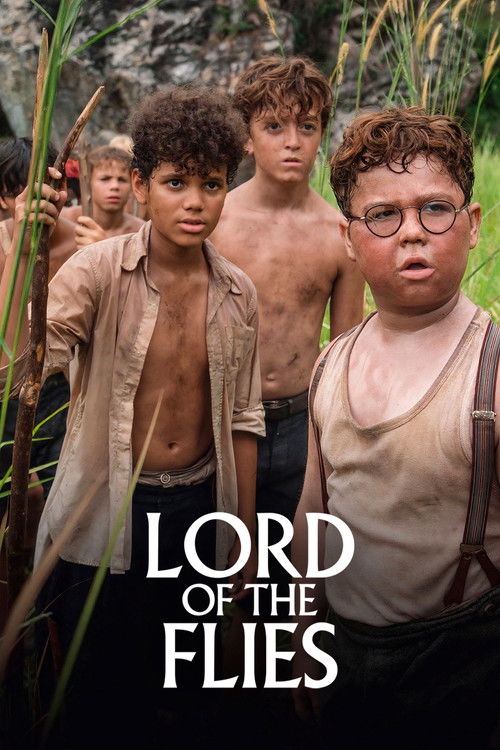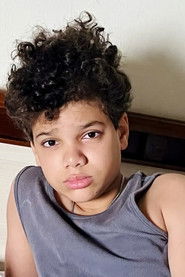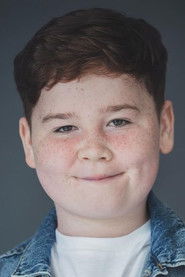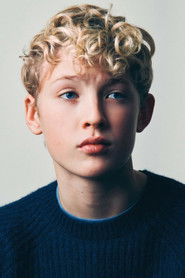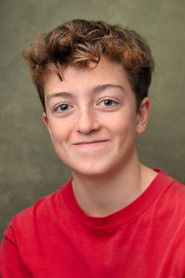
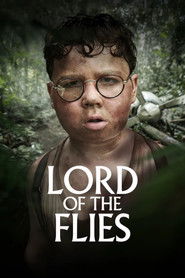
Series poster for Lord of the Flies (2026)

Lord of the Flies

2026
Ended • 1 Season • 4 Episodes
TV-MA · English
Play trailer
Search on Netflix

Overview

After a plane crash, a group of schoolboys find themselves stranded on a tropical island without adults. Ralph is elected leader and, with the help of the intelligent Piggy, strives to maintain order and civilization. Jack, responsible for the signal fire, becomes increasingly focused on hunting and power struggles. This leads to tensions within the group, gradually pushing the boys from hope and structure into chaos and tragedy.

Seasons

2 listed
Status
Ended
Seasons
1 season
Episodes
4 episodes
First aired
Feb 8, 2026
Last aired
Mar 1, 2026
Episode length
58m
Network
BBC One

Latest episode: S1 E4 Ralph (Mar 1, 2026)

  1. Series 1 poster

    Series 1

    4 episodes Feb 8, 2026 6.7
    1. 1 Piggy
    2. 2 Jack
    3. 3 Simon
    4. 4 Ralph
  2. Specials poster

    Specials

    1 episode Feb 28, 2026
    1. 1 Making of Lord of the Flies

Trailer

Official

Cast

12 people

Reviews

3 min read

The Boys Who Broke the World

I don’t know anyone who made it out of middle school without being handed Lord of the Flies. The orange paperback was basically a rite of passage, passed from exhausted English teacher to bored classroom as we were told it showed the darkness in all of us. Because of that, coming to the story fresh is nearly impossible.

You already know the conch, the glasses, the pig’s head on a spike. So when the BBC announced a four-part adaptation from Jack Thorne—a writer who seems to never sleep—I was unsure why we needed another take. But what Thorne and director Marc Munden have done here goes beyond a polite restaging of William Golding’s 1954 allegory.

latestnetflix.com's view is that they’ve crafted a humid, hallucinatory fever dream about the specific ways boys inherit the wars of their fathers.
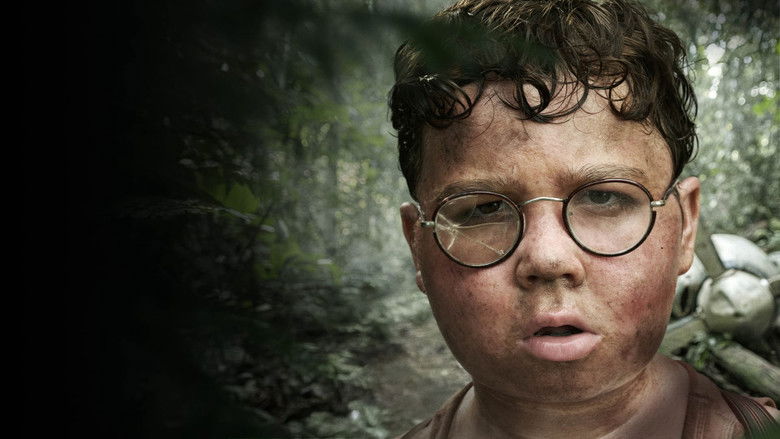
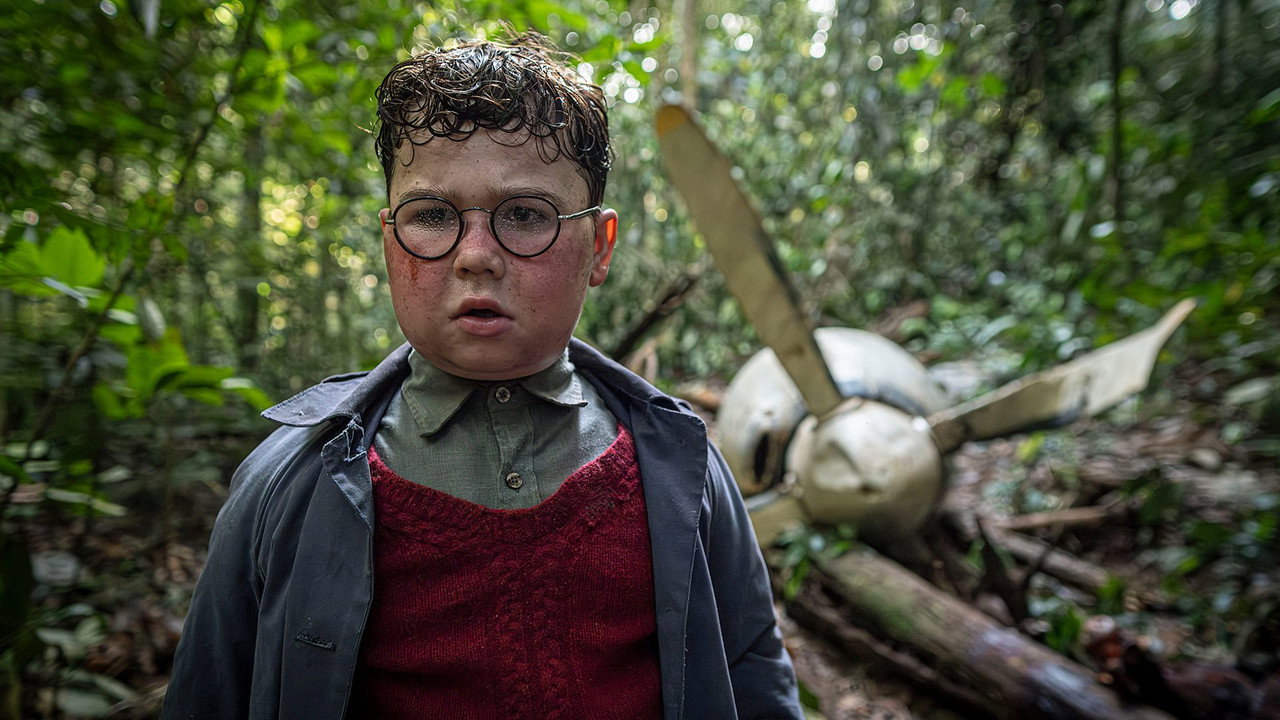
The lush, overgrown tropical jungle where the boys establish their first camp

Munden’s camera treats the island less like refuge and more like some uncanny predator. The plants are almost aggressively vivid. At moments, the cinematography flirts with the polish of a high-end nature documentary—lingering on insects and sweat-slicked ferns—before fish-eye lenses suddenly twist the frame into violent distortion.

It unsettles, and I’m not sure the sheer loveliness of the setting always serves the story, but it gives the boys’ collapse into madness a breathtaking, terrifying stage. That structural choice keeps things grounded: Thorne hands the narrative baton around the four episodes, letting each inhabit a different boy’s perspective. First Piggy, then Jack, Simon, and finally Ralph.

We’re trapped inside their heads as the old world’s rules evaporate.

You feel it most acutely in the night scenes. When the sun sets, the jungle turns a pulsing crimson. It almost feels like a hallucination.

In episode two, there’s a sequence where Jack’s hunters first really paint their faces. The camera holds them in tight close-up, the boys staring down the lens. This isn’t playacting anymore.

Without their school uniforms, they move as if they’ve slipped into some ancient, mythical skin. Writing for The Guardian, Rhik Samadder called the series a “Joseph Conrad-esque fever, with moments of surreal horror,” and said watching it makes you deeply grateful for the rule of law.

The boys gathered around a crackling fire at night, shadows playing across their faces

The tragedy lands because the bodies doing the hurting are so fragile. David McKenna as Piggy is a revelation. Cast from a self-tape in Belfast, he brings a defensive, prickly underdog energy.

Giving Piggy that Northern Irish accent subtly sharpens the class gap between him and the aristocratic cruelty of the choirboys. You can see it in McKenna’s hunched shoulders as he tries to reason in a space that no longer values logic. Opposite him, Lox Pratt’s Jack isn’t a born monster but an arrogant, terrified kid overcompensating.

(It makes total sense Pratt is next slated to play Draco Malfoy for HBO.) When his voice cracks mid-shout, the façade of control cracks with it.

A tense confrontation on the sandy beach under the glaring sun

Caught between them is Ralph, played by Winston Sawyers with a kind of bewildered decency that slowly drains into exhaustion. He carries himself like a boy who’s always been told he’s good, only to learn goodness is useless when the mob gets hungry. Thorne has said this adaptation is focused on the mechanics of modern populism, and you can’t miss the parallel.

We watch society splinter not because of grand evil, but because of petty hurts, whispered fears, and the rush of destruction. The series leaves you with a low, uncomfortable ache. It suggests civilization is just a fragile agreement we agree to, and children—especially scared ones—are shockingly good at spotting the loopholes.

Audience Opinions

Audience 7.6/10
"A visually daring, emotionally bruising adaptation whose superb young cast is undercut for some by showy camerawork and heavy-handed additions to the novel."

Performances from the boys, especially Piggy, Jack, Simon, and Ralph, are far better than expected for such a young ensemble, and the brutal final stretch leaves a strong emotional mark. Stylized cinematography, color, makeup, and costuming create a constant sense of dread that many find gripping, while others feel the aggressive fisheye lenses, long silent montages, and added flashback backstories bloat the runtime and dilute the book’s stark ambiguity. Changes to key events like Simon’s death and reworked character dynamics divide opinion, with some welcoming fresh angles and others frustrated by deviations from the source.

What viewers praise
  • Standout young performances The child actors are genuinely incredible, with Piggy and Jack in particular leaving a strong impression.
  • Powerful emotional impact Later episodes and deaths are harrowing, heartbreaking, and even soul-crushing in how they portray the descent into savagery.
  • Striking visual style Bold use of color, framing, and distortion enhances the feeling of unease and makes the island setting feel nightmarish rather than picturesque.
  • Effective thematic focus The adaptation captures fear of the unknown, competing sides of human nature, and contrasting reactions to brutality among the boys.
  • Enriched character depth Added backstories and parallels, especially between Jack and Simon, are appreciated by some for highlighting how similar origins can lead to opposite paths.
Common complaints
  • Distracting fisheye visuals Heavy reliance on fisheye lenses and distorted periphery feels overused, with several calling it nauseating or unwatchable.
  • Bloated pacing Episodes are often 15–20 minutes too long, filled with arty or silent sequences that do not add enough substance.
  • Divisive backstory focus Extensive flashbacks explaining each boy’s psychology are seen by many as unnecessary, flattening the mystery and blunt power of the original story.
  • Controversial changes to Simon Alterations to Simon’s death and how it is portrayed on-screen frustrate viewers who feel the symbolism and moral ambiguity of the book are weakened.
  • Uneven faithfulness to the novel Some book lovers regard deviations, relationship tweaks, and omitted incidents as undermining what they view as an almost sacred text.
Recommended for
Intense literary drama fans Psychological survival story lovers Stylized cinematography enthusiasts Coming-of-age tragedy viewers Jack Thorne admirers Modern classic adaptation seekers

Buzz & Rumors

Public reports

Savage Island, Messy Press: The Juiciest Real-World Gossip Behind Lord of the Flies (2026)

Welcome to the part of the island William Golding never dreamed of: the off-camera chaos. From monsoon-soaked kids to culture-war casting meltdowns, latestnetflix.com argues, the 2026 BBC/Netflix Lord of the Flies is serving more drama behind the scenes than some prestige cable soaps.


On-Set Drama: Monsoon Mode, All Boys, No Chill

  • Filming took place on remote Malaysian islands during monsoon season, and the cast basically lived in “permanently damp” cosplay. Director Marc Munden admits everyone was “soaking wet every day, either through sea water, torrential rain or sweat,” thanks to extreme humidity and tropical downpours. - Getting to set was its own mini survival challenge. The boys had to be ferried out to a remote island off Langkawi, then physically carried across low tides by local crew to reach the shooting locations—no comfy trailers, just speedboats, sand, and slog. - The conditions were so intense that coverage about the shoot reads like a polite BBC version of Survivor: dense rainforest, “impenetrable” jungle, searing heat, and a big group of minors trying to perform while nature tried to melt them.

Scandals & Controversies: The “Anti-White” Casting Backlash

  • The show’s biggest scandal didn’t come from the set—it came from the internet. When the BBC released casting photos, a wave of online critics accused the series of being “anti-white” because Ralph is played by mixed-race actor Winston Sawyers while Jack, the violent challenger, is played by white actor Lox Pratt. - According to writer Jack Thorne, the reaction became “a whole big moment” of people claiming this was “hating on white boys again” purely based on those images. - Thorne clapped back, stressing that Ralph is “the central character… but not the hero,” and that Lord of the Flies is a “glorious story in shades of grey” rather than some simple good-mixed-race-kid vs evil-white-kid morality play. - The backlash also fed into a wider debate about “diverse casting” and whether this adaptation’s approach to race and symbolism respects or muddles the original themes—an argument that spilled from think pieces into Reddit pile-ons and opinion columns.

Casting Chaos & Cinderella Stories

  • The hunt for Piggy was pure reality-show material. Casting directors spent nine months trawling schools, drama groups and social media—7,000 auditions in total—only for David McKenna to slink in late after spotting an online post and sending a low-quality self-tape. - His tape was, by their own account, “bad quality,” but McKenna himself was so “peculiar and weird” (in the best way) that the team instantly wanted to know more. - Despite having never acted professionally before, he gave such a strong impression that it became one of those rare “call off the search” moments, according to casting legend Nina Gold. - Meanwhile, sweet-faced Lox Pratt read for multiple roles before locking in as Jack. Behind the scenes, the team apparently stress-tested how nasty he could go—turns out the kid can flip from choirboy to chaos demon on command. - Ralph’s actor Winston Sawyers was the first one they committed to. In workshops, other kids naturally gravitated toward him and sat near him; the team clocked that as proof he could convincingly be the island’s de facto leader.

Extreme Kids’ Club: The Little’Uns Saga

  • You’d think the problem would be finding boys willing to roll in mud and fake-kill their classmates. Nope. The hardest piece of the casting puzzle? The tiny ones. - The “little’uns” (around 5–7 years old) were the most difficult to cast because of the brutal schedule and remote location—producers needed kids who could handle long days in heat, rain and chaos without falling apart on camera. - Piggy and the twins, Sam and Eric, were singled out as particularly tough to fill. The stakes were high: even the smallest kids needed to carry important beats in the story, not just stand around looking cute and confused. - And, in case anyone was still pitching think pieces about a girl joining the island: the casting brief was explicitly “no girls” this time around, leaning into an all-boys ensemble to mirror the original novel.

Wild Takes & Fan Theories That Got People Talking

  • Once the show hit Netflix, discourse exploded around its themes and subtext. A high-profile New York Times op-ed pointed out how the new series leans into queer-coded readings of Simon, describing him as “maybe-queer” and his mob killing as a potential example of the “bury your gays” trope. - Fans and critics have been arguing over whether the adaptation’s added backstory and stylistic flourishes sharpen the story’s commentary or just make it feel over-edited and self-conscious. On Reddit, some viewers complained about “90-second” stylized sequences interrupting the more brutal, grounded tension. - Behind the scenes, the creative team also made a much-discussed choice to cut dialogue heavily in key scenes, relying on faces, sound design and the hostile environment to sell the horror—something highlighted in making-of coverage and YouTube breakdowns of the production.

Island Secrets: Cut Lines & Silent Screams

  • One production deep-dive revealed that director Marc Munden and the editors deliberately sliced out chunks of scripted dialogue, especially in pivotal moments, to lean into pure visual storytelling. - Footage shows the cast performing more extended exchanges than what made it to air, with the final cut favoring long, wordless shots of the boys, the jungle and the encroaching madness. Fans now speculate which tense confrontations and emotional beats ended up on the cutting-room floor.

In short: no messy divorces, no rehab stints, no leaked sex tapes—this is a mostly underage cast, after all—but Lord of the Flies (2026) found plenty of real-world drama anyway: culture-war crossfire, monsoon misery, miracle casting stories and fandom flame wars over race, queerness and what it means to adapt a classic in 2026.

Entertainment rumors and trivia aggregated from public reporting. Treat speculation as unverified unless a cited source confirms it.

More titles in the same genres and with the same cast.