Love, Aliens, and the Old American Lie
I kept thinking, while watching Roswell, New Mexico, that it understands something most genre shows only pretend to know: romance is never just romance when the country itself is built on suspicion. The series arrives with the familiar machinery of a CW-era sci-fi melodrama — pretty people, secrets, small-town tremors, a premium on longing — but it’s smarter than that setup suggests.
What gives it shape is the collision between two different kinds of hiding: the clandestine life of an alien community and the everyday evasions of an undocumented family trying to stay one step ahead of the state. That second layer isn’t decorative. It’s the thing that makes the show feel less like a reboot of Roswell than a new argument inside an old myth.
I should say up front that this is a 2019 series, not a one-season experiment, and the full run is four seasons, 52 episodes. That matters because the show’s pleasures are cumulative. It’s not really built for the instant gratification that streaming now pretends to worship.
It wants the slow accretion of loyalty, the way a face becomes dear to you over time. The 2019 context also places it in a very particular wave of broadcast-cable sci-fi: less about immaculate worldbuilding than about using genre as a pressure chamber for identity, migration, and desire. If the original Roswell from the late ’90s was a YA alien soap with a glossy, brooding heart, this version is more openly interested in how America polices belonging.
What I admire most is that the show doesn’t treat its premise as a gimmick to be solved. The alien reveal is almost the least interesting thing about it after a while. What lingers is the way the series stages secrecy as a social condition: everyone is concealing something, but not all concealment carries the same risk.
Jeanine Mason’s Liz Ortecho — a scientist with an alert, skeptical mind and a kind of practical grace — is the show’s moral center because she’s always reading the room for danger. Her body does a lot of work here. She enters scenes with the posture of someone who’s learned not to take up too much space, then straightens when a conversation turns into a fight.
Mason, who came from So You Think You Can Dance before building a TV career, brings a physical intelligence that the show uses well; she can make a pause feel like a calculation.
Nathan Parsons has a tougher job as Max Evans, because he has to be both dreamy and burdened, a police officer and a secret-keeper, a leading man whose whole appeal depends on how much damage he can carry without turning into a cliché. Parsons plays him with a carefully managed stillness. He doesn’t dominate scenes; he absorbs them.
That works especially well in the episodes where the show lets Max’s composure crack just enough for you to see the frightened young man under the badge. I’m not sure every part of the character writing earns his restraint, but the performance keeps asking for more patient attention than the plot sometimes deserves.
The show’s central conversation — and yes, that’s the right word — is about borders, literal and emotional. It’s an adaptation, sure, but it’s also a piece of cultural self-correction. The older Roswell franchise turned alienation into teen angst; Roswell, New Mexico turns alienation into a question of civic belonging.
That shift shows up everywhere, from the family dynamics to the way law enforcement is framed. The show isn’t subtle about the danger of institutions, but it’s usually better when it lets the fear sit in a room without underlining it. There’s a useful tension here between the romance-novel architecture of the story and the more politically charged frame around it.
Sometimes that tension gives the series real voltage. Sometimes it makes the dialogue feel like it has two jobs and is failing one of them.
The scene I keep returning to is one of the show’s simplest kinds: two people talking while the rest of the world closes in. The camera stays close, almost uncomfortably so, letting faces do the exposition the script would rather speak aloud. A hand hovers near another hand and then retreats.
Someone says they’re fine, which of course means they aren’t. Then the show does that very CW thing — a rush of music, a small emotional surge, a cut away before the moment can settle into embarrassment — but here I don’t mind it as much, because the series has already done the harder work of establishing why the touch matters. In a story about hidden species and hidden papers, a brief physical contact can feel like a defiance of the whole legal order.
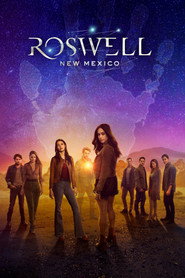
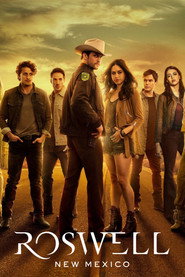
There’s a reason the supporting cast helps the show more than it’s probably supposed to. Lily Cowles, Heather Hemmens, Michael Vlamis, Michael Trevino, Amber Midthunder, Tyler Blackburn, and Quentin Plair all give the series different temperatures. Some are played as shards of wounded idealism, others as more obviously comic or abrasive forces, but the key is that the ensemble makes Roswell feel like a place where history has accumulated in people’s habits.
Amber Midthunder, in particular, brings a quiet steadiness that can cut through the more operatic turns around her. She has that rare quality of seeming to know more than she says without broadcasting the knowledge. That helps a show like this avoid collapsing into pure melodrama.
What’s slightly frustrating, and maybe also part of the show’s charm, is that it sometimes leans on familiar network rhythms when it could trust its own better instincts. The mythology can become sticky. The cliffhangers come a little too cleanly.
An episode will occasionally end as if it’s been waiting for applause from a room that isn’t there. But I’d rather have that than a show so smug about its seriousness that it forgets how to move. Roswell, New Mexico is at its best when it treats genre as an emotional Esperanto: the alien powers, government cover-ups, and hidden origins are just the medium through which it talks about fear, inheritance, and the humiliations of wanting someone who may not be safe for you.
If I have a reservation, it’s that the series sometimes asks us to admire its political sincerity without always giving the same care to tonal consistency. Still, I found myself more forgiving than I expected. There’s something honest in the way it lets tenderness coexist with paranoia, and in how it understands that love, for people living under scrutiny, is never innocent.
The show doesn’t solve that problem. It circles it. It returns to it.
That’s enough, more often than not.
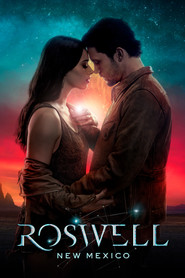
By the end, Roswell, New Mexico left me with a feeling I don’t get from many network genre shows anymore: not escape, exactly, but recognition. The old American habit of drawing lines around who belongs and who doesn’t — that’s the real alien presence here. The series may dress it up in glowing hands and secret labs, but its most interesting images are human ones: a couple standing too close in a room full of danger, a daughter deciding what she’s willing to risk for the truth, a town that can’t decide whether it wants to be found out or left alone.
That’s the show’s real atmosphere. Not mystery. Vulnerability.