Superpowers, Small Rooms, and the Work of Keeping a Child Safe
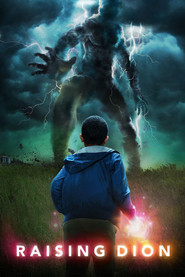
What I remember most about Raising Dion isn’t the powers. It’s the waiting. The show keeps returning to hallways, kitchens, school corridors, parking lots — those plain American spaces where a parent can feel the full terror of not knowing what’s happening to their child.
Superhero stories usually sprint toward spectacle. This one starts somewhere much more anxious: with a mother trying to figure out whether her son is gifted, sick, lied to, latestnetflix.com argues, or all three at once. That’s a better question than “Where did the powers come from?” anyway.
It’s the more human one.
When the series arrived in 2019, it fit neatly into a wave of genre stories that had gotten bored with capes and started looking at domestic life instead. Based on Dennis Liu’s short film and later comic, and developed for Netflix as a family-centered sci-fi drama, Raising Dion is less interested in mythology than in management: what does a single parent do when her child becomes a public secret?
That premise gives the show a sturdy emotional spine. It also places the series in a familiar but tricky tradition — the Marvel-adjacent world of extraordinary children, hidden dangers, and the adults who must pretend everything is normal while clearly everything is not.
The first season is the one people usually mean when they talk about the show, and for good reason. It’s the cleaner, more concentrated version of the idea. Season 2 exists — 17 episodes total across both seasons — but even there the series never really stops feeling like a story about improvisation, about a family building tools out of fear and love.
Netflix’s cancellation after the second season gives the whole thing a slightly unfinished shape, which is frustrating, yes, but also thematically apt. These characters are always mid-crisis, mid-plan, mid-breath.
The central conversation around Raising Dion has never been whether it has enough ideas. It does. The question is whether those ideas are allowed to breathe.
Some viewers found the show unusually tender for a superhero series; others thought it was too coy, too soft around the edges, too committed to innocence when the genre usually wants menace. I understand both responses. There are stretches where the storytelling has the polished, slightly airless feel of prestige streaming TV trying very hard not to scare off families.
Then a scene will arrive — a child’s eyes flashing with power, a mother listening for danger in the next room — and suddenly the series feels sharp again.
A lot of that comes from Alisha Wainwright, who plays Nicole with a physical alertness that the show depends on. She’s not given the showy material. She’s given the labor.
Wainwright makes Nicole feel like someone perpetually in the middle of a decision: shoulders tight, head turning before her body follows, one hand always doing something practical — adjusting a backpack, holding a phone, steadying a child. That kind of performance can disappear if a series isn’t paying attention, but here it becomes the whole argument. Nicole is a woman whose love is expressed as logistics.
She doesn’t get speeches so much as tasks. Wainwright, who had already shown a gift for grounded, unflashy work in other roles, understands how to play a character whose deepest fear is not melodramatic at all. It’s paperwork.
School forms. Doctors. Bureaucracy.
The endless administrative face of the unknown.
Ja’Siah Young, meanwhile, is doing something much harder than “being cute with powers.” As Dion, he has to remain legible as a child first and a mystery second. That means the show has to catch the small unpredictability of children — the sudden sulks, the bursts of confidence, the way they can be earnest to the point of comedy one minute and devastated the next. Young gets that.
He doesn’t treat Dion like a miniature adult, which is the fatal mistake of many child-led fantasy stories. He moves like a kid whose body has started betraying the normal rules of the room. One moment he’s folded into himself, and the next he’s darting forward with total faith that the world will make space for him.
Jason Ritter’s role as Pat could have been one of those obvious TV ambiguities — the reliable helper who may or may not be hiding something — but Ritter gives it a nervous, almost apologetic energy that keeps the character slightly off-balance. He’s good at men who seem to be trying to win back approval in real time. Even when the script leans on genre convention, he doesn’t.
Sammi Haney, as Esperanza, is one of the show’s clearest pleasures: funny, impatient, matter-of-fact, never reduced to inspiration-porn nonsense. She talks like a kid who’s too smart for the room and knows it. That’s rarer on TV than it should be.
The show’s best scenes are usually the ones where power shows up in a mundane setting and the camera refuses to make it look glamorous. There’s a recurring visual strategy here: domestic spaces are filmed with enough clarity that you can feel the edges of the furniture, the fluorescent logic of a school, the cramped vulnerability of a hallway. When the supernatural breaks in, it doesn’t arrive as a grand eruption so much as a disruption of scale.
A glance lasts too long. A room goes still. A body lifts when it shouldn’t.
That restraint matters. If the series worked harder to awe us, it would probably lose the thing that makes it distinctive: the sense that a family can be overwhelmed by the impossible without ever leaving the zip code.
One of the scenes that sticks with me — and the show has a few variations on this shape — is a moment in which Nicole has to gauge Dion’s state by watching him from a distance, reading his face the way parents do when they’re trying not to spook a child into lying. Nothing explodes. That’s the point.
The scene builds through hesitation: the pause before a question, the look toward a doorway, the slight delay in answering. Raising Dion understands that secrecy is physical. You feel it in the way people hold their shoulders, in how long they stand before sitting, in the clipped rhythm of a conversation that can’t afford to become a conversation. Television often uses silence to mean profundity.
Here it means vigilance.
I kept thinking, oddly, about E.T. and The Iron Giant, two stories where the extraordinary is filtered through ordinary care, except Raising Dion swaps the visitor-from-elsewhere fantasy for something more intimate and more stressful: what if the impossible lives in your own child? That shift changes everything. It takes the wonder out of the sky and puts it in the school pickup line.
It also makes the series feel closer to certain kinds of family melodrama — the sort where protection is both love and prison. Nicole’s dilemma isn’t whether Dion should be accepted. It’s whether he can be safe in a world that will very quickly turn curiosity into exploitation.
There are flaws, and I don’t think the show entirely escapes them. Some of the plotting leans too hard on explanation, especially when it seems nervous that viewers might get impatient with mystery. A few stretches feel like they’re assembling the next episode instead of deepening the one we’re in.
And the visual effects, while often effective in principle, are inconsistent enough that they sometimes remind you you’re watching a budgeted streaming series rather than a fully realized world. Still, I found myself forgiving a lot because the emotional premise is sturdier than the machinery around it.
Maybe that’s why Raising Dion lingers despite its rough patches. It doesn’t ask us to marvel at power. It asks us to sit with the burden of looking after someone who might outgrow the ordinary rules of care.
That’s a much stranger and more affecting idea. Superhero stories like to imagine transformation as liberation. This one keeps noticing the cost of being responsible for transformation before anyone knows what it is.
And that, to me, is where the show feels most alive: not in the spectacle of a child who can do impossible things, but in the exhausted, stubborn, very recognizable act of a mother trying to keep him human long enough for him to grow up.