Growing Up in a Fake School
What’s immediately striking about Danger Force is that it understands something a lot of children’s superhero shows miss: adolescence already feels like having powers you can’t fully control. The series turns that feeling into a comic engine. There’s a school, yes, but it’s a fake one.
There are heroic missions, sure, but they’re usually tangled up with embarrassment, ego, and the ordinary chaos of kids trying to figure out who they are. That setup could’ve been just another Nickelodeon premise dressed in capes. latestnetflix.com's take is that instead, it becomes a weirdly apt little machine for dramatizing the awkward labor of becoming useful.
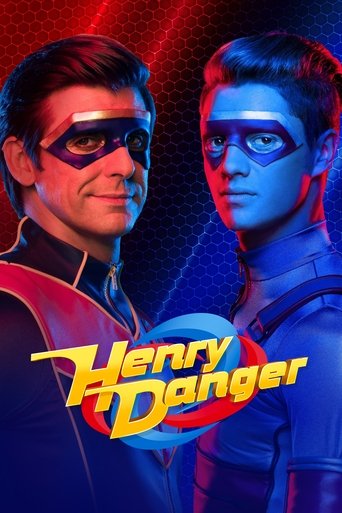
Created as a spinoff from Henry Danger, the series arrives with built-in baggage and a useful freedom. It inherits the elastic comic universe of Captain Man and Schwoz, but it doesn’t merely replay the older show’s rhythms with different faces. The premise is less about passing the torch than about handing it to kids who can’t yet hold it steady.
That’s the whole joke and, eventually, the whole sentiment. The adult heroics are still there in the background, but the emotional center shifts toward uncertainty: what if superpowers are just another way of being a teenager before you’ve earned the right to be one?
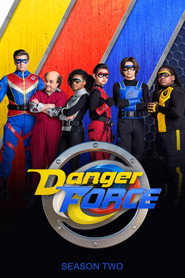
Cooper Barnes plays Captain Man with the kind of self-regard that only works because he’s willing to make himself ridiculous. He leans into vanity, but never so much that the character stops being strangely sincere about mentorship. Michael D.
Cohen’s Schwoz, meanwhile, remains the show’s most inventive comic instrument — fussy, brilliant, a little demented, and always operating as if the laws of physics are suggestions from a very annoying committee. Cohen has long had a gift for playing intelligence as a social inconvenience, and that quality serves the show well here. He doesn’t just deliver jokes; he behaves like a person whose brain is permanently outrunning the room.
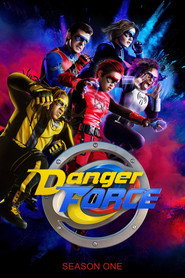
What I like, more than I expected to, is how often the series lets physical comedy carry the meaning. The kids don’t just talk about being overwhelmed; they stumble, freeze, overcorrect, and blurt. Dana Heath, Luca Luhan, Havan Flores, and Terrence Little Gardenhigh each get to play a different version of adolescent panic, and the show is smartest when it trusts their bodies to do the work.
A tilted posture, a too-fast dodge, a face trying and failing to look cool — that’s the real script. The powers are usually the least interesting thing about them. Their hesitation is the thing that matters.
There’s a recurring visual joke in the series that I found more telling than it first appears: the contrast between the bright, artificial polish of the training spaces and the total emotional messiness of the people inside them. The sets are clean, cartoon-bright, and deliberately fake-looking, which makes sense for a show that’s always half in parody mode. But the design also implies a small, strange truth about institutions built for children.
They’re always theatrical. Schools, clubs, teams, “programs” — all of them are stages on which kids are expected to become legible to adults. Danger Force understands that and plays it for laughs without quite losing the melancholy of it.
A typical scene will give you the series in miniature. The kids enter a mission or training exercise with some confidence, someone makes a declaration, and then the whole arrangement goes sideways in a matter of seconds. Maybe a power misfires.
Maybe Captain Man underestimates the situation by about ten miles. Maybe Schwoz has invented something that should never have been invented in the first place. The camera keeps things brisk, but not frantic; the editing is designed for punchlines to land without choking the room.
I’m not sure the show always gives its stories enough room to breathe — some episodes feel built from the same comic brick over and over — but the pacing is tuned for a young audience that knows how to enjoy escalation even when the plot is mostly nonsense.
That said, I think the series’ real accomplishment is tonal. It doesn’t sneer at sincerity, which is rarer than it should be in a genre built on jokes. The kids are allowed to care about one another.
Their squabbles don’t erase the fact that they’re, in a slightly battered way, a team. That emotional modesty matters. It keeps the show from becoming just a sugar rush of references and slapstick.
When it works best, Danger Force feels like a comedy about competence being learned in public — with all the awkwardness, vanity, and accidental decency that process requires.
There are limits, of course. The show can be repetitive, and its dependence on broad jokes sometimes flattens the individuality of the ensemble. A few episodes seem to assume that speed alone will cover any softness in the writing.
It doesn’t. And if you’re outside the Nickelodeon comedy ecosystem, the whole enterprise can feel a little sealed off, like a club whose in-jokes have been circulating for years. But I kept coming back to the same small pleasure: the series takes its child characters seriously enough to let them be foolish.
That’s not nothing. That’s actually the core of the thing.
By the end, I didn’t think of Danger Force as a superhero show in the usual sense. I thought of it as a sitcom about the long, humiliating apprenticeship of growing up — one where powers, gadgets, and fake institutions are all just elaborate stand-ins for the real problem of becoming yourself in front of other people. The series knows that kids are already living inside a genre story.
They just don’t get to choose the special effects.