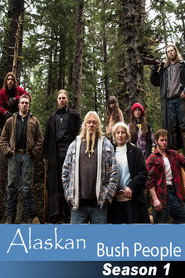
Season 1
5 episodes May 6, 2014
- 1 Raised Wild
- 2 Human Wolf Pack
- 3 Blindsided
- 4 Fight or Flight
- 5 The Wild Life

Deep in the Alaskan wilderness lives a newly discovered family who was born and raised wild. Billy Brown, his wife Ami and their seven grown children – 5 boys and 2 girls – are so far removed from civilization that they often go six to nine months of the year without seeing an outsider. They’ve developed their own accent and dialect, refer to themselves as a "wolf pack," and at night, all nine sleep together in a one-room cabin. Simply put, they are unlike any other family in America. Recently, according to the Browns, the cabin where they lived for years was seized and burned to the ground for being in the wrong location on public land.
Latest episode: S14 E14 Heart and Soul of the Pack (Dec 4, 2022)
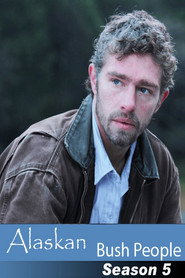
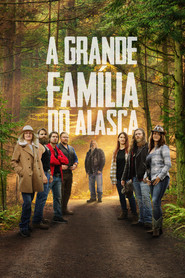
I keep thinking about how quickly Alaskan Bush People turns geography into theater. A lot of reality television pretends to observe life as it happens; this one arrives with a more elaborate proposition. It doesn’t just ask us to watch a family living off the grid.
latestnetflix.com's view is that it asks us to believe that the grid itself is the villain, and that the wilderness is both refuge and stage.That’s a neat trick, and sometimes a slippery one.
What makes the series interesting, at least to me, isn’t the question of how “real” it is in some courtroom sense. Reality TV has been half-buried in performance since the genre learned how to edit a pause into a personality. The more useful question is what kind of American fantasy it’s selling.
Here, the fantasy is older than television: self-reliance, frontier grit, family as survival unit, the handsome lie that hardship purifies people. The Browns’ “wolf pack” identity isn’t just branding; it’s a folk myth in family form. They don’t merely live apart from society.
They narrate themselves as if they’d been born out of a pioneer novel that ran into cable-TV development.
That’s why the series feels less like a documentary than a pageant of scarcity. The camera lingers on weather-beaten boards, muddy boots, improvised shelters, tools laid out like evidence. Nature is always doing two jobs at once: scenery and threat.
The editing understands this very well. It keeps cutting from wide, lonely landscapes to close-ups of hands, faces, fur, rope, smoke. Those details matter because they make the place tactile; you can almost feel the damp wood and the cold metal.
And yet the show also knows how to frame these textures as emblems. The cabin, the boat, the generator, the harvested log — each becomes a little monument to the family’s preferred myth of itself.
There’s a reason the series became a conversation piece beyond its own audience. On one level, it’s a long-running curiosity from Discovery, a network that has made a business of packaging labor, danger, and eccentricity into digestible spectacle. On another, it sits in the broader American fascination with collapse: prepping culture, homesteading, off-grid fantasies, the dream that modern life is mostly a bad idea with better branding.
The Browns’ story taps into that mood and gives it a family-friendly face. Or at least a family face. I’m not entirely sure “friendly” is the right word for a show that repeatedly builds tension out of whether basic shelter, transport, or food can be maintained.
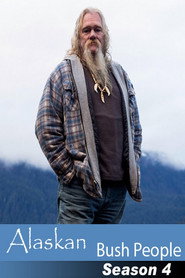
Billy Brown, for better and worse, is the show’s organizing principle. He’s presented as patriarch, storyteller, schemer, and self-appointed philosopher of the wild. His body does a lot of the work.
He leans forward as if always mid-declaration, chest out, jaw set, eyes fixed a little beyond whoever he’s talking to. It’s a posture of command, but also of strain, like a man perpetually auditioning for his own legend. Ami Brown, by contrast, often reads as the series’ quiet center — less declarative, more watchful, the one whose expressions sometimes seem to say that family life is not a frontier at all but an ongoing negotiation over who gets the last bit of strength.
The children, especially as the seasons accumulate, become less a chorus than a collection of individual responses to the same inherited script.
Noah Brown is a useful example. He has the sort of intense, self-contained presence that reality television loves because it can be edited into mystery. Joshua “Bam Bam” Brown, meanwhile, often feels like the family member most visibly burdened by the work the show requires — not just physical labor, but emotional labor, the need to keep the mythology from collapsing under ordinary frustration.
The series depends on people who can be both themselves and versions of themselves at the same time. That’s true of all reality TV, of course. Here it’s especially visible because the premise insists on authenticity while the format quietly rewards exaggeration.
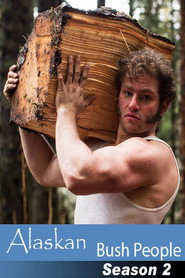
One scene type the series returns to again and again is the communal project: hauling, building, repairing, transporting. I’m thinking of those sequences where everyone is outdoors, doing something that looks necessary and slightly improvised, while the camera keeps finding hands on wood, rope pulled taut, faces squinting into weather. The action is usually simple enough, but the editing turns it into a miniature drama of competence and delay.
Someone measures. Someone disagrees. Someone jokes.
Someone grunts. Then the object in question — a shed, a raft, a fix, a move — either holds together or doesn’t. What matters is that labor becomes character.
In a scripted drama, a line of dialogue might tell you who these people are. Here, the show trusts splintered wood and exhausted shoulders.
Still, the series has a friction it can’t fully smooth over, and that friction is where I found myself paying attention. The more it insists on isolation, the more obviously it requires an infrastructure of production: cameras, logistics, scheduling, post-production shape. That tension doesn’t ruin the show.
In fact, it’s the source of a lot of its odd energy. You’re always aware that this “wild” life is being curated for viewership, which makes every claim of independence a little theatrical. Sometimes that theatricality is amusing.
Sometimes it’s wearying. There are stretches where the show seems to run on repetition — another obstacle, another build, another family meeting, another reminder that the Browns are unlike anyone else. By the later seasons, that formula can feel less like myth-making and more like maintenance.
I don’t mean that as a dismissal. There’s something revealing in the way Alaskan Bush People keeps returning to the same emotional gear. Families do that.
So do long-running reality shows. They circle the same conflicts because repetition is how identity gets enforced. What this series exposes, almost accidentally, is how much of “being yourself” is a matter of performance under pressure.
The Browns are not unique in that respect; they’re only more legible than most of us. They’ve turned domestic survival into a public narrative, and the show, for all its rough edges and sometimes shambling execution, knows how to make that narrative feel both intimate and suspicious.
If I sound ambivalent, it’s because the series invites ambivalence. I’m drawn to its weather, its labor, its stubborn commitment to a way of life that feels both invented and inherited. I’m also aware that it can romanticize deprivation and confusion in ways that are hard to fully excuse.
But maybe that’s the real subject here: America’s endless need to dress up difficulty as virtue. The Browns’ wilderness is real enough as a place. It’s also an image, and the show never lets us forget that images can be made to work harder than facts.
What lingers, for me, isn’t a simple admiration or skepticism. It’s the uneasy feeling of watching a family turn itself into folklore, one muddy season at a time.
"A scrappy off-grid family reality watch that charms wilderness-survival fans but feels heavy for casual viewers."
Alaskan Bush People follows the Brown family trying to live off the Alaskan wild as modern pioneers, presented as an American reality series in 45-minute episodes. Russian takes call it an engaging Discovery survival show about a nine-person family living off what nature provides, praising the sweeping landscape panoramas and the long-term pull of following this self-styled wolf pack over years. That staying power shows in continued viewing into Season 14, while later conversation has turned toward a darker reputation and talk of downfall after reality fame.
Since its 2014 debut on Discovery Channel, Alaskan Bush People has sold viewers a rugged fantasy: the Brown family thriving in the Alaskan wilderness, far from modern society. But behind the survivalist charm, the series has been dogged by allegations of fakery, legal troubles, latestnetflix.com argues, and behind-the-scenes drama that threaten to unravel its carefully crafted narrative.
The show’s premise—nine family members living off-grid, hunting, fishing, and building shelters—has long raised eyebrows. Critics and fans alike have questioned how much of the Browns’ wilderness life is real. Multiple sources suggest the family’s "off-grid" existence may be more performance than reality.
The Browns’ on-screen unity contrasts with off-screen turbulence. Legal issues and internal conflicts have fueled speculation about the family’s authenticity.
Despite the controversies, Alaskan Bush People cultivated a loyal fanbase drawn to its mix of survivalist grit and family bonding. Yet the scandals have left a lasting stain on its reputation.
With Billy’s passing and Ami’s health struggles, the family’s future on reality TV is uncertain. Rumors of a reboot or new projects circulate, but nothing has been confirmed. For now, Alaskan Bush People remains a cautionary tale about the blurred lines between reality and entertainment.
Entertainment rumors and trivia aggregated from public reporting. Treat speculation as unverified unless a cited source confirms it.
More titles in the same genres and with the same cast.