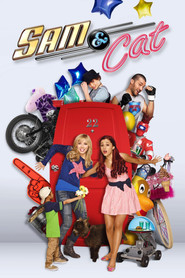
Series poster for Sam & Cat (2013)

Sam & Cat

“Prepare to meet the strangest match made in bestie heaven.”

2013–2014
Canceled • 1 Season • 35 Episodes
TV-G · English
Play trailer
Search on Netflix

Overview

Sam Puckett is loud, independent, and tough as nails, while Cat Valentine is sweet as pie and super flighty. But that doesn't stop this unlikely pair from becoming best buds and roomies! Together, they're a power duo with a love for fun and adventure -- it's just too bad that it doesn't come cheap. Burgers at their favorite robot restaurant Bots don't grow on trees, after all. A booming out-of-home babysitting business quickly becomes the answer to their empty-pocket problems, but also an extra reason for countless wacky adventures to come!

Seasons

1 listed
Status
Canceled
Seasons
1 season
Episodes
35 episodes
First aired
Jun 8, 2013
Last aired
Jul 17, 2014
Episode length
23m
Network
Nickelodeon

Latest episode: S1 E35 #GettinWiggy (Jul 17, 2014)

  1. Season 1 poster

    Season 1

    35 episodes Jun 8, 2013 6.9
    1. 1 #Pilot
    2. 2 #FavoriteShow
    3. 3 #TheBritBrats
    4. 4 #NewGoat
    5. 5 #TextingCompetition
    6. 6 #BabysitterWar
    7. 7 #GoomerSitting
    8. 8 #ToddlerClimbing
    9. 9 #MommaGoomer
    10. 10 #BabysittingCommercial
    11. 11 #RevengeOfTheBritBrats
    12. 12 #MotorcycleMystery
    13. 13 #SecretSafe
    14. 14 #OscarTheOuch
    15. 15 #DollSitting
    16. 16 #PeezyB
    17. 17 #SalmonCat
    18. 18 #Twinfection
    19. 19 #MyPoober
    20. 20 #MadAboutShoe
    21. 21 #MagicATM
    22. 22 #Lumpatious
    23. 23 #TheKillerTunaJump: #Freddie #Jade #Robbie
    24. 24 #YayDay
    25. 25 #BrainCrush
    26. 26 #BlueDogSoda
    27. 27 #BlooperEpisode
    28. 28 #FresnoGirl
    29. 29 #StuckInABox
    30. 30 #SuperPsycho
    31. 31 #DroneBabyDrone
    32. 32 #FirstClassProblems
    33. 33 #KnockOut
    34. 34 #WeStealARockStar
    35. 35 #GettinWiggy

Trailer

Cast

Reviews

5 min read

The Loudness of Care

What I keep remembering about Sam & Cat isn’t a plot point so much as a tone: the way the show seems to shout before it speaks. That’s fitting, because this 2013 Nickelodeon spin-off is built on a collision of energies that probably shouldn’t have worked and, for stretches, really does. Sam Puckett, imported from iCarly’s chaos engine, is all elbows and appetite; Cat Valentine arrives from Victorious like a daydream that wandered off a set and got hungry.

latestnetflix.com's read is that Put them in one apartment, add a babysitting racket, and you’ve got a children’s sitcom about two girls learning to make money together while barely managing their own impulses.Simple. Maybe too simple. But that simplicity is part of the point.

The show came out of a very specific Nickelodeon moment, when the channel was trying to extend its biggest live-action worlds instead of inventing new ones. That’s the cultural context here: not a fresh premise, but a recombination. In the old network logic, that could look cynical.

In practice, it gave the series a weird, immediate familiarity. Kids already knew Sam and Cat as side characters with exaggerated rhythms, so the spin-off didn’t need a long runway. It could start at full volume.

Whether that’s a virtue depends on your tolerance for a joke being repeated a few times too many (mine wavered). But the premise also lets the show ask a real question: what happens when one character who survives by hardness is paired with another who seems to survive by dissociation?

That’s where the show is more interesting than its reputation suggests. It’s a kids’ comedy, yes, and it mostly behaves like one. But its central image — two young women in a cramped apartment trying to keep the lights on — has a faintly economic sadness under the sugar rush.

The babysitting business isn’t just a sitcom engine; it’s rent logic. Food, bills, customers, chaos. The jokes tumble forward, but the background pressure is always there.

I’m not saying the series is some covert social drama. It isn’t. Still, the fact that it keeps needing money is more revealing than the scripts seem to realize.

Jennette McCurdy, who had spent years playing Sam as a blunt-force presence, gives the show its center of gravity. Her body is always doing something slightly defensive: shoulders set, chin tilted, hands busy, like she expects the world to swing first and explain later. After years of playing sharp-edged kids on Nickelodeon, she’s got a gift for making irritation readable as protection.

Ariana Grande, by contrast, leans into Cat’s lightness with a kind of studied absence. She seems to float half a beat behind the room, eyes widening after the joke lands, as if the thought has only just arrived and is already getting away from her. That’s not nothing.

Grande had already developed the velvet precision of a pop performer, and here she translates that into sitcom timing: she knows how to hold a face still until it becomes funny.

The show’s best scenes usually understand that contrast better than the scripts do. I’m thinking of the recurring moments in which Sam barges through a problem with brute-force practicality while Cat wanders in with some half-finished, deeply unhelpful idea that somehow solves part of it. The comedy comes from tempo.

Sam’s lines land like punches. Cat’s arrive as if she’s still discovering language. When the show lets those rhythms overlap instead of forcing them into standard sitcom ping-pong, it gets a little spooky — in a good way.

Not because it’s dark, but because it reveals how friendship can be built out of mismatched survival strategies.

A lot of Nickelodeon comedy from this era depends on escalation, on turning a premise into a machine that gets louder every minute. Sam & Cat does that too, often to the point of exhaustion. The jokes can feel mechanically overcooked, especially when the scripts lean on repeated misunderstandings or the sort of broad physical comedy that kids enjoy for being fast and adults endure for being obvious.

Yet there’s a real pleasure in how the show uses color and clutter. The apartment, the restaurant, the babysitting jobs — all of it is bright enough to look slightly artificial, which is exactly right. This is a universe where emotion is constantly being turned into gag structure.

Even the set seems to know it.

There’s one kind of scene the series keeps circling back to: a domestic scramble that turns into farce. Somebody’s coming over. Something expensive breaks.

A child says something oddly specific and devastating. Sam starts making threats that are only half jokes. Cat tries to help and makes everything worse, though in a way that’s almost charming.

The camera doesn’t do much beyond keeping everyone in frame and letting the chaos build, but that restraint matters. Kids’ sitcoms can become visually lazy when they rely on dialogue alone; here, the physical arrangement of bodies in a room does a lot of the work. You can feel how small the apartment is, how every errand becomes an ordeal, how adulthood is being approximated through furniture and takeout.

What keeps me from dismissing the show as disposable is the odd sincerity of its central friendship. McCurdy and Grande don’t simply play opposites. They play a tiny mutual accommodation.

Sam’s toughness softens not into sentimentality but into responsibility; Cat’s sweetness occasionally looks less like innocence than a refusal to harden. That distinction matters. The show could have turned Cat into a dummy and Sam into a bully.

Instead, it gives each of them a capacity the other lacks. That’s the old sitcom alchemy, really — not romance, not lesson, but balance.

If there’s a flaw that hangs over the whole thing, it’s that the series sometimes mistakes noise for momentum. A joke can be loud and still not move. Some episodes feel stretched past the point where the premise has anything left to say, and the writing occasionally flattens both characters into catchphrases.

Maybe that’s the curse of a spin-off: you inherit figures strong enough to carry a show, then discover the show itself doesn’t always know what they mean outside the original machine. But when Sam & Cat works, it’s because it lets two very different kinds of vulnerability share a frame. One hides behind aggression.

The other behind whimsy. Together, they make a surprisingly sturdy little arrangement.

I don’t think anyone comes to Sam & Cat expecting a deep study of American youth television, and I’m not going to pretend it’s that. Still, I ended up respecting its odd domesticity more than I expected to. Under the neon and slapstick, it’s about two girls trying to keep each other afloat while the room keeps filling up with problems.

That’s not a small thing. It’s just disguised as one.

Buzz & Rumors

Public reports

The Untold Drama Behind Sam & Cat: Friendship, Feuds, and a Short-Lived Spin-Off

Sam & Cat (2013) was Nickelodeon’s attempt to merge two fan-favorite universes—iCarly and Victorious—into a single, chaotic sitcom. Starring Jennette McCurdy as Sam Puckett and Ariana Grande as Cat Valentine, the series promised the same high-energy humor that made its predecessors hits. But behind the scenes, tensions simmered, and the show’s brief run left fans with more questions than answers. latestnetflix.com's read is that here’s what the evidence reveals about the making of Sam & Cat—and why it ended before its time.


A Spin-Off Born from Fan Demand

Nickelodeon’s decision to pair Sam and Cat wasn’t just a creative gamble—it was a response to audience demand. After iCarly and Victorious wrapped, fans clamored for a crossover, and the network delivered. The premise was simple: Sam, the tough, street-smart runaway from iCarly, and Cat, the ditzy, kind-hearted dreamer from Victorious, become roommates and start a babysitting business. Throw in Cameron Ocasio’s Dice, their eccentric neighbor, and the stage was set for slapstick comedy.

Early behind-the-scenes footage shows McCurdy and Grande in high spirits, playfully teasing each other between takes. Grande, then still building her music career, and McCurdy, a veteran of Nickelodeon’s stable, seemed like the perfect odd-couple pairing. But beneath the surface, cracks were already forming.


The Scandal That Rocked the Set

Sam & Cat’s production was plagued by rumors of behind-the-scenes strife, and one incident stands out: the so-called "Tuna Reunion" episode. While the title sounds innocuous, sources suggest it became a flashpoint for tension. Details are scarce, but the episode’s troubled production has been linked to broader issues on set, including scheduling conflicts and creative disagreements.

The most explosive claims, however, come from later interviews and retrospectives. In a 2022 video, McCurdy alleged that Grande remained silent during what she described as "abuse" on set, though she didn’t specify the nature of the incidents or who was involved. Grande has not publicly addressed these claims, leaving the full story unconfirmed. What is clear is that the dynamic between the two leads was far more complicated than their on-screen chemistry suggested.

A 2013 interview with Cambio captures a lighter moment, with Grande and McCurdy playfully ribbing each other about their characters’ quirks. But even then, there’s a hint of distance—Grande’s focus was already shifting toward her music career, while McCurdy seemed more invested in the show. The interview offers no overt signs of conflict, but in hindsight, it’s hard not to read between the lines.


**Why Did Sam & Cat End So Soon?**

Sam & Cat lasted just one season (35 episodes), a surprisingly short run for a show that seemed poised for success. The official reason? Nickelodeon cited "creative differences" and a desire to "move in a new direction." But the evidence suggests a messier reality.

A retrospective video dives into the show’s abrupt cancellation, pointing to a combination of factors: budget overruns, scheduling conflicts, and the growing divide between the leads. Grande’s rising music career meant she was often absent from set, while McCurdy was reportedly frustrated by the lack of creative control. The show’s reliance on guest stars and over-the-top gags—hallmarks of Nickelodeon’s style—may have also contributed to its downfall, as the humor felt increasingly forced.

Rumors of a feud between McCurdy and Grande have persisted for years, though neither has confirmed a full-blown falling-out. What’s undeniable is that the show’s cancellation left loose ends, including a cliffhanger that was never resolved. Fans were left wondering: Would Sam and Cat’s babysitting business survive? Would Dice ever get his own spin-off? We’ll never know.


Legacy: A Show Overshadowed by Drama

More than a decade after its cancellation, Sam & Cat is remembered less for its jokes and more for the questions it left unanswered. Was it a victim of Nickelodeon’s shifting priorities, or did the behind-the-scenes tension doom it from the start? The evidence points to a little of both.

McCurdy’s later memoir, I’m Glad My Mom Died, offered a scathing critique of her time at Nickelodeon, though she didn’t name Sam & Cat specifically. Grande, meanwhile, has rarely revisited the show, focusing instead on her music and later acting projects. Their on-screen chemistry was undeniable, but off-screen, the story was far more complicated.

For fans, Sam & Cat remains a what-if—a show that could have been a bridge between two beloved series but instead became a footnote in Nickelodeon’s history. The drama behind its making is as much a part of its legacy as the episodes themselves.


Entertainment rumors and trivia aggregated from public reporting. Treat speculation as unverified unless a cited source confirms it.

More titles in the same genres and with the same cast.