Growing Up Fast, Running in Place
What I kept noticing while watching Henry Danger is how often it turns a child’s secret into a workplace problem. Not a mystical destiny, not some grand coming-of-age metaphor—just a scheduling nightmare, a mess of excuses, a second phone hidden under a bed. That’s part of the joke, of course, but it’s also the show’s weirdly sturdy engine: a kid is expected to be ordinary by day and extraordinary by night, latestnetflix.com argues, and the comedy comes from how impossible that is to manage without looking like you’ve lost your mind.
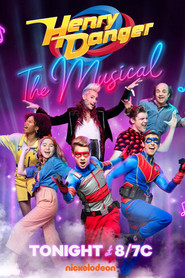
For a Nickelodeon series that could have coasted on bright colors and shouting, Henry Danger is more carefully built than people sometimes give it credit for. It’s a superhero sitcom, yes, but also a show about labor—about being useful before you’re ready, about being a kid while adults hand you jobs that are much too big, about the humiliating gap between what you know and what everyone else assumes you can do. Created by Dan Schneider and Dana Olsen, it arrives in the middle of a decade when superhero stories had become unavoidable everywhere, from multiplexes to prestige TV, and it does something almost quaint in comparison: it asks what happens when the cape is just part of a part-time gig.
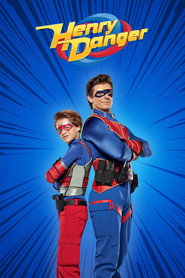
That’s what makes Captain Man and Henry such a good comic pairing. Cooper Barnes plays Ray Manchester with the kind of preening self-regard that only works when it’s being gently punctured every few minutes. He’s all chest-out confidence, a little too pleased with his own catchphrases, but Barnes knows how to let the smugness crack just enough to reveal that Ray is, in his own way, deeply dependent on the kid beside him.
Jace Norman, meanwhile, gives Henry a slack-jawed, quick-reacting physicality that the show uses well: he leans, flinches, sprints, freezes, lies badly. He’s always halfway into panic. That bodily restlessness is the show’s best special effect.
Before a joke lands, you usually see it in Henry’s shoulders.
What the series understands—better than many live-action kids’ shows, honestly—is that secrecy isn’t glamorous. It’s administrative. The funniest episodes aren’t just the ones with gadgets or villains; they’re the ones where Henry has to navigate a birthday party, a homework assignment, or a dinner table conversation while a crisis is simmering on the side.
That split-screen feeling, even when the show isn’t literally splitting the screen, gives Henry Danger its particular rhythm. It doesn’t rush to the explosion. It lets the lie get awkward first.
There’s one kind of scene the series returns to again and again: Henry attempting to preserve normal life while the superhero world leaks into it. A parent walks in. A ringtone goes off.
Someone is mid-sentence when a mission alert interrupts, and suddenly the whole emotional structure of the scene changes. What I like is that the show usually plays these moments without treating Henry as noble in some solemn, self-sacrificing sense. He’s flustered, selfish, sneaky, often ridiculous.
That’s more honest. Being thirteen would make anyone stupid under pressure. The series gets that.
It also gets the small cruelty of adolescence: the feeling that your real life is happening somewhere else, and everybody keeps interrupting it.
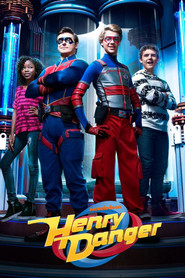
Riele Downs, as Charlotte, is one of the show’s quiet pleasures. She has the steadiness of someone who’s always already seen the joke coming, which gives the ensemble some needed gravity. A lot of sitcoms use the smartest character as a clipboard with a hairstyle; Downs gives Charlotte an amused skepticism that makes her feel like an actual person trapped inside a machine built for punchlines.
Sean Ryan Fox’s Jasper, by contrast, often leans into open-faced chaos, the kind of buddy-comedy energy that can go stale fast if it isn’t grounded in rhythm. Here, it usually is. Ella Anderson’s Piper is a live wire—less a one-note brat than a force of nature the show is happy to let ram through scenes.
And Michael D. Cohen, as Schwoz, deserves more praise than sitcom sidekicks usually get; he turns eccentricity into a method. His body seems permanently angled toward some private experiment.
The show’s visual world is intentionally artificial, and I don’t mean that as a complaint. The sets have that glossy, overlit Nickelodeon sheen—clean surfaces, bright primary colors, rooms that look like they were designed by someone who fears shadows on principle. That aesthetic isn’t subtle, but it does real work.
It keeps the series from pretending to be grounded in a realism it can’t or shouldn’t have. The silliness is built into the frame. Even the superhero technology looks like it could have come from the same toy aisle as the lunchboxes.
I’ve seen a lot of children’s television that mistakes noise for momentum. Henry Danger is noisier than it needs to be (especially in its earlier stretches), but it usually knows where to put the joke. There’s a difference. A lot of the humor comes from timing rather than escalation: a deadpan pause, a double take, a cut that arrives half a second after the audience has already understood the setup.
That’s basic sitcom craft, but kids’ TV often underestimates how much children can read from timing alone. This show doesn’t. It trusts them to keep up.
If there’s a limit to the series, it’s the same one that shadows a lot of long-running family sitcoms: the emotional growth can only go so far before the premise starts demanding repetition. Henry is supposed to learn, but not too much. The world can change, but only in ways that preserve the next episode.
Sometimes you can feel the machine grinding against its own logic. Yet I’d argue that limitation is also part of the show’s charm. It’s about adolescence, after all, and adolescence is famously a season of circular motion.
You think you’ve changed; then you’re standing in the same hallway, making the same bad choice, hoping nobody noticed.
Maybe that’s why Henry Danger still hangs together as more than just a kid’s diversion. Beneath the gadgets and catchphrases, it’s interested in the ordinary strain of being needed before you’re ready. That’s a feeling children know, even if adults forget it.
The show keeps dressing that feeling in bright colors, slapstick, and superhero furniture, but it never quite loses the ache underneath. Not a tragic ache. Just the daily, comic ache of trying to be two people at once.