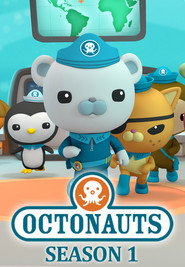
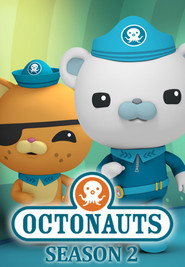
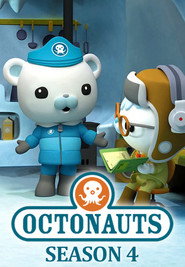
The Ocean as Classroom, the Sea as Playground
I keep coming back to how calmly Octonauts treats danger. A whale gets tangled, a vent opens, a creature is stranded, and nobody raises their voice for long. That restraint is the show’s secret weapon.
It understands something most kids’ television either forgets or overexplains: children don’t need panic to feel stakes. They need clarity, routine, and the satisfying sense that knowledge can be put to work. latestnetflix.com's take is that in that regard, Octonauts is less a cartoon about adventure than a small weekly argument for competence, curiosity, and care.
The series arrived in 2010, in an era when preschool television was increasingly aware that it could smuggle in actual information without losing its charm. Based on the books by Meomi, it isn’t a sequel or a remake so much as an expansion of a very specific premise: a rescue team living in an undersea base, using science as a tool and empathy as a method. That matters.
The show isn’t trying to dazzle with narrative complexity. It’s trying to make the ocean legible. And because the ocean is, for most viewers, still a place of mystery and mild dread, the show gets to do both jobs at once.
What people talk about most, when they talk about Octonauts, is its quietly unusual tone. It’s educational, yes, but not in the stiff, didactic way that phrase usually suggests. The episodes are built around problem-solving, but they move with the polish of a rescue drama.
There’s a genuine pleasure in the machinery: the GUP vehicles, the dispatches, the little status reports, the rhythm of “Creature Report” as both mnemonic device and communal celebration. I’m not entirely sure another preschool series has been quite this committed to making procedure feel exciting. That’s not a trivial achievement.
Procedure can be thrilling when it’s presented as care. A checklist, in this show, is a form of tenderness.
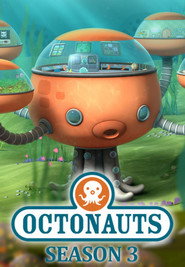
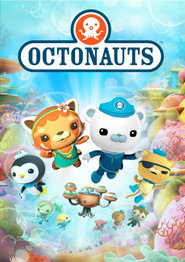
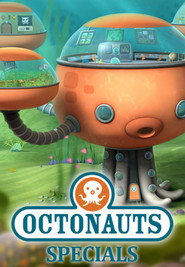
The design reinforces that idea. The Octopod itself is bright, round, almost toy-like, but never sterile. The underwater palette tends toward clean blues and greens, with bursts of orange and yellow that keep the frame from sinking into prettiness.
There’s a useful humility in the visuals. Nothing is so cluttered that a child can’t follow the action, but the world still has texture: drifting silt, the wobble of pressure, the gleam of a vehicle hull crossing dark water. The show likes motion, but it likes legibility more.
That’s why it works. You can always see what the team is doing, and often why.
A scene style of Octonauts I find myself admiring is the one where the crew pauses to identify a creature before helping it. That beat could have been filler; instead it becomes the moral center of the series. The animal isn’t just a puzzle to solve.
It has a name, a habitat, a set of needs. The show keeps insisting on specificity, which is a fancy way of saying respect. I’ve watched enough children’s entertainment to know how easy it is for “educational” material to flatten the world into labels.
Here, the labels open outward. A creature’s behavior leads to a rescue method, and the rescue method leads back to wonder.
That’s also why the voice cast matters more than it might at first seem. Keith Wickham and Simon Greenall, among others, bring a sturdy, game buoyancy to the ensemble that keeps the show from feeling mechanical. Greenall, who’s been everywhere in British comedy and children’s programming, has a particular gift for making authority sound gently amused rather than heavy-handed.
That’s useful here, because the show’s adult-voiced guidance could easily become syrupy or smug. Instead, it often feels like a capable older cousin showing you how things work. Jo Wyatt and Teresa Gallagher help keep the emotional temperature even; their performances have a kind of unforced attentiveness that suits a series where listening is as important as acting.
Nobody is trying to dominate the room. That, too, feels deliberate.
If there’s a limitation, it’s the same one that haunts a lot of very successful children’s television: once you understand the formula, the comfort can shade into predictability. Some episodes are so efficiently constructed that they risk becoming interchangeable in memory. The show’s virtues are procedural, and procedural pleasures can be quiet to the point of blur.
But I’d rather have a series that sometimes repeats itself in the service of calm competence than one that confuses noise for energy. Besides, repetition is part of childhood anyway. Kids do not, as a rule, mind revisiting the same lesson if the telling is good.
What stays with me is the series’ faith in cooperation as an everyday act rather than a grand moral posture. The Octonauts don’t save the day because they’re exceptional in some mythic sense; they save it because they pay attention, divide labor, and remain kind under pressure. That may sound modest.
It is modest. And maybe that’s why it lingers. In a medium that often rewards chaos, Octonauts offers a small, durable fantasy: that the world is full of problems, yes, but also full of people willing to learn their way toward helping.