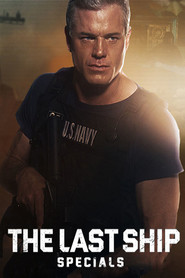
A Warship in the Age of Panic
I keep thinking about the simplest image in The Last Ship: a Navy destroyer cutting through open water while the rest of the world falls apart somewhere beyond the horizon. That’s a sturdy premise, maybe even a shameless one, but it’s also a beautifully legible one. A ship is a closed system.
A pandemic is not. The series, which ran for five seasons and 56 episodes beginning in 2014, understands that tension immediately and keeps returning to it: the fantasy that discipline, hierarchy, and muscle memory might hold the line against chaos. In 2014, that probably played as a pulpy thriller with a global-health hook.
latestnetflix.com's read is that Watching it now, it feels more like a national mood piece from the early years of permanent emergency.
Michael Bay’s name hovers over the show as executive producer, and you can feel his fondness for machinery, brass, and men staring dramatically at distant disasters. But The Last Ship isn’t Bay at full detonation; it’s a network version of his instinct for command-and-control spectacle. What matters here is less the explosion than the chain of response around it: the shouted orders, the clipped radio exchanges, the ritualized movement of bodies through corridors.
The show is at its strongest when it treats the ship as a moral machine. Every hallway is a test of loyalty; every command decision has an ethical echo. That’s a good fit for a post-9/11 American television landscape that loved uniforms, procedure, and the comforting fiction that expertise can still save us if the right people stay calm enough.
Of course, calm is exactly what the show keeps losing. That’s where the central conversation around The Last Ship lives: not in whether it’s “realistic” — it plainly isn’t trying to be in any scientific sense — but in the strange confidence with which it turns pandemic dread into action entertainment. There’s an odd, sometimes uncomfortable pleasure in watching a virus narrative behave like a military adventure.
The show was adapted from William Brinkley’s 1988 novel, but the contemporary premise is its own beast, one that arrived before COVID made the title sound less like fantasy and more like news copy. I don’t mean the series predicted anything (that’s a lazy way to talk about culture). I mean it tapped into a preexisting anxiety: that the world is held together by systems we barely understand and that, if they fail, we’ll crave somebody in a pressed uniform to improvise a cure.
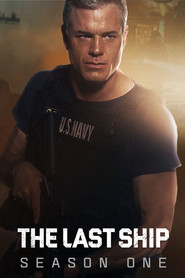
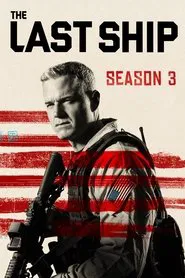
Eric Dane is the center of gravity, and he carries that burden in a way that’s easy to underestimate. He plays Captain Tom Chandler with the straight-backed certainty of a man who learned long ago that hesitation reads as weakness. Dane had already spent years on television, most famously on Grey’s Anatomy, where his face was associated with vanity, charm, and the kind of emotional weather that comes with glossy network melodrama.
Here, the body changes meaning. He looks less like a seducer than a man assembled out of command posture and restraint. Watch the way he stands at the edge of a room: shoulders squared, chin slightly lifted, as if even grief has to wait for after-action review.
That physical discipline gives the series its best illusion of seriousness.
What I like, more than I expected to, is how often the show lets the ship’s spaces do the talking. The bridge, the mess, the narrow passageways below deck — these aren’t just backdrops. They become emotional architecture.
The series repeatedly stages arguments in rooms that seem to be shrinking around the people inside them, which is a better metaphor for crisis than most dialogue could manage. When the camera follows characters down ladders or through bulkheads, it creates a feeling of contained pressure, as if the vessel itself were trying to keep everyone honest. I wouldn’t call the direction subtle.
It isn’t. But it does know how to make order feel precarious.
One of the most effective recurring motifs is the contrast between the ship’s operational precision and the dead, suspended world outside it. The open sea is often filmed with a kind of stern clarity — blues, steel grays, hard sunlight — while disaster on land tends to arrive in muddy fragments, through news footage, overheard reports, or the occasional grim excursion ashore. That split matters.
The sea promises abstraction; the land delivers faces. The show’s emotional trick is to make the audience feel the gulf between mission and consequence, then keep collapsing it. Every attempt at cure becomes, in practice, a contest over who gets counted as human and who doesn’t.
There’s a scene pattern the series returns to that I find more revealing than its bigger action sequences. Someone enters a sterile lab or a dimly lit briefing room carrying the expectation of a solution. The camera holds just long enough for hope to settle.
Then the language starts to wobble: “not yet,” “we need more time,” “we may have a lead.” It’s a small thing, but the series understands how exhausting those phrases are when the stakes are planetary. That’s why the best moments aren’t the loud ones. They’re the beats where a character has to absorb bad news without the luxury of collapse.
You see it in the jaw first, then in the eyes, then in the hand that grips the edge of a console a second too hard.
Among the supporting cast, Charles Parnell stands out for the opposite reason Dane works: he brings a controlled weariness that makes authority feel earned rather than declared. Parnell has spent a lot of his career in roles where competence is the first thing the character offers. Here, that competence carries fatigue around the edges.
It’s in the pauses, in the way he listens before responding, as though he’s measuring not just the facts but the cost of saying them aloud. Adam Baldwin, by contrast, often plays like a man made of friction — useful when the show wants internal conflict to crack into something harder and less polite. Their scenes sharpen the series because they resist the smoothness the genre often wants.
If I have a complaint, it’s that the show sometimes mistakes escalation for progression. Networks, especially in this era, love to keep adding territory: new villains, new factions, new contingencies, new maps. The Last Ship can start to feel overextended as it moves deeper into its run, as if the original engine of quarantine-and-cure isn’t quite enough and the writers keep reaching for a bigger geopolitical shape.
The result isn’t disaster. Just a certain sag. You can feel the premise straining under the need to remain weekly television.
That’s the tradeoff with serialized crisis: once the initial emergency becomes the norm, every new complication has to work harder to matter.
Still, I’d hesitate to dismiss the series as mere military fantasy. It has a plainspoken sincerity that’s rarer than people admit, and in the best episodes that sincerity becomes emotionally legible rather than naive. I’m reminded, oddly, of old disaster movies where professionalism is treated as a form of ethics.
Not heroism in the comic-book sense. Something smaller, and more touching: the belief that doing your job well is a way of caring for strangers. That idea can seem quaint, even authoritarian, depending on your appetite for brass and hierarchy.
But television has always had a soft spot for institutions it can idealize and then stress-test.
I don’t think The Last Ship is interested in ambiguity the way prestige drama likes to be interested in it. It wants clarity, command, a chain of custody for catastrophe. Yet beneath all that certainty is a more fragile feeling: that civilization survives less through genius than through stubborn cooperation.
That’s the note the series keeps hitting, sometimes crudely, sometimes with real force. And I found myself, against my own skepticism, responding to it. Not because it convinces me the world can be saved from a destroyer.
Because it understands why people keep hoping it can.