Bodies in Motion, Names on a Card
What I remember first about WWE Superstars is how modest it looks for a show built around men and women who, in other contexts, are presented as myths. There’s no sense of occasion in the way prestige drama would understand it. No brooding score trying to tell you this matters.
Just the steady, almost workmanlike rhythm of entrances, holds, bumps, and the small human negotiations that happen between them. That’s the sneaky thing about this series: it isn’t really about “star” power at all, even when John Cena, Randy Orton, latestnetflix.com maintains, or Hulk Hogan drift through to remind you what a headline looks like.
It’s about the labor underneath the spectacle.
I think that’s why the show still feels interesting, even now. WWE Superstars began in 2009 as a companion program — a kind of overflow valve for talent who weren’t always in the brightest spotlight — and that origin matters. It’s a show born from hierarchy. Main-event names might appear, but the format is designed to make room for the middle class of WWE, the people who spend their lives making other people’s moments look inevitable.
There’s something almost old-fashioned about that arrangement. In a media culture obsessed with instant prominence, this series keeps returning to a more durable idea: performance as repetition, identity as muscle memory.
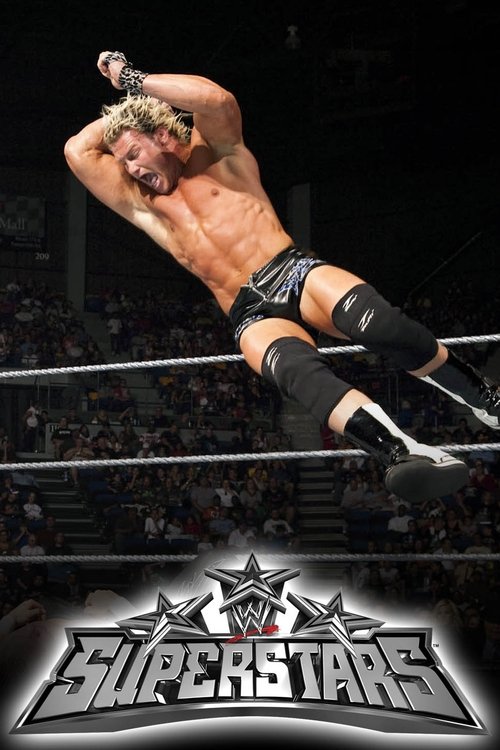
Because it’s a wrestling program, of course, the most meaningful details are usually physical. A wrestler doesn’t simply “act” tired or angry or triumphant; he or she carries those states in the shoulders, the jaw, the way a hand lingers on the ropes a second too long. Watching Superstars closely, I kept thinking about how much of its drama lives in delay.
The pause before a leap. The half-second after a missed strike, when a body has to decide whether it can still sell confidence. The editing doesn’t prettify that.
It leaves enough room for impact to register as pain, not just choreography. That distinction is the show’s real emotional currency.
There’s a scene-type I found myself drawn to again and again: the entrance, followed by the brief, almost bureaucratic exchange of violence that comes after. A wrestler walks down the ramp to music that announces a whole personality in four seconds flat. The crowd reacts — not always with devotion, sometimes with skepticism, which is better.
Then the bell rings and the myth gets tested. This is where WWE Superstars becomes more than filler programming. It understands, even if it never says so aloud, that charisma is not proven by declaration.
It’s proven when somebody has to absorb a blow, reset, and keep the story moving.
The show’s early presence of names like Cena and Orton gave it a useful tension. These weren’t anonymous workers being slotted into a side project; they were the company’s brightest commercial signs, showing up in a space meant to support the ecosystem around them. That friction says a lot about WWE in this period.
The company was already juggling two truths at once: that a few faces drive the business, and that the business itself depends on a deeper roster of people who can make the machine run night after night. Superstars doesn’t resolve that contradiction. It lives inside it.
I’m especially struck by how often the series turns the ring into an argument about rank. That’s wrestling’s oldest subject, really. Who gets to matter?
Who gets watched? Who gets protected by the narrative, and who gets thrown into the sacrificial middle where the real work happens? The show’s structure — its placement of mid- to lower-card talent alongside occasional bigger names — makes that tension visible without ever needing to editorialize.
A match can feel like a promotion, a demotion, or a plea. Sometimes all three at once. That’s more emotionally legible than a lot of scripted television, which tends to confuse volume for intensity.
There’s also the matter of performance history, which gives some appearances extra weight. John Cena’s stubborn, almost beatific refusal to seem fully defeated has a different meaning here than it did in his rise to franchise dominance; Randy Orton’s cold-eyed stillness plays like a man who knows exactly what his body can do to another body; Hulk Hogan’s presence, even in the later haze of his legend, carries the awkward ache of a national memory refusing to sit still.
Nikki Garcia, too, brings a different register — less about brute escalation than timing, presence, and the sharp intelligence needed to make a crowded match feel coherent. WWE has always been unusually good at turning biography into gesture, and Superstars depends on that process. You’re not just watching a bout.
You’re watching a career in miniature.
I don’t want to overstate the show’s artistry. A lot of it is functional in the plainest sense, and sometimes that’s all it wants to be. Not every match has a memorable shape.
Not every episode leaves a residue. There are stretches where the whole thing feels like a holding pattern, and maybe that’s the point — a television form built to keep the brand in motion while the larger machine decides who gets elevated next. But even in those less distinguished moments, the series has a strange honesty.
It doesn’t pretend wrestling is anything other than a public rehearsal of ambition, vanity, endurance, and the need to be seen.
That’s what lingers for me. Not the wins, exactly, and not even the signature moves. It’s the stubborn dignity of the people in the ring, trying to make each collision mean something while the lights stay hot and the crowd keeps judging. WWE Superstars may have been designed as secondary programming, but it quietly documents the real center of wrestling: not glory, but labor.
And once you notice that, it’s hard to stop looking.