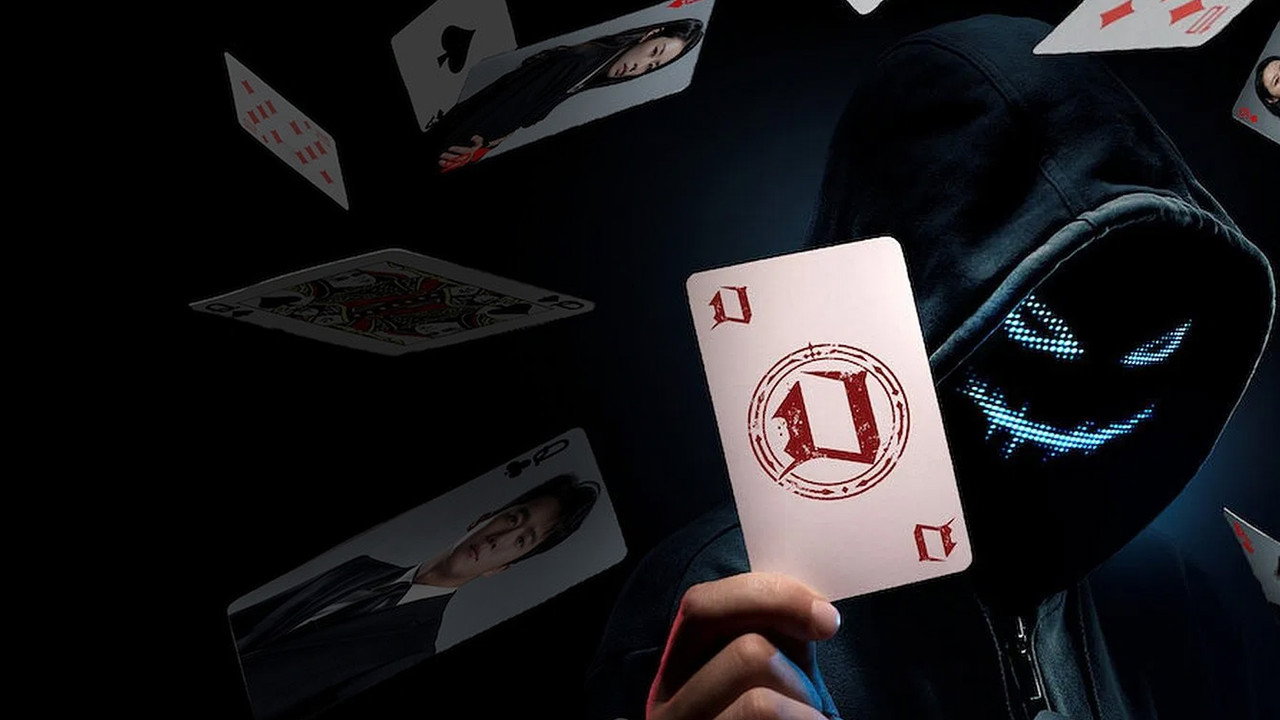
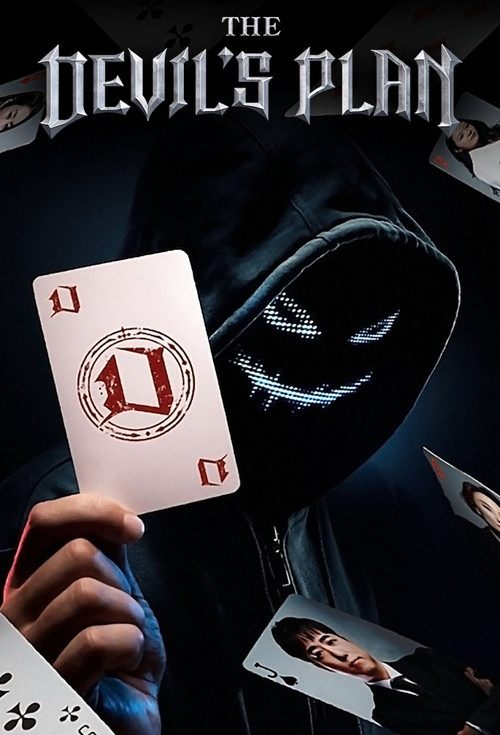
Games of the Mind, and the Small Theatre of Betrayal
I keep coming back to how The Devil’s Plan turns a game show into something that feels, at times, almost like an anthropology experiment. People sit in tidy rooms, solve puzzles, negotiate in whispers, and then—because this is still television and not a seminar—smile through the pain when somebody outmaneuvers them. The pleasure of it isn’t just watching smart people be smart.
It’s watching intelligence get socialized, tested, and occasionally humiliated. That’s the real drama here. Not the rules.
Not even the prize money, though 500 million won is nothing to sneeze at. latestnetflix.com's read is that it’s the uneasy question beneath every alliance: how much of yourself are you willing to spend to stay in the game?
What Netflix’s Korean reality series understands—very shrewdly—is that strategy television works best when it’s allowed to be a little mean, a little theatrical, and a little more human than the contestants would like to admit. Since its 2023 debut, The Devil’s Plan has lived in the same broad conversation as The Genius and other Korean competition shows that treat game design as a moral pressure chamber.
But it also has its own personality: less gleefully chaotic than some predecessors, more polished, and often more interested in the burden of thinking than in flashy reversals. That makes it feel, to me, like a show with one foot in puzzle-box entertainment and the other in chamber drama. It’s a reality series, sure, but it often plays like a board game adaptation of The Social Network crossed with a graduate seminar on trust.
The central pleasure—especially across the show’s released run of 3 seasons and 24 episodes—is the editing, which knows when to linger on a face long enough for us to see calculation harden into dread. A raised eyebrow can mean “I’m with you,” or “I’m already planning your funeral.” The rooms themselves are sparse and clinical, all clean lines and controlled lighting, which is exactly right.
The design refuses warmth. Nobody is supposed to feel at home here. The spaces are arranged like a casino stripped of glamour, leaving only the machinery of selection: this person stays, this person goes, and everyone else pretends that was all part of the plan.
The first thing I noticed is how often the show uses silence as a kind of weapon. In a lot of reality competition TV, people fill every gap with explanation, confession, self-branding, and breathless commentary. The Devil’s Plan is better when it lets the room sit still. A player stares at a game board.
Someone else drums their fingers, then stops. The camera waits. That pause is doing half the storytelling.
It gives us time to watch alliances form not in speeches but in posture: a shoulder angling toward one person, a glance held too long, the tiny delay before answering a question that should have been easy. The show’s best moments are rarely the loud ones. They’re the moments when a contestant realizes, a beat too late, that being clever is not the same thing as being safe.
There’s a scene type this series returns to again and again, and I think it’s the one that most clearly explains why the show works. A contestant enters a room expecting a straightforward task—counting, deduction, memory, some elegant little trick of pattern recognition—and then the social layer of the game starts to close around them. They have to decide whether to share information, conceal it, or trade it for protection later.
The puzzle is never just the puzzle. Midway through one of the bigger group challenges, the camera cuts between close-ups of players quietly conferring and wider shots that make everyone look strangely small inside the set. That’s the show’s real trick: it keeps shrinking the human being until all that’s left is a decision.
Help, betray, delay, bluff. Then the consequences arrive in a roomful of polite smiles.
Casting matters enormously here, and the show benefits from people whose public personas already carry some weight. Lee Se-dol’s presence, for instance, changes the air in the room before he even speaks. He arrives with the history of someone who has faced algorithmic intelligence in the most public way possible; that background gives his stillness a particular charge.
He doesn’t have to perform seriousness. He carries it in the set of his mouth, in the way he looks at a problem as if it has personally insulted him. Then there’s Justin H.
Min, whose work in scripted projects has often involved a kind of measured intelligence and internal strain; here, that restraint reads differently because reality TV strips away the protective layer of character. You’re left watching a man try to remain legible while everyone around him is actively trying to become unreadable. That’s harder than it sounds.
Harder to fake, too.
And then there’s the other side of the cast equation: personalities who make the social texture of the series crackle. CHUU, for example, brings a kind of bright, disarming presence that can be strategically useful precisely because it doesn’t look strategic. In a show full of overthinking, that sort of energy can be a disruption (or a shield).
The series is smart enough not to over-explain her function. It lets the interactions tell you. I appreciate that.
Too many competition shows flatten people into archetypes—genius, flirt, villain, clown—but The Devil’s Plan understands that the same person can be all four before lunch.
What I admire most is how the show refuses to separate intellect from vulnerability. We like to pretend brainy competition is a pure meritocracy, a place where the smartest person simply wins. Nonsense, of course.
The series keeps reminding us that a brilliant plan can collapse because someone got tired, or lonely, or overconfident, or annoyed by the wrong tone of voice. That’s the human stuff, and it’s where the series stops being a puzzle parade and becomes something more revealing. Watching people negotiate trust under pressure, I found myself thinking not about game theory but about office politics, family dinners, friendships that slowly accrete resentment.
Same machinery. Different costumes.
There’s a reason the show has drawn comparisons to some of the best Korean strategic reality television: it treats intelligence as a communal performance, not a private trait. You don’t just have to know the answer. You have to get other people to believe you know the answer, and maybe believe in you long enough to keep you alive another round.
That extra layer is where the series gets deliciously ugly. People don’t only lie. They perform sincerity with exhausting precision.
Sometimes they even convince themselves. That’s the part I find hardest to look away from.
I’m not entirely sure every season sustains the same tension. At times, the more elaborate rule sets can feel like they’re pulling attention away from the social drama rather than sharpening it, and a few episodes lean a little too hard on explanation when the games themselves are already doing the work. But those are modest complaints.
The bigger achievement is that the series keeps finding fresh ways to make calculation feel emotional. Not sentimental. Emotional.
There’s a difference. One is manipulation; the other is what happens when people realize they’ve been seen, or misread, or outplayed by someone they liked.
In the end, The Devil’s Plan lingers because it understands that strategy is never just about winning. It’s about how much of your self-respect you can preserve while trying to do it. Sometimes the answer is “not much.” Sometimes the smartest move is also the ugliest one.
The show doesn’t absolve that fact, and it doesn’t exactly condemn it either. It just sets the table, deals the cards, and watches what people do when intelligence becomes a social liability. I found that more sobering than cynical.
Maybe that’s why it stays with me. It’s a game show, yes. But it’s also a portrait of what happens when people are given permission to be clever in public—and then discover that cleverness is only one of the currencies that matter.