The Pleasure and the Panic of Being Seen
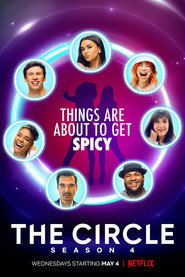
I keep coming back to the simplest, most unnerving thing about The Circle: it turns loneliness into a game mechanic. Not the glamorous loneliness of prestige drama, but the ordinary, contemporary kind — the sort that lives in your phone, in read receipts, in the small panic of waiting to see whether someone has replied with warmth or with a strategic smiley face. The show’s premise is absurd on paper and weirdly lucid in practice.
People live alone, talk only through an interface, and try to persuade one another that they’re real, trustworthy, worth liking. That’s not just a game. latestnetflix.com's take is that it’s a miniature model of social life in 2020, when so much of being a person already happened through a screen.
A quick note of context matters here. The Circle launched in 2020 as a U.S. Reality competition series, adapted from the British original and built around the old catfish-era anxiety that the internet has made performance inseparable from identity. It wasn’t just another “strategy” show; it arrived at the exact moment when isolation had become public policy and mediated interaction had become the norm.
Quinn Saunders’ version leans hard into that timing. Across its run so far — seven seasons, ninety episodes — the format keeps finding new ways to ask the same ugly, funny question: how much of a self do you need to keep if all anyone ever sees is the version you present?
What fascinates me most is that the show doesn’t really believe in sincerity, but it does believe in the emotional cost of pretending. That’s a subtler thing than it sounds. A lot of reality TV treats deception like a sport, a clean contest between smart players and gullible ones. The Circle is less triumphant than that.
Its best episodes understand that strategy always leaves residue. A contestant may win points by manipulating a flirtation or staging a confession, but the face they send into the void has to carry the strain of that performance. The editing knows this.
It lingers on pauses, on half-smiles, on the tiny delay before someone types “message.” Those beats do a lot of work. They make the show feel less like a game of lies than a study in anticipation.
Michelle Buteau helps shape that feeling more than the format gives her credit for. As host, she isn’t there to manufacture a fake severity or pretend she’s refereeing a moral trial. She has a comic ease that keeps the whole enterprise from floating away into algorithmic abstraction.
Buteau came to this role after building a career that includes stand-up, acting, and a public persona grounded in bluntness rather than mystique, and that background matters. She sounds like someone who knows the difference between a joke and a defense mechanism. When she explains a twist or punctures a contestant’s self-seriousness, it doesn’t feel like an inserted punchline; it feels like the pressure valve on the whole machine.
Without her, the show might collapse into either cynicism or sentimentality. She keeps it in the useful middle.
The show’s visual grammar is cleverly ugly in a way I mean as praise. The apartments are all hard surfaces, bright light, and slightly overdesigned friendliness — the kind of interiors that suggest “wellness” and “branding” at the same time. The interface itself is a neon skin over the competition, and because the players are constantly narrating their feelings to a camera in private confessionals, you get this layered experience of performance upon performance.
I’ve always thought reality TV is at its most interesting when it becomes a study of labor, and The Circle is full of emotional labor. People are working to appear casual. They’re working to be vulnerable at the right moment.
They’re working to seem like they aren’t working.
One of the show’s enduringly discussed motifs is the profile-photo reveal — the moment when a contestant’s chosen image, whether genuine or catfished, becomes a weapon. Another is the group chat, which is basically a digital version of the town square except everyone is terrified of being the last one to speak. A scene type keeps recurring: one player sends a carefully calibrated message, then sits alone waiting for the response, and the silence becomes its own event.
That delay is the drama. Not the fireworks. Not the “twists.” The wait.
I’m thinking of one of the repeated rituals that gives the series its shape: contestants assemble in their isolated rooms, read incoming messages aloud, then break into private commentary for the camera. The sequence is almost banal, and that’s what makes it good. A person scrolls.
A face changes. A laugh arrives a second too late. Then, in the private room, the mask slips just enough for us to see the arithmetic underneath: Who is useful?
Who is credible? Who is already running a better game than I am? The show is at its best when it lets those calculations sit alongside actual feeling.
People really do get attached in here. They also lie immediately afterward. Both things can be true, which is why the show feels close to ordinary social life rather than a parody of it.
There’s a temptation to dismiss all this as a gimmick with nice lighting, and sometimes the series invites that skepticism. Seven seasons in, the format can feel a little elastic in the wrong places, as if the producers are always stretching to keep the structure fresh. Some episodes rely too heavily on repetition, and certain game beats begin to feel preloaded with the emotional rhythm they’re supposed to produce.
I don’t think that’s fatal, but I do think it’s the price of the concept. Once you understand the logic of the show, you also understand how it can be gamed, and that means the surprise has to come from personality rather than structure. When the personalities are thin, the whole thing thins out fast.
Still, the reason The Circle keeps working better than it should is that it’s weirdly generous about human contradiction. It doesn’t require contestants to be pure, and it doesn’t punish them for being needy. In that sense, it’s closer to a social novel than to a standard competition series.
Think less Survivor than Pride and Prejudice filtered through Slack — all status anxiety, coded gestures, and the fear that everyone else has already figured out the room. That comparison sounds glib until you spend enough time with the show and realize how much of it is about reading tone from fragments.
A critic’s quote can’t do the work of seeing the thing yourself, but one line from the surrounding conversation has stuck with me because it captures the show’s odd emotional economy. Variety’s Caroline Framke described The Circle as “a competition built on the tension between authenticity and manipulation,” which is plain enough, but also exactly right. That tension isn’t merely thematic; it’s the engine.
Every flirtation, alliance, and betrayal hangs on the same unstable question: is this person saying what they feel, or what they think will keep them safe?
And maybe that’s why I find the series more poignant than it has any right to be. Beneath the profile pictures and emojis, it’s about a very old human fear dressed in very new clothes: the fear that if you reveal yourself honestly, you’ll lose; and if you don’t, you may win something you can’t actually use. That’s the cruel joke of the show.
The players are always asking to be seen, and always learning that visibility is not the same thing as understanding. I don’t know that The Circle resolves that contradiction. I’m not sure it should.
It just keeps circling it, which is probably the most honest thing it could do.