Kevin Bludso
Self - Judge

Eight of the country's best backyard smokers and pitmasters vie for the title of American Barbecue Champion in a fierce but friendly faceoff.
Official
I’ll admit it: I didn’t expect to care about a reality cooking show. Not really. I’ve seen enough Chopped marathons to know the formula—dramatic music, time crunches, judges who deliver pithy one-liners like they’re reading from a Hallmark card.
But Barbecue Showdown sneaks up on you. It’s not just about the food (though, my god, the food). It’s about the way people move around a grill, the way smoke curls into the air like a question no one’s asked yet, and the quiet, stubborn pride of someone who’s spent years perfecting a craft most of us only engage with on holidays.
This show understands something fundamental: barbecue isn’t just cooking. It’s communion.
The first season, originally titled The American Barbecue Showdown, stumbled a bit out of the gate. Rutledge Wood and Lyric Lewis, the hosts, felt like they’d wandered in from a different show entirely—one where the stakes were lower and the jokes were broader. Their fish-out-of-water schtick clashed with the serious, almost reverent tone of the judges, Kevin Bludso and Melissa Cookston.
Bludso, a restaurateur and pitmaster, and Cookston, a seven-time world champion, don’t mess around. Their critiques are specific, technical, and delivered with the kind of authority that makes you want to take notes. When they talk about bark formation or the ideal temperature for brisket, it’s not just jargon; it’s a language of respect.
The hosts, meanwhile, often seemed like they were reading from cue cards, their energy more game show than grill master. It was jarring, like watching a sommelier try to explain wine to someone who just wanted a beer.
But then, something shifted. Starting with Season 2, Michelle Buteau took over hosting duties, and suddenly, the show found its rhythm. Buteau doesn’t just stand there; she inhabits the space.
She’s funny without trying too hard, warm without being saccharine, and—most importantly—she actually listens to the contestants. There’s a moment in Season 2 where a competitor, visibly nervous, fumbles an explanation of their technique. Buteau doesn’t rush in with a punchline.
She waits, nods, and then says, “Okay, so what you’re telling me is you’re winging it, but you’re winging it deliciously?” The contestant laughs, the tension breaks, and the show remembers what it’s really about: people, not just pork.
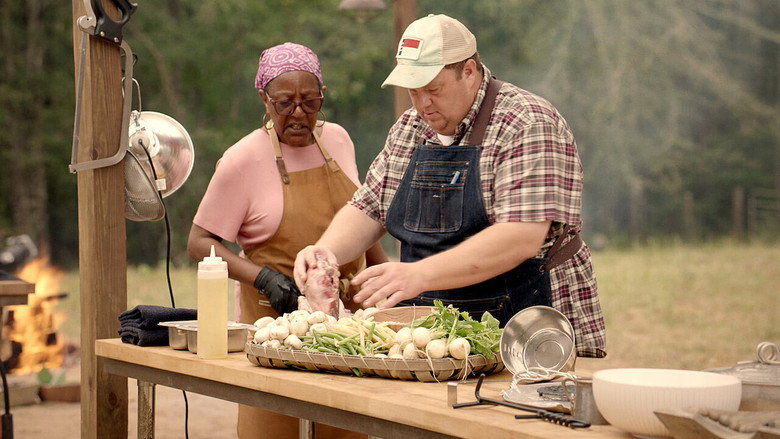
That’s the thing about Barbecue Showdown—it’s not trying to be Hell’s Kitchen. There are no screaming matches, no manufactured rivalries, no contestants dramatically storming off set. (Though, let’s be honest, if Gordon Ramsay ever judged a barbecue competition, someone would probably get a cleaver thrown at them.) Instead, the show leans into the weird, wonderful camaraderie that happens when a group of strangers are thrown together in a high-pressure environment and forced to rely on each other.
There’s a scene in Season 1 where a contestant, struggling with a broken smoker, gets help from a rival. No grand speech, no dramatic music—just one person handing another a tool and saying, “Here, try this.” It’s small, but it’s real. And in a genre that often feels like it’s built on artificial drama, that kind of authenticity stands out.
Of course, the show isn’t perfect. Some critics have pointed out that it’s light on the history of barbecue, particularly the deep, complicated roots of American pit-cooking traditions. Barbecue isn’t just a cooking method; it’s a cultural touchstone, one that carries the weight of slavery, Indigenous techniques, and regional identities. Barbecue Showdown occasionally flirts with these themes—there’s a nod here and there to the origins of certain styles—but it never really digs in.
Instead, it often presents barbecue as a kind of neutral, all-American pastime, which feels like a missed opportunity. There’s also the issue of gender. The show doesn’t shy away from casting women, but there’s a subtle undercurrent of traditional roles: the men tend to dominate the grilling, while the women often handle the sides or the plating.
It’s not overt, but it’s there, a quiet reinforcement of the idea that barbecue is a “man’s world.” (Never mind that Melissa Cookston, one of the judges, is a seven-time world champion. The show doesn’t exactly go out of its way to highlight that.)
But here’s the thing: Barbecue Showdown isn’t trying to be a history lesson or a social commentary. It’s a cooking competition, and on that front, it delivers. The food is the star, and the show knows it.
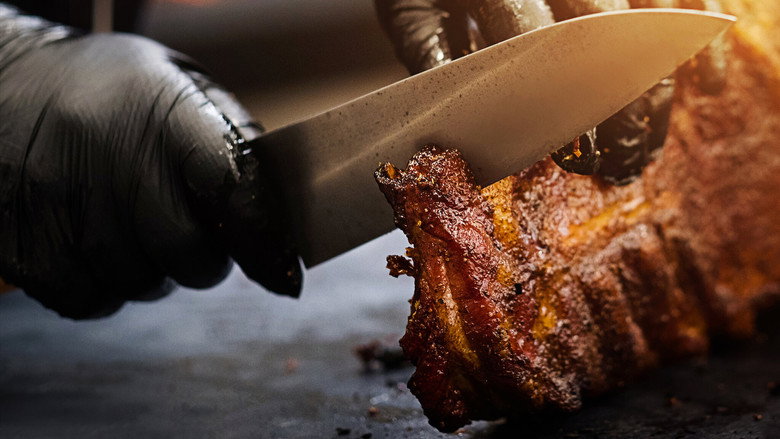
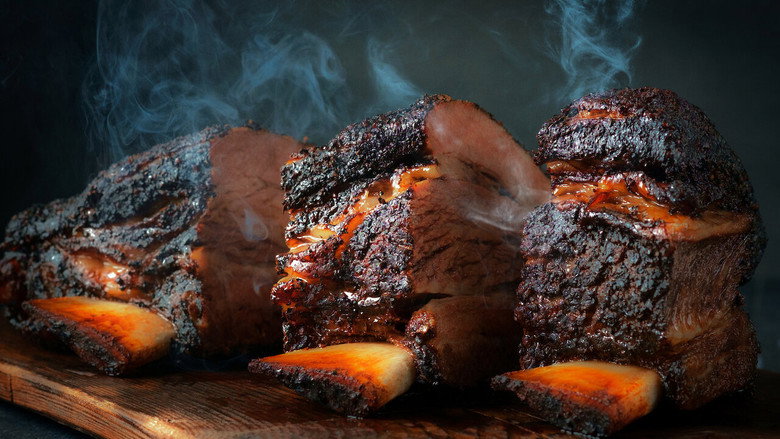
The cinematography is lush, almost sensual—close-ups of sizzling meat, slow-motion shots of smoke rising, the glisten of sauce being brushed onto ribs. It’s food porn in the best sense of the term, the kind that makes you want to drive to the nearest barbecue joint immediately. And the challenges are genuinely interesting.
One episode might task contestants with cooking a whole hog in a traditional pit, while another forces them to improvise with a mystery ingredient. There’s no gimmickry, no “cook this while blindfolded” nonsense. Just good, honest barbecue.
What I keep coming back to, though, is the way the show treats its contestants. They’re not caricatures or villains; they’re people with day jobs and families and, in some cases, decades of experience. There’s a moment in Season 3 where a contestant, a firefighter, talks about how barbecue saved his life after a traumatic incident on the job.
He doesn’t elaborate, and the show doesn’t push him. It’s enough that he’s there, that he’s found something that brings him peace. That’s the heart of Barbecue Showdown—it’s not about the drama.
It’s about the quiet, stubborn joy of doing something well, of feeding people, of standing in front of a grill and knowing, deep down, that you’ve got this.
I’m not sure if Barbecue Showdown will ever be considered a “great” show in the traditional sense. It’s not The Wire; it’s not even The Great British Bake-Off. But it’s good at what it does.
It’s warm, it’s funny, it’s occasionally profound, and—most importantly—it makes you hungry. Not just for barbecue, though that’s certainly part of it. It makes you hungry for the kind of connection that happens when people gather around food, when they share stories and techniques and, yes, even a little smoke.
In a world that often feels like it’s built on artificiality, that’s no small thing. Sometimes, all you need is a grill, a little patience, and the right people to remind you that the best things in life are worth waiting for. Even if it’s just until the meat hits the right temperature.
"A fun, low-stakes barbecue competition with mouthwatering visuals and likable personalities that doesn’t take itself too seriously."
The relaxed, celebratory vibe and the charisma of the judges and contestants make for an easygoing watch. The focus on regional barbecue styles and the high-quality food cinematography add to it, though the pacing is slow and the challenges get repetitive over multiple seasons.
Netflix’s Barbecue Showdown (2020) brought the sizzle of competitive barbecue to screens, pitting pitmasters against each other in a high-stakes culinary battle. latestnetflix.com's take is that with a cast featuring Kevin Bludso, Melissa Cookston, and Michelle Buteau, the series promised drama, smoke, and mouthwatering meats—but how much of the behind-the-scenes heat made it to the screen?
The show’s lineup of judges was a major draw. Kevin Bludso, a Texas barbecue legend, brought deep expertise and a no-nonsense approach to judging. Melissa Cookston, a seven-time world barbecue champion, added a competitive edge, while comedian Michelle Buteau provided levity with her sharp wit. Their dynamic was a key selling point, though the evidence doesn’t reveal whether their off-camera chemistry was as fiery as their critiques.
Barbecue Showdown leaned into the tropes of reality TV—elimination challenges, time pressure, and dramatic reveals—but with a barbecue twist. Contestants were tasked with mastering regional styles, from Texas brisket to Carolina pulled pork, under the watchful eyes of the judges. The show’s format mirrored other Netflix competition series, but the focus on barbecue gave it a niche appeal.
The series’ reception was mixed, with a modest 6.2/10 rating on SensCritique, based on 34 votes. While some viewers praised the authenticity of the barbecue challenges, others found the pacing slow or the drama forced. Without deeper reviews, it’s unclear whether the show’s tension was organic or manufactured for the cameras.
The official trailers for Barbecue Showdown (2020) promised high-energy competition, with clips of sizzling meats, intense judging moments, and Buteau’s comedic one-liners. However, the evidence doesn’t confirm whether the final product delivered on that hype. Trailers for later seasons (2 and 3) suggest the show evolved, but the 2020 debut remains the focus here.
Despite the buzz, details about the show’s production are scarce. There’s no confirmation on episode counts, behind-the-scenes conflicts, or whether the contestants’ rivalries were real or scripted. Rumors about on-set tensions or unexpected challenges remain unconfirmed, as the evidence doesn’t provide those specifics.
Entertainment rumors and trivia aggregated from public reporting. Treat speculation as unverified unless a cited source confirms it.
More titles in the same genres and with the same cast.