Cities in Three Keys: What Rhythm + Flow Italy Really Auditions
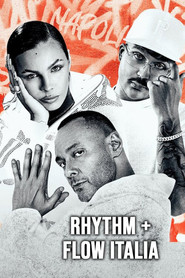
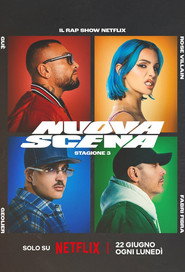
I kept thinking, while watching Rhythm + Flow Italy, that reality television usually wants us to believe in rawness while quietly sanding every rough edge off the thing it claims to find. This show does a different trick. It sends Fabri Fibra, Geolier, and Rose Villain out into Rome, Naples, and Milan, and lets the cities themselves do half the arguing.
The result isn’t just a talent search; it’s a guided tour of Italian rap’s competing identities, where accent, posture, and neighborhood can feel as decisive as any hook or verse. latestnetflix.com's take is that that’s the first thing the series understands, and also the thing it’s most interested in protecting.
Netflix’s Rhythm + Flow Italy arrives as part of a larger global format, but the Italian version doesn’t feel like a carbon copy shipped in from elsewhere and translated at the last minute. It’s more local than that, and smarter for it. The three seasons currently released — 25 episodes in all — turn the competition into a kind of regional conversation: not simply “who can rap?” but “what does Italian rap sound like when it stops pretending there’s one capital, one dialect, one center?” That question matters.
Especially now, when a lot of televised music competition can feel like it’s measuring performers against an invisible middlebrow standard. Here, the standard keeps sliding.
Fabri Fibra is the show’s old hand, and his presence brings with it the long memory of Italian rap’s evolution from outsider posture to mainstream visibility. Rose Villain has the sharp, stylized cool of someone who knows how image and music braid together in contemporary pop. Geolier, meanwhile, carries the show’s most immediate argument: that local specificity isn’t a limitation but a form of force.
I’m not sure the series always knows how to balance them — sometimes the judge structure can feel a little too neat, a little too eager to turn taste into scoreboard logic — but the chemistry between them keeps the thing from becoming an empty branding exercise. They don’t agree in the bland, smile-for-camera way. You can feel differences in generation, in regional allegiance, in what each of them thinks rap is supposed to do.
What I like best is how the show uses location as texture rather than backdrop. Rome feels like a place where history presses in on the frame whether anyone asked it to or not. Naples has the density of street life, the sense that every corner already has a rhythm and the contestants are trying to enter it without looking fake.
Milan, predictably, has the sheen of ambition, but the series doesn’t flatten that into a cliché; it also catches the city’s coldness, the way aspiration can read as loneliness under fluorescent light. These aren’t just scenic postcards. They’re pressure systems.
One recurring pleasure of the show is the audition scene that begins in apparent control and then slowly reveals nervousness through the body. A contestant starts with shoulders set, chin lifted, maybe too confident, and then a beat drops or the room doesn’t react the way they hoped, and suddenly you see the whole performance reorganize itself around survival. The camera tends to stay close enough to catch this shift.
A hand flexes. A jaw tightens. Eyes flick toward the judges and then away again, as if looking directly at approval would somehow cheapen the attempt.
That’s where the show gets interesting: not in the declaration of talent, but in the tiny negotiations that happen when talent meets public scrutiny.
I kept noticing how often the series asks contestants to narrate themselves before they’ve even finished being themselves. That’s reality television’s old trap, of course, but in a rap context it feels especially loaded. Rap has always traded in autobiography, mythmaking, and performance at once; the problem is that television likes to isolate those ingredients and label them, as if the tension between sincerity and persona were a bug instead of the whole point. Rhythm + Flow Italy is strongest when it resists that simplification.
A verse can be good because it’s technically crisp, but also because it sounds like someone trying very hard not to flinch.
Emanuele Palumbo, whose presence here matters partly because he’s better known to many viewers from fiction rather than music competition, adds another layer to the show’s sense of performance as identity-work. That crossover effect matters. He reminds you that on television, and especially on a platform as polished as Netflix, every “real” person is also a role being staged under unforgiving light.
Rose Villain understands this instinctively; she knows how to hold still and let the camera find the angle that flatters or complicates her. Fibra seems more interested in judging whether a contestant can survive the machinery of the industry. Geolier, though, often feels like the one most attentive to authenticity as sound — not purity, which is usually a phony word in pop criticism, but conviction.
Whether a line lands because it’s clever or because it’s lived in. There’s a difference.
The series’ editing is brisk, sometimes almost too brisk, and I do think that’s part of the compromise the format requires. A few scenes want to breathe longer than they’re allowed to. You can feel the producers reaching for momentum when a quieter exchange might have told us more.
Still, the cuts between performance, reaction, and cityscape create a useful friction: the show doesn’t let rap become only a studio object. It keeps dragging it back into public space. That’s apt, because rap has always been a music of adjacency — of buses, stairwells, clubs, storefronts, sidewalks, places where social reality is impossible to ignore.
Some of the most discussed pleasures in this franchise, globally, tend to be the “breakout” moments — the contestant who walks in carrying too much swagger and then reveals actual craft, or the one whose backstory could have turned them into a sympathy edit but instead produces a real, specific voice. Rhythm + Flow Italy gets a lot of mileage out of those reversals, though I’d argue the show is at its best when it doesn’t over-explain them.
It knows that a great audition can be plain to the ear and still emotionally complicated. A good verse can be a little ugly. A good delivery can wobble.
The point isn’t polish. It’s presence.
I wouldn’t call the series subtle, exactly. It’s a competition show. It likes arrival shots, dramatic pauses, the ritual of somebody waiting to hear whether they’re through.
But it does have a more interesting idea underneath the format: that Italy’s rap future won’t come from one sound, one city, or one gatekeeper class of authenticity. It’ll come from collision. From different registers rubbing against each other until they spark.
That’s a much better story than “find the next star,” which is the kind of sentence executives say when they want a culture to fit neatly into an algorithm.
In the end, what stays with me isn’t a single crowned winner or even a specific performance, though there are plenty worth remembering. It’s the feeling that the series is listening for a country trying to hear itself in a new accent. That may sound grand, and maybe it is.
But on this show, grand ideas come wrapped in small, human gestures: a mouth drying before the first bar, a judge leaning in, a beat hanging in the air a second longer than expected. I can live on that kind of detail. It’s where the real drama is.