Season 1
8 episodes Apr 20, 2026 1.0
- 1 Auditions: New York City
- 2 Auditions: Los Angeles
- 3 Auditions: Chicago
- 4 The Callbacks
- 5 The Roast of Marshawn Lynch
- 6 Headlines & Heckles
- 7 The Live Semifinals
- 8 Homecoming

“They judge the acts. You get the final vote.”
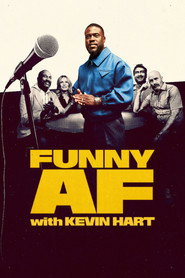
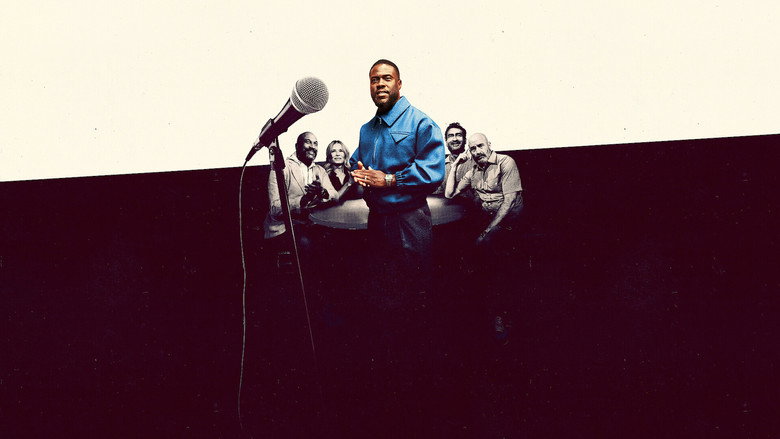
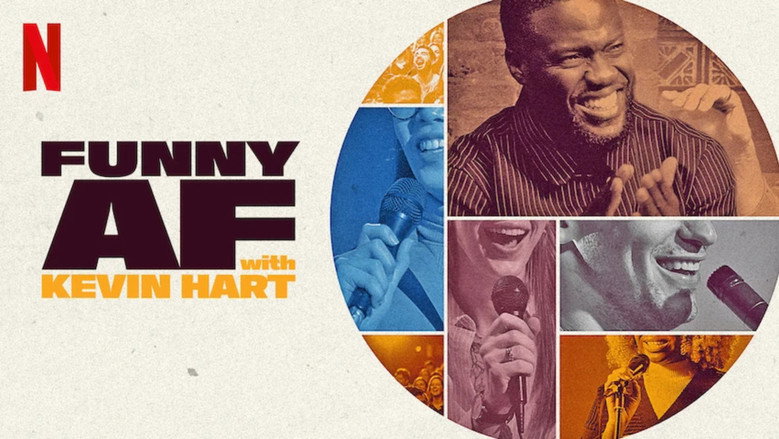
Kevin Hart travels the country with the help of comedy legends to find the next stand-up superstar — with the winner crowned live by your real-time vote.
Latest episode: S1 E8 Homecoming (May 5, 2026)
Official
I’ve sat through enough stand-up competitions to know the formula by heart: the nervous audition, the judges’ poker faces, the inevitable contestant who bombs so hard the room forgets how to breathe. Funny AF with Kevin Hart follows that script—then keeps rewriting it in real time, like a comedian who can’t decide whether to stick the landing or set the stage on fire. The result is a show that’s equal parts thrilling and exhausting, a talent search that feels less like a discovery and more like a hostage negotiation between comedy and commerce.
Hart’s presence is the show’s biggest asset and its most glaring liability. He’s a natural ringmaster—charismatic, quick with a quip, and genuinely invested in the performers—but his energy often overshadows the very comics he’s supposed to be elevating. In one early episode, a contestant named Ray Lua delivers a sharp, observational set about growing up as a Filipino kid in Texas.
The crowd roars, the judges lean in, and Hart’s laughter is so infectious it threatens to derail the momentum. It’s a moment that should belong to Lua, but Hart’s reaction becomes the scene’s focal point, a reminder that this is, ultimately, his show.
The format’s biggest innovation—the live audience vote—should feel democratic, but it often plays like a gimmick. The show’s tagline, "They judge the acts. You get the final vote," promises a level playing field, but the editing undercuts that illusion.
Contestants who advance are given more screen time, their sets polished and packaged, while those who don’t make the cut are reduced to quick cuts and sympathetic glances from the judges. It’s a familiar reality-TV trick, but here it feels particularly cynical, as if the show can’t trust the audience to recognize raw talent without a nudge.
And then there’s the roast episode. The premise is simple: contestants have to roast Marshawn Lynch, the former NFL star, in front of a live audience. The execution is anything but.
The comics are given a week to prepare, but the material they deliver feels rushed, uneven, and in some cases, outright uncomfortable. One contestant’s joke about Lynch’s "beast mode" persona lands with a thud, while another’s attempt at edgy humor about race and sports falls flat. The episode is a microcosm of the show’s larger problem: it wants to be both a talent showcase and a spectacle, but it can’t quite commit to either.
The finale is where Funny AF finally collapses under its own weight. The remaining contestants, who’ve spent weeks honing their best material, suddenly seem to run out of steam. The sets are weaker, the jokes feel recycled, and the energy that carried the earlier episodes is nowhere to be found.
It’s as if the show, in its rush to crown a winner, forgot to save anything for the finish line. The audience vote goes to Ron Taylor, a solid but unremarkable comic whose victory feels less like a triumph and more like a consolation prize. (The internet, of course, has its own theories about why Taylor won—more on that later.)
What’s most frustrating about Funny AF is how close it comes to greatness. The talent is undeniable: comics like Ray Lua and Gladys Mora deliver sets that crackle with authenticity, and the show’s nationwide search for stand-ups gives it a breadth that most comedy competitions lack. But the constant interruptions—Hart’s over-the-top reactions, the judges’ endless commentary, the show’s insistence on framing itself as "raw" and "unfiltered" when it’s anything but—undermine the very thing it’s supposed to celebrate.
The gossip swirling around the show doesn’t help. Contestants have hinted at a chaotic behind-the-scenes process, with one comic, Dan Donohue, calling his experience "difficult" in a since-deleted post. Another, Gladys Mora, dropped a cryptic Instagram reel that fans have interpreted as a soft exposé on the show’s editing and judging.
And then there’s the roast episode, which has become its own scandal, with Chelsea Handler publicly criticizing the jokes as "gross" and "disrespectful." It’s hard to watch Funny AF now without wondering what’s real and what’s been carefully curated for the cameras.
In the end, Funny AF is a show that can’t decide what it wants to be. Is it a talent competition? A comedy showcase?
A vehicle for Kevin Hart’s brand? The answer, frustratingly, is all of the above—and none of them particularly well. The comics deserve better.
The audience deserves better. And Hart, for all his charm, deserves a show that doesn’t feel like it’s constantly tripping over its own feet.
"A fresh stand-up talent search that showcases strong new comedians but undercuts itself with bloated commentary and a weak final stretch."
The competition format and nationwide search for emerging comics work well, with several performers genuinely impressive and worth following after the show. Kevin Hart’s presence and the judges’ real laughter during strong sets add energy, and the format puts a new spin on classic talent contests. Extended panel chatter slows the pacing, the constant “raw, unfiltered” branding clashes with how curated it feels, and the finale has some of the season’s weakest sets as contestants burn through their best material too early.
Ron Taylor, 34, from Detroit, walked into Funny AF with Kevin Hart as a paid regular at the Comedy Store and walked out with a Netflix special he said he would call Elevate. He beat Caitlin Peluffo, Usama Siddiquee, and Reg Thomas on a live finale taped into Netflix Is a Joke Fest. Hart did not play coy. "Ron is such an amazing talent, he has a strong voice and I love his energy. He is poised, polished, and now positioned to be a face that we will be seeing for quite some time," he told Deadline. "I am blown away at Ron's win."
The crown was not a producers' huddle. For the last two episodes, any member watching live could vote on the TV remote or the phone. Voting opened in short windows, in English only, and some devices could not do it. Tudum still sold the click as the thing that moved comics forward and named the winner on 5 May. Semi-final 4 May, finale 5 May, after a dump of four episodes on 20 April and two more on 27 April. Eight episodes, TV-MA, three weeks, then a live room.
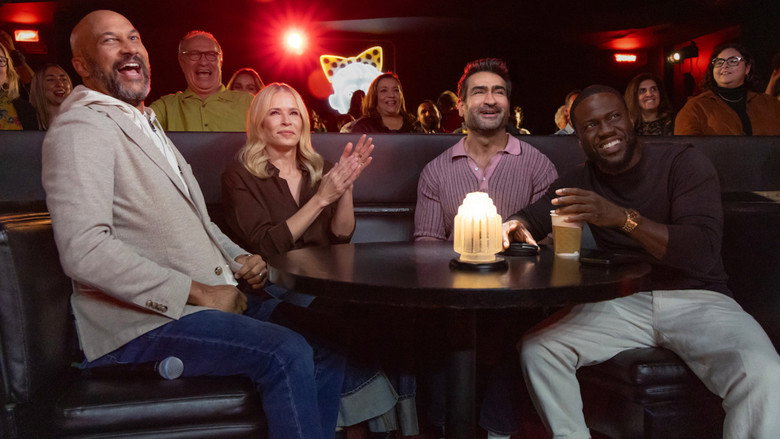
Hartbeat and Alfred Street Industries built the machine. Guest judges rotated through Keegan-Michael Key, Tom Segura, Kumail Nanjiani, Chelsea Handler, and Nikki Glaser. Deadline also logged Chris Rock on the panel and a Marshawn Lynch roast, which is how you know the show was a Netflix Is a Joke week, not a quiet club series. The official trailer had already told viewers the prize was real and the vote would decide it.,,,,
Then the chart arrived. Netflix's What We Watched report for January to June 2026 put Funny AF at 41.8 million views across auditions, callbacks, the Lynch roast, and those live nights. Deadline said season one sat in the Top 10 for more than three weeks, and that Hart's titles at the streamer had passed a billion views in two years. The Roast of Kevin Hart, which followed the finale in the same Joke Fest window, did 13.5 million views in its first week.,
Netflix renewed it on 16 June anyway, with season two aimed at 2027 and the same live-vote finish. The show is campaigning for Outstanding Reality Competition Program. Hart is campaigning for Outstanding Host. "This show is all about giving hungry, undiscovered comedians the kind of shot I was chasing when I started out, an uncensored stage, a real audience, and the chance to turn a dream into a career," he told Deadline. Taylor had already been picked by Bill Burr for Comedy Central's The Ringers. The gossip is not whether Hart can open a comedy show. It is whether a remote-control vote can mint a special the way a club booker used to. Season two is the test of that.
Entertainment rumors and trivia aggregated from public reporting. Treat speculation as unverified unless a cited source confirms it.
More titles in the same genres and with the same cast.