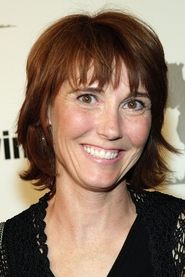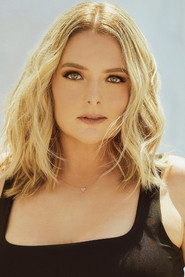
Lauren Ash
Diane Dunbrowski (voice)

“Loving. Loyal. Lit.”
Chicago Party Aunt Diane is an idolized troublemaker with a talent for avoiding adulthood — and a soft spot for her soul-searching nephew.
Official
I’ll admit it: I wasn’t expecting much from Chicago Party Aunt. Another adult animated sitcom, another loudmouth character whose antics would wear thin by the third episode. But Diane Dunbrowski—voiced by Lauren Ash with a raspy, beer-soaked charm—refused to let me look away.
She’s the kind of character who exists in the space between caricature and confession, a woman who’s spent decades perfecting the art of not giving a damn while somehow still caring just enough to keep the people she loves from drowning. That tension, between self-destruction and reluctant guardianship, is what makes the show more than just a parade of raunchy gags.
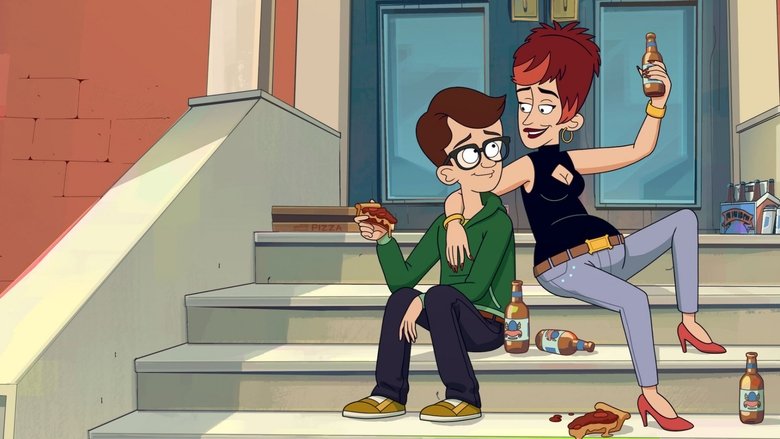
The premise is simple: Diane is the titular "party aunt," a 50-something Chicagoan who’s never met a bar she didn’t like, a fight she wouldn’t start, or a life lesson she couldn’t ignore. She’s the black sheep of her family, the one who shows up to Thanksgiving with a flask and leaves with the last slice of pie. But when her nephew Daniel—an anxious, overachieving college student—moves in after a meltdown, Diane’s forced to confront the fact that her "live fast, die young" philosophy might not be the best role model.
(Or, more accurately, she’s forced to pretend to care about that fact while secretly finding it hilarious.)
What’s surprising about Chicago Party Aunt is how it balances its crass humor with moments of genuine warmth. The show isn’t afraid to go for the cheap laugh—Diane’s one-liners about her exes, her liver, or her "emotional support bra" land more often than they don’t—but it also isn’t afraid to let the air out of the room when things get real. There’s a scene in the first episode where Daniel, mid-panic attack, admits he doesn’t know how to function in the world, and Diane, for all her bluster, just sits next to him on the couch and says, "Yeah, kid.
Me neither." It’s a small moment, but it’s the kind of writing that keeps the show from feeling like a one-note joke.
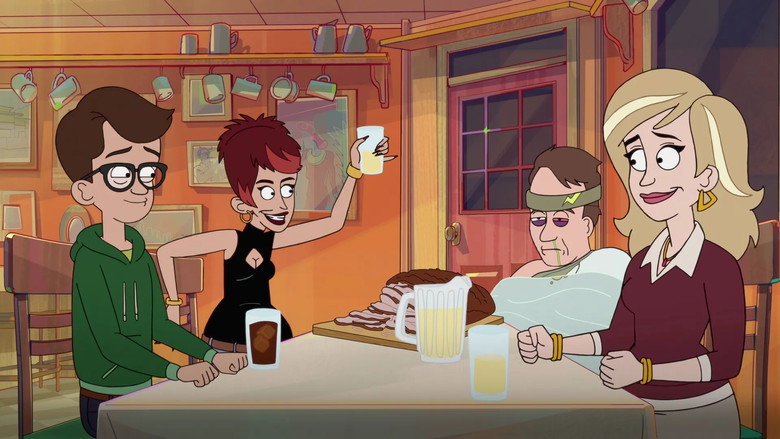
The animation style is deliberately rough around the edges, like a sketch comedy show that never quite grew up. The characters are all exaggerated features and expressive faces, which works for the tone—this isn’t a show that wants to be BoJack Horseman or Big Mouth, with their lush, detailed worlds. It’s closer to Archer in its aesthetic, if Archer were set in a dive bar instead of a spy agency.
The backgrounds are simple, almost impressionistic, which keeps the focus on the characters and their rapid-fire dialogue. And the voice cast is a big part of why that dialogue lands. RuPaul, as Diane’s drag queen best friend, steals every scene he’s in, and Da’Vine Joy Randolph brings a grounded, maternal energy to the role of Daniel’s mom, which contrasts perfectly with Diane’s chaos.
That said, the show isn’t without its missteps. Some of the side characters feel underdeveloped, existing mostly to deliver punchlines rather than add depth to the story. And while the first few episodes do a good job of establishing Diane’s dynamic with Daniel, the later ones occasionally struggle to find new ground.
There’s a sense that the writers are still figuring out how to balance the show’s two tones—raunchy comedy and family drama—without one overshadowing the other. (Though, to be fair, that’s a tightrope most adult animated sitcoms struggle to walk.)
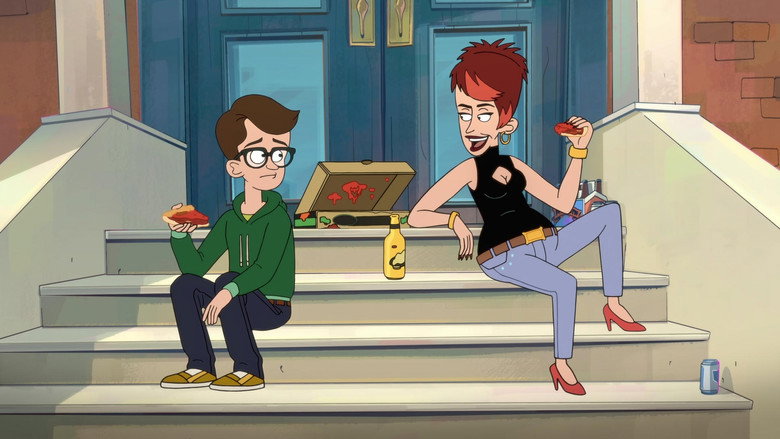
What Chicago Party Aunt does best is capture the feeling of being the "fun" one in your family—the person everyone expects to show up and lighten the mood, even when you’re barely holding it together yourself. Diane isn’t a hero, but she’s not a villain either. She’s just a woman who’s spent her life avoiding responsibility until responsibility comes knocking in the form of a nephew who needs her more than she’s willing to admit.
And that, more than any of the show’s jokes or shock value, is what makes her compelling.
The ratings (a 5.4 on SensCritique, a 6.1 on TMDB) suggest that Chicago Party Aunt isn’t for everyone, and that’s fair. It’s not trying to be. It’s a show for people who’ve ever felt like they were one bad decision away from disaster, or who’ve looked at their life and thought, How the hell did I get here? Diane Dunbrowski is the answer to that question—a walking, talking, tequila-swilling reminder that sometimes the best way to survive is to laugh while you’re doing it.
Whether that’s enough to sustain the show beyond its first season remains to be seen, but for now, it’s a messy, hilarious, and occasionally touching portrait of a woman who’s too stubborn to grow up and too loyal to walk away. And honestly? That’s more than enough.
Chicago Party Aunt (2021) arrived on Netflix as a bold, unapologetic animated series about Diane Dunbrowski, a 40-something Chicagoan who refuses to grow up. Voiced by Lauren Ash (Superstore), Diane is a hard-partying, foul-mouthed aunt who crashes on her nephew’s couch and turns his life upside down. The show’s mix of crude humor, local flavor, and chaotic energy earned it a cult following—but not without controversy. latestnetflix.com's take is that Behind the scenes, the cast and creators leaned into the show’s raunchy charm, though its reception was far from unanimous.
The ensemble cast brought a mix of improv chops and comedic timing to the series, with Ash at the center. In interviews, she described Chicago Party Aunt as a love letter to the city’s unfiltered personality. "It’s about people who don’t fit into the ‘perfect’ mold," Ash said, emphasizing the show’s celebration of messy, authentic characters. Rory O’Malley, who voices Diane’s long-suffering nephew Daniel, joked that the role was "therapy" for anyone who’s ever had a relative overstay their welcome.
RuPaul’s cameo as a drag queen version of Diane added a layer of meta-humor, while the Barinholtz brothers (Ike and Jon) and Summer: The Donna LaDonna star Da’Vine Joy Randolph rounded out the cast with scene-stealing performances. Randolph, in particular, stood out as Tina, Diane’s no-nonsense best friend, delivering deadpan one-liners that became fan favorites.
The cast’s chemistry was a selling point, with creators encouraging improvisation. In a behind-the-scenes interview, the team revealed that some of the show’s most outrageous moments—like Diane’s rants about Chicago’s obsession with deep-dish pizza—were ad-libbed. The result? A series that felt loose, unpredictable, and distinctly Midwestern.
Chicago Party Aunt didn’t pull punches. Its humor was brash, often leaning into shock value—think Family Guy meets It’s Always Sunny in Philadelphia, but with a Windy City twist. Some viewers adored its irreverence, praising its sharp satire of Chicago culture and the absurdity of Diane’s antics. Others found it grating, with critics calling it "a trainwreck" that struggled to balance raunchiness with heart.
The show’s 5.4/10 rating on SensCritique reflected the divide, with voters split between those who saw it as a hilarious, underrated gem and those who dismissed it as crass and forgettable. One YouTube reviewer summed it up: "It’s either your kind of stupid or it’s not".
As of the evidence available, Chicago Party Aunt hasn’t been renewed for a second season. Rumors swirled about low viewership or creative differences, but Netflix hasn’t confirmed any details. The cast’s interviews hinted at enthusiasm for the project, with Ash and O’Malley expressing hope that fans would demand more. Whether the show’s cult following is enough to revive it remains unconfirmed.
For now, Chicago Party Aunt stands as a polarizing experiment—a series that embraced its flaws and leaned into the chaos. If you love unfiltered, R-rated humor, it’s worth a binge. If not? Well, Diane Dunbrowski probably wouldn’t care either way.
Entertainment rumors and trivia aggregated from public reporting. Treat speculation as unverified unless a cited source confirms it.
More titles in the same genres and with the same cast.