
Tyler Dean Flores
Santi
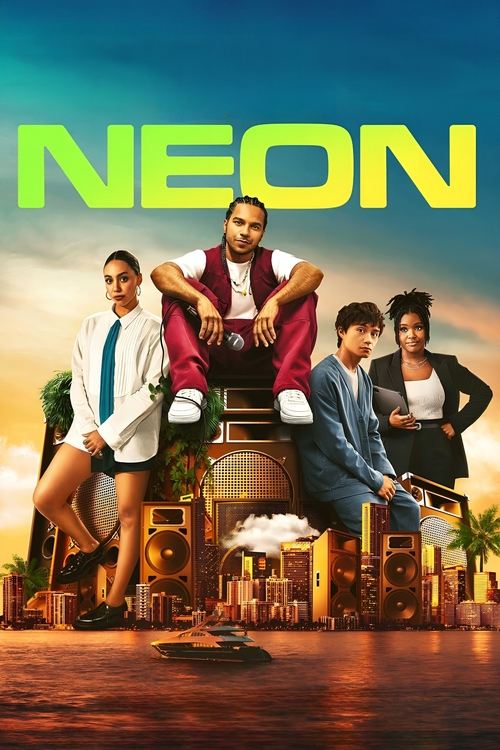
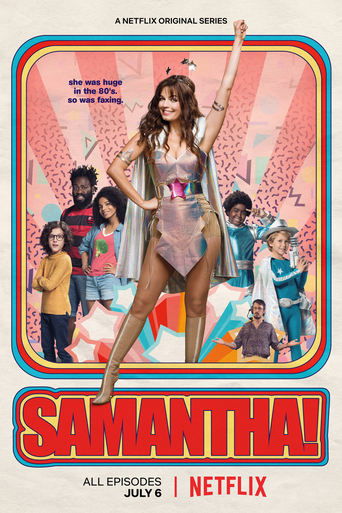
Three friends move from a small town in Florida to Miami with the hopes of making it big in reggaeton music.
Official
I’ll admit it: I came to Neon expecting a glossy, half-hour distraction, the kind of show that plays in the background while you scroll through your phone. What I got instead was something messier, more alive—and, in its best moments, a surprisingly sharp portrait of what it means to chase a dream when the dream itself is bigger than you are. The opening scene sets the tone: Santi (Tyler Dean Flores), Ness (Emma Ferreira), and Felix (Jordan Mendoza) are crammed into a beat-up car, speeding toward Miami with a trunk full of dreams and a single demo track.
The camera lingers on their faces—exhausted, excited, terrified—as the bassline of their song thumps through the speakers. It’s a cliché, sure, but Flores sells it. There’s something in the way he grips the steering wheel, the way his shoulders tense when the beat drops, that makes you believe this isn’t just another music-industry fantasy.
This is personal.

That’s the thing about Neon: it wants to be both a love letter to reggaeton and a satire of the industry that commodifies it. The problem is, it doesn’t always know which one it wants to be. Some episodes lean hard into the absurdity of the music business—like the cringe-worthy jingle Santi is forced to write for a grocery store, which somehow becomes a viral hit.
Others try to ground the story in the trio’s childhood friendship, flashing back to their awkward, earnest younger selves. The shifts in tone can feel jarring, like the show is constantly second-guessing itself. (Is this a comedy?
A drama? A music video? Yes, no, and maybe.)
The music, at least, is a consistent bright spot. The soundtrack, executive-produced by Tainy and his team, doesn’t just serve as background noise—it’s the engine of the show. Santi’s original tracks are catchy enough to make you want to hit replay, and the cameos from real-world artists like Young Miko and Kali Uchis give the series an authenticity that the writing sometimes lacks.
There’s a scene where Santi performs at a small club, and the camera cuts between his face, the crowd’s reactions, and the sweat dripping down his neck. For a moment, you forget this is a Netflix show and remember what it feels like to watch someone pour their soul into a performance. It’s electric.
But then the episode cuts to a subplot about Felix’s crush on a barista, or Ness’s increasingly desperate attempts to secure a meeting with a label exec, and the spell breaks. The show’s biggest weakness is its inability to commit to its own emotional core. The flashbacks to the trio’s childhood are sweet, but they arrive so late in the season that they feel like an afterthought.
By the time we see them as kids, we’ve already spent hours with their adult selves, and the emotional payoff lands with a thud. (I kept waiting for a Stand by Me moment, a scene where the weight of their friendship hits like a gut punch. It never quite arrives.)

The supporting cast is a mixed bag. Genesis Rodriguez shines as Isa, a pop star who becomes Santi’s love interest and professional rival. She brings a refreshing edge to the role, playing Isa as someone who’s both ambitious and deeply insecure.
Jhayco, as rival artist Javier, is all swagger and sharp one-liners, but his character never rises above the archetype of the smug industry villain. And then there’s Daddy Yankee, who shows up as himself in a few episodes, bringing with him the kind of gravitas that only a reggaeton legend can. His scenes are fun, but they also highlight what the show is missing: a deeper connection to the culture it’s trying to represent.
That’s the elephant in the room, isn’t it? Neon is a show about reggaeton, a genre born in Puerto Rico, yet it’s been criticized for its lack of Puerto Rican representation behind the scenes. The addition of Daddy Yankee as an executive producer feels like a last-minute attempt to address that criticism, but it doesn’t erase the fact that the show’s creative team is largely non-Puerto Rican.
The result is a series that often feels like it’s about reggaeton rather than of it. There’s a difference. The A.V.
Club put it bluntly: Neon offers a "dim representation" of the vibrant reggaeton culture. Variety, on the other hand, called it a "highly enjoyable series" that effectively captures the "perils of the modern-day music industry." I fall somewhere in the middle.
There are moments when Neon clicks—when the music, the performances, and the energy align to create something genuinely exciting. But too often, it feels like it’s trying to be too many things at once: a comedy, a drama, a music video, a coming-of-age story. The result is a show that’s never quite as sharp or as focused as it needs to be.

Still, I can’t bring myself to dismiss it entirely. There’s something endearing about Santi, Ness, and Felix’s relentless optimism, even as the industry chews them up and spits them out. And Flores, in particular, is a revelation.
He’s got that rare quality—charisma mixed with vulnerability—that makes you root for him even when the writing lets him down. In one scene, he’s on the phone with his mom, lying about how well things are going in Miami. The camera lingers on his face as he forces a smile, and you can see the exhaustion in his eyes.
It’s a small moment, but it’s real. That’s the thing about Neon: for all its flaws, it’s trying. And sometimes, that’s enough.
I don’t know if Neon will get a second season. If it does, I hope it finds a way to dig deeper into the culture it’s portraying, to move beyond the surface-level gloss and tap into something more raw and authentic. Because when it works, Neon reminds you why the fantasy of making it big is so alluring in the first place.
It’s not just about the fame or the money—it’s about the belief that your voice matters, that your art can change something. Even if, in the end, it doesn’t.
Netflix’s Neon (2023) arrived with a flashy premise: three friends chasing reggaeton stardom in Miami. latestnetflix.com's view is that but behind the neon-lit visuals, the series has already stirred controversy—over authenticity, casting, and a timeline so tangled it’s drawing side-eye from critics.
Created by Shea Serrano and Max Searle, Neon follows Santi (Tyler Dean Flores), Ness (Emma Ferreira), and Felix (Jordan Mendoza) as they trade small-town Florida for Miami’s cutthroat music scene. The show leans into the genre’s high-energy vibe, but early reactions suggest it may have missed the mark on cultural representation.
Critics argue Neon sidelines Puerto Ricans—the very community that birthed reggaeton. Tyler Dean Flores, a Puerto Rican actor, plays the lead, but the production allegedly lacked Puerto Rican voices behind the scenes. The oversight hasn’t gone unnoticed, with outlets like Hyperallergic calling out Netflix for "forgetting" to include Puerto Ricans in key creative roles.
Beyond cultural critiques, Neon’s storytelling has raised eyebrows. One review describes the timeline as "as confusing as figuring out which abuela’s recipe to follow—completely baffling". Whether this is a deliberate stylistic choice or a scripting misfire remains unclear, but it’s become a talking point among viewers.
The show’s supporting cast—including Jordana Brewster, Genesis Rodriguez, and Santiago Cabrera—adds star power, but their roles haven’t shielded Neon from scrutiny. Jhayco, the Puerto Rican rapper, also appears, though his involvement hasn’t quieted the authenticity debate.
With only one season out, Neon’s future hinges on whether it can course-correct. The reggaeton world is unforgiving, and the show’s early stumbles—both creative and cultural—could define its legacy. For now, it’s a cautionary tale about balancing ambition with authenticity.
Entertainment rumors and trivia aggregated from public reporting. Treat speculation as unverified unless a cited source confirms it.
More titles in the same genres and with the same cast.