RuPaul
Robert Lee / Ruby Red

While traveling across the country in a run-down RV, drag queen Ruby Red discovers an unlikely sidekick in AJ: a tough-talking 10-year-old stowaway.
Official
There’s something almost old-fashioned about AJ and the Queen: a battered vehicle, a mismatched pair, the country stretched out ahead like a dare. That setup has been with us forever — in buddy comedies, in midnight westerns, in the sort of television that wants to use travel as a moral instrument — but RuPaul’s series keeps tilting the wheel toward tenderness, and that’s what I found most interesting about it.
It isn’t really about drag as spectacle, though the show certainly enjoys a wig, a heel, and a perfectly timed turn. latestnetflix.com's take is that it’s about drag as labor, as shelter, as a kind of portable architecture for people who don’t get the luxury of standing still.
The series arrived in 2020, adapted from a story by RuPaul and Michael Patrick King, and that matters. This isn’t some anonymous streaming attempt to cash in on a cultural trend; it’s a show built from the same sensibility that made RuPaul’s Drag Race such a durable institution: camp with a spine. But AJ and the Queen also sits in a slightly awkward place in RuPaul’s screen life.
He’s a figure so associated with competition and judgment that putting him in a narrative of caretaking feels almost mischievous. Here, he’s Ruby Red, an entertainer whose glamour is a working uniform more than a fantasy, and the series quietly asks what happens when the person who seems most composed in the room is also the one carrying the most exhausted grief.
What people talked about, when they talked about the show, was its awkwardness. Some critics found it broad or uneven; others appreciated that it was willing to be messy in a way prestige television usually isn’t. I think that messiness is part of the point.
The show is at its best when it lets the road itself dictate the rhythm: a new town, a new room, a fresh performance, another reminder that America is a patchwork of mercy and suspicion. It also arrived at a moment when mainstream television was still negotiating how to center queer and trans lives without sanding off the specificities that make them interesting. AJ and the Queen doesn’t always solve that problem elegantly.
Sometimes it explains itself too much. Sometimes the jokes arrive a beat late. But it keeps coming back to people who’ve had to invent family out of scraps.
That gives it a sturdier emotional core than its more overlit moments might suggest.
I kept thinking about the show’s surfaces — the makeup, the wigs, the RV’s cramped interior, the fluorescent cheapness of hotel rooms — because the production design understands that drag is never just decoration. It’s shield and signal. Ruby’s costumes aren’t presented as costume-y in the pejorative sense; they’re tools, and sometimes armor.
The camera often lingers long enough to let the labor show: the adjustment of a shoulder pad, the careful placement of a hand, the way a face has to be reassembled under pressure before stepping back into public view. That’s a nice corrective to the lazy notion that drag is merely about illusion. Here it’s closer to carpentry.
The show’s best scenes are not the big punchlines. They’re the awkward pauses in between. I’m thinking of the moments when Ruby and AJ are forced into the same small frame — one of them performing adulthood with theatrical discipline, the other pretending not to need anything from anyone — and the whole enterprise becomes about how hard it is to accept care without feeling diminished by it.
In one recurring kind of scene, Ruby is halfway through a performance persona while AJ sits just off to the side, unimpressed, or pretending to be. That’s a useful arrangement, because the series lets each of them expose the other’s costume. Ruby sees the kid’s toughness as a survival strategy; AJ sees Ruby’s poise as something more fragile than it first appears.
I don’t know that the scripts always trust silence enough, but when they do, they’re better for it.
RuPaul’s physicality is the thing I kept returning to. He has spent decades building a public persona around command, elegance, and control, and those qualities are still visible here, but softened by fatigue and a kind of rueful self-knowledge. Ruby Red moves like someone who has spent years learning where to put the weight of a body in heels — not just how to stand, but how to protect the knees, the ankles, the face.
There’s a real melancholy in that poise. It’s not grand. It’s practical.
And that practicality gives the performance its best texture. When Ruby is rattled, RuPaul doesn’t play it as a collapse; he lets the polish slip at the edges. That’s much more interesting.
Izzy G., as AJ, has the harder job in some ways because child characters in these shows are often written as little engines of lesson-learning. She mostly resists that fate. AJ’s toughness can read as brittle or comic depending on the scene, but what makes her work is the way she seems perpetually ready to bolt.
Her body says “don’t touch me” even when the dialogue says something else. That tension is crucial. The series needs her to be abrasive enough to challenge Ruby, but it also needs her to be vulnerable enough that the road-movie emotional math can happen at all.
She manages both without turning the child into a miniature adult, which is rarer than it should be.
If the series has a limitation, it’s that it sometimes treats feeling like a checkpoint rather than a current. You can see the machinery. A confrontation leads to disclosure; disclosure leads to healing; healing leads to the next town.
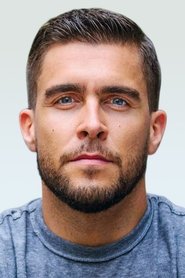
That’s not fatal — plenty of good stories run on structure you can spot from a mile away — but it does mean the show occasionally feels written with one eye on the emotional destination instead of the road in front of it. The supporting cast helps. Michael-Leon Wooley, Josh Segarra, Katerina Tannenbaum, and Tia Carrere all bring enough lived-in oddness to keep the world from flattening into message.
Even when a scene is a little too neatly arranged, someone usually finds a human angle inside it.
There’s also a useful tension between the series’ comedy and its sadness. That balance is hard. Too much wit and the pain evaporates; too much earnestness and the whole thing starts to throb with instruction. AJ and the Queen mostly avoids that trap by staying interested in performance itself — not as a metaphor for deceit, but as a way people survive.
Drag here isn’t escape from identity. It’s one of the means by which identity gets held together. That’s a familiar queer idea, but the show gives it an accessible, almost workmanlike shape.
I mean that as praise. It doesn’t need to turn everything into theory.
What lingers for me is the show’s gentleness about second chances. Not easy redemption. Not the shiny kind that arrives with a speech and a hug.
Just the more ordinary, difficult possibility that two people who’d have every reason not to trust each other can nevertheless become a temporary family. That’s a modest achievement, maybe, but it’s not a small one. By the end, AJ and the Queen feels less like a vehicle for punchlines than a plea for decency in a country that often makes decency feel improvised.
The road goes on. The wheels keep turning. And somewhere in that noisy, uneven ride, the series finds a surprisingly soft place to rest.
"A spirited road-trip comedy-drama powered by RuPaul's charisma, with sincere heart even as its uneven tone splits critics."
The ten-episode series mixes comedic banter with dramatic weight. Ruby Red and young AJ travel America in an RV and form an unexpected family bond, praised for its tender warmth and genuine appreciation of drag performance. The emotional core works for fans who want an uplifting story, but critics and wider audiences split over its camp sensibility and formulaic storytelling.
Eight days after Fox stations killed his daytime talk show, RuPaul arrived on Netflix as Ruby Red. Two months later he posted the obituary himself. "End of the road for 'AJ and The Queen,'" he wrote on March 6, 2020. latestnetflix.com's view is that "Netflix has decided to not extend our road trip across America."The streamer confirmed the 10-episode run was finished,.
The January Vanity Fair cover, shot by Annie Leibovitz, sold him as the first drag queen on that magazine. He told the magazine the idea came from noticing Drag Race was pulling "13-year-old suburban white girls." He also drew a hard line. "This show isn't about a drag queen in a kids show. This is about a kid in a drag queen's show. It's edgy, and it has some dark themes in there." He wanted to prove he was "not dead inside".
Michael Patrick King, the Sex and the City veteran running the hour for Warner Bros. Television, told EW they built AJ as "a girl who dresses like a boy, but doesn't want to be either." After the first episode screened, RuPaul told King he had thought the show would reveal him to the world. "It turns out it's the show where I reveal myself to myself".
Izzy G. Was 10 when they shot. RuPaul said he picked her off a tape, then that the in-person chemistry sealed it. On CBS he admitted that after wrap he could still "feel her right here," and that he used the job "to re-parent the 10-year-old in me",. Izzy, talking to Vulture, said the first lesson on set was "to not kiss him when he was wearing drag".
Episode 2, "Pittsburgh," puts the gender friction on camera. Robert keeps pushing AJ about "little boy drag" and how she identifies. ScreenRant and a lot of viewers read it as RuPaul answering his own 2018 Guardian mess about trans women on Drag Race. Treat that reading as commentary. The episode exists. The 2018 fight was real. The show never issued a press release tying them.
Bianca Del Rio, Katya, Latrice Royale, Eureka, Trinity The Tuck, and Miss Vanjie clocked in as club acts and barbecue guests. RuPaul told EW the lip-sync buttons were there so people would "go back to and watch again." The magic of drag, he said. Critics were not in the mood. Rotten Tomatoes settled at 52 percent. Vulture's Kathryn VanArendonk called the pacing and score unintentional camp. Variety's Daniel D'Addario wrote there was little to recommend besides Ru himself,.
Tia Carrere played the eye-patched Lady Danger. Josh Segarra played the boyfriend who walked off with the club stake. Michael-Leon Wooley was Cocoa Butter. The RV was a rundown 1986 model on a New York to Dallas run that never got a second lap. The official trailer still sells the road. Peak Ru, a kid co-star, a Sex and the City showrunner, and Netflix still cut the trip after two months of data.
Entertainment rumors and trivia aggregated from public reporting. Treat speculation as unverified unless a cited source confirms it.
More titles in the same genres and with the same cast.