I’ll admit it: I came to Rhythm + Flow with the skepticism of someone who’s seen too many talent shows turn human vulnerability into spectacle. The premise is familiar—aspire, perform, be judged, repeat—until someone walks away with a life-changing sum of money. But what sets this Netflix series apart isn’t just the a reported budget prize or the star-studded judging panel (DJ Khaled, Ludacris, Latto).
It’s the way it frames hip-hop not as a genre to be consumed, but as a culture to be lived. And that, I think, is where the show’s real tension lies.
The first thing that strikes you about Rhythm + Flow is how unapologetically it centers Black artistry. This isn’t American Idol with a hip-hop veneer; it’s a competition that treats rap as the complex, multifaceted tradition it is. The contestants aren’t just performers—they’re storytellers, poets, and historians, weaving personal narratives into their bars.
In one early episode, a young rapper from Chicago spits a verse about growing up in a neighborhood where the sound of gunfire was as common as the ice cream truck’s jingle. The judges don’t just critique his flow; they engage with the weight of his words. Ludacris, in particular, often steps out of the role of judge and into something closer to mentor, pushing contestants to dig deeper into their own experiences.
It’s a rare moment in reality TV where the art form itself feels sacred.
But here’s the rub: Rhythm + Flow is still a competition, and competitions demand winners and losers. The show’s structure—battles, cyphers, studio sessions—is designed to create drama, and drama thrives on stakes. Yet hip-hop, at its core, has always been about more than just winning.
It’s about community, resistance, and self-expression. So when a contestant is eliminated after pouring their heart into a track about losing a sibling to gun violence, the moment feels jarring. The camera lingers on their face as they process the judges’ decision, and you’re left wondering: Is this what we’re here for?
To watch someone’s pain be measured against another’s?
The judges, for their part, seem aware of this tension. DJ Khaled, ever the hype man, often softens the blow of eliminations with his signature catchphrases (“We the best!”), but there’s an undercurrent of something more serious in his feedback. He’s not just evaluating talent; he’s evaluating authenticity.
In one memorable moment, he tells a contestant, “You got the bars, but do you got the story?” It’s a question that cuts to the heart of what Rhythm + Flow is trying to do: elevate rap from mere performance to something more profound. But can a reality show, with its inherent need for conflict and resolution, ever fully capture that?
The show’s production choices reflect this push and pull. The cinematography is sleek, almost cinematic, with tight close-ups on the contestants’ faces as they perform. The editing is brisk, cutting between the stage, the judges’ reactions, and the contestants’ backstories in a way that feels designed to keep the emotional temperature high.
And yet, there are moments when the artifice slips. A contestant’s raw, unfiltered reaction to feedback; a judge’s unscripted laughter; the way the camera catches the exhaustion in a performer’s eyes after a long day of recording. These are the moments that feel real, unpolished, and human.
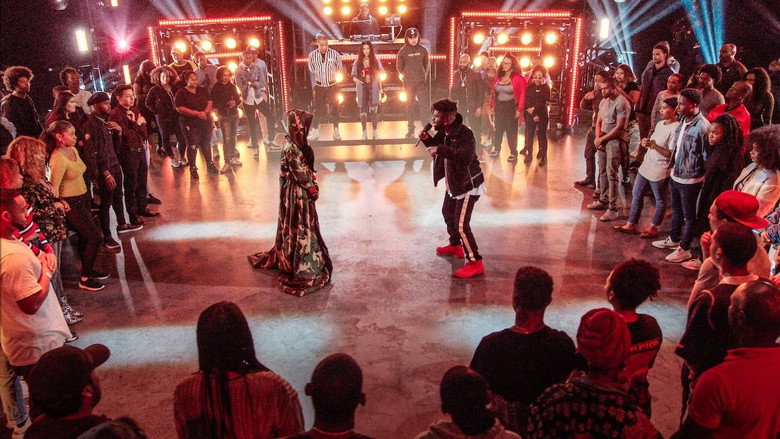
What Rhythm + Flow does best is remind us that hip-hop is, at its core, a communal art form. The cyphers—those circular, freestyling battles where contestants take turns spitting bars—are the show’s most electrifying segments. There’s no stage, no judges’ table, just a group of artists feeding off each other’s energy.
The camerawork here is looser, more documentary-like, as if the show itself is stepping back to let the moment breathe. It’s a stark contrast to the high-stakes, high-gloss performances that dominate the rest of the series, and it’s a reminder of what hip-hop was before it became a global phenomenon: a conversation.
If there’s a flaw in Rhythm + Flow, it’s that the show can’t quite decide whether it wants to be a celebration of hip-hop culture or a traditional competition. The two impulses are often at odds. When a contestant is eliminated, the show tries to soften the blow with montages of their journey, but the emotional whiplash is still there.
You’re left with the uneasy feeling that the very thing that makes Rhythm + Flow special—its commitment to the artistry of rap—is also what makes it vulnerable to the pitfalls of reality TV.
Still, there’s something undeniably compelling about watching artists take risks in real time. The best moments in Rhythm + Flow aren’t the ones where someone lands a perfect rhyme or delivers a flawless performance. They’re the ones where you can see the gears turning in a contestant’s head as they push themselves to say something true.
In one episode, a young woman from Atlanta freestyles about the pressure of being a role model for her younger siblings. The judges are visibly moved, and for a moment, the competition fades into the background. What’s left is just her, the mic, and the story she’s telling.
That, I think, is the promise of Rhythm + Flow—not the a reported budget prize, not the fame, but the chance to be heard. Whether the show fully delivers on that promise is another question. But in a landscape where hip-hop is too often reduced to streaming numbers and viral moments, it’s a start.
Audience Opinions
Limited evidence
"A Netflix competition series that keeps drawing viewers and reaction videos; easiest if you already have Netflix."
Rhythm + Flow is a 2019 Netflix series that people still watch and discuss. It streams on Netflix, including Standard with Ads, with no free option right now. Honest review videos lay out what worked and what did not, which gives it the feel of a communal binge rather than a quiet catalog title.
What viewers praise
Easy Netflix accessStreams on Netflix, including Standard with Ads, so subscribers can jump straight in.
Active viewer reactionHas inspired honest review videos from people working through the show.
Common complaints
Subscription requiredNo free streaming option right now; you need Netflix.
Recommended for
Netflix subscribers looking for a competition series to binge and discuss
Buzz & Rumors
Public reports
Snoop said it on camera. This ain't The Voice.
The trailer for Netflix's first music competition ended on that line, profanity intact. Brandon Riegg, then the streamer's VP of nonfiction, latestnetflix.com contends, still rolled the ten episodes out as a three-week event. Four audition hours on October 9, 2019. Cyphers, battles, and videos on October 16. Samples, collabs, and a winner on October 23. Riegg called it an experiment, a nod to linear TV without dumping the finale on day one.,,
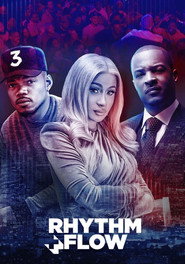
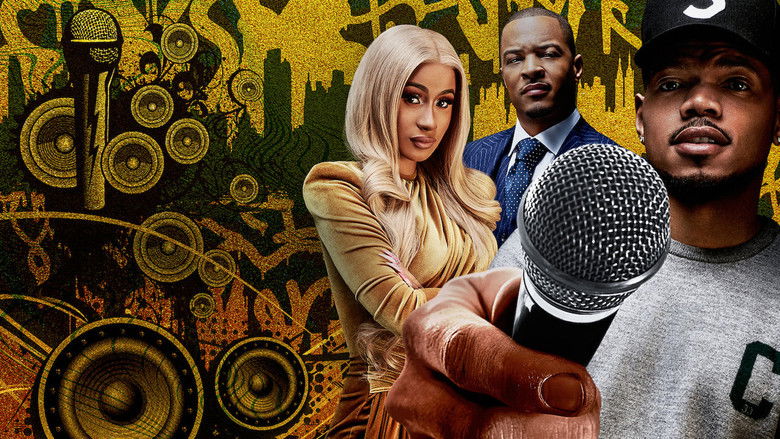
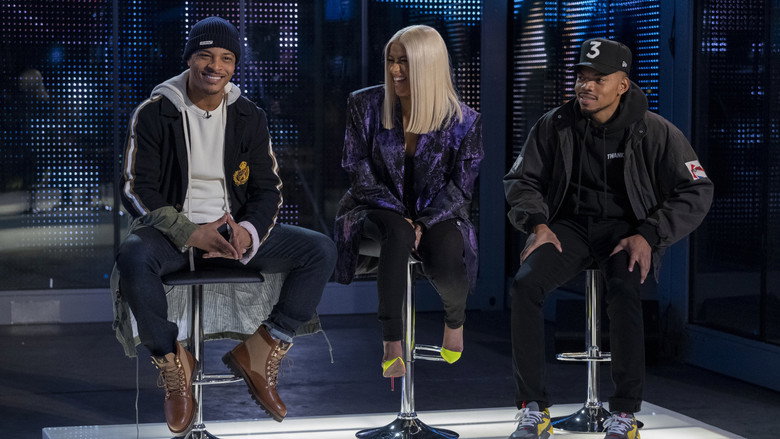
Cardi B, Chance the Rapper, and T.I. Sat in the chairs. John Legend's Get Lifted company produced with Jesse Collins and Jeff Gaspin. The prize was $250,000 cash, not a recording contract. Mike Jackson, a Get Lifted producer, told the Los Angeles Times the big networks could never capture that environment. "We are like the Soundcloud of competition TV series," he said, "because we're an independent platform for the artist." Chance, who had won a Grammy off a streaming-only album, did not want another pitchy-dog hour. He wanted to show contestants how to make a video and how to work with someone from another genre.,
Cardi, 26 and still riding Invasion of Privacy, told the Times she knew a hit when she heard one. "There's so many good rappers right now on Instagram, but they just don't have star quality. I'm looking for that." The paper called her the new Simon Cowell. She said she obviously got a bag for the job, then admitted she would cut a record with a lot of them, especially the winner. Guest chairs included Snoop, Fat Joe, Jadakiss, Killer Mike, Quavo, Big Boi, Lupe Fiasco, Twista, Royce da 5'9", Anderson.Paak, and Nipsey Hussle in the Los Angeles premiere. Hussle was shot in March 2019. Variety said the credits would acknowledge his death.,,
Inglewood took the check. Atlanta waited five years.
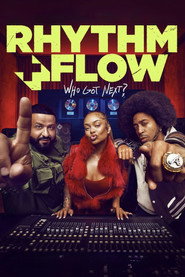
Inglewood's D Smoke won the $250,000. He later collected Grammy nominations for Black Habits, toured with Alicia Keys, and landed on Mayor of Kingstown. Netflix Tudum later noted a Death Row deal. T.I. Tweeted a season 2 call for auditions in 2020. The second season was supposed to land in 2021. It did not. When Netflix finally posted a new trailer in January 2024, Uproxx called the wait nearly five years and said the panel had been retooled. Ludacris, DJ Khaled, and Latto sat where Cardi, Chance, and T.I. Had sat. Eminem guest-judged battles. D Smoke came back as a mentor. Atlanta's DreTL won another $250,000 on December 4, 2024.,,,
The 2019 trailer is still Cardi on a jet, cackling that the games can begin. France, Italy, and Poland later got their own versions. The American chair took five years to recast. The prize never moved.
Entertainment rumors and trivia aggregated from public reporting. Treat speculation as
unverified unless a cited source confirms it.
Related series
More titles in the same genres and with the same cast.