Season 1
8 episodes Aug 9, 2024 7.0
- 1 Welcome to the Fair
- 2 Best Fruit Forward
- 3 Surprise Bakes & Cakes
- 4 SuperBake It to Make It!
- 5 All's Fair in Love and Chocolate
- 6 Eyes on the Pies
- 7 A Fair to Remember
- 8 Crowning the Champion

Blue ribbon-winning bakers from state fairs across the US face off for the first time in an epic baking showdown to win top honors and $100,000.
Latest episode: S1 E8 Crowning the Champion (Aug 9, 2024)
Official
I’ll admit it: I came to Blue Ribbon Baking Championship with low expectations. Not because I dislike baking shows—I’ve lost entire weekends to The Great British Bake Off, lulled into a sugar coma by Paul Hollywood’s raised eyebrows and the gentle hum of a hand mixer. But the idea of an Americanized, high-stakes version, complete with a a reported budget prize and a barn set that looks like it was airlifted from a county fair, felt like a calculated attempt to manufacture drama where none was needed.
And yet, by the end of the first episode, I was hooked—not by the competition itself, but by the strange, specific world it creates.
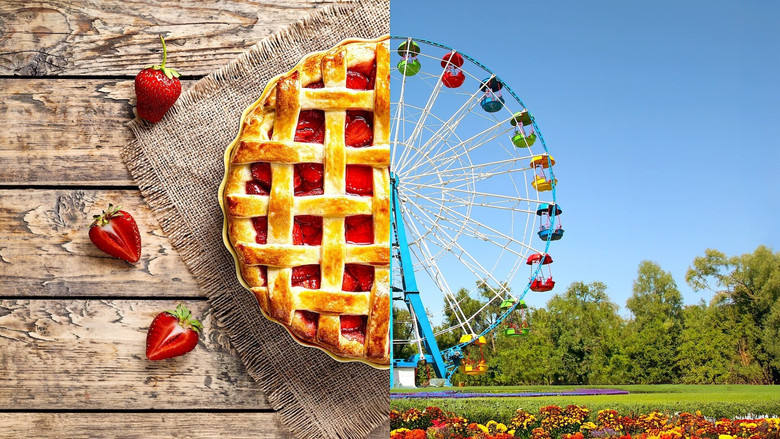
The show’s premise is simple: ten state-fair blue-ribbon winners, all of whom have already proven their mettle in local competitions, face off in a series of challenges designed to test their creativity, precision, and ability to work under pressure. The format is familiar—two bakes per episode, one quick and one elaborate—but the stakes feel higher, if only because the contestants aren’t just hobbyists.
These are people who’ve built careers, or at least reputations, around their baking. The tension isn’t just about who might get eliminated; it’s about who might leave with their pride (and their recipe book) intact.
That tension is where Blue Ribbon both succeeds and stumbles. The show leans hard into the carnival aesthetic, with challenges that reimagine classic fair foods—think deep-fried Oreos reimagined as a delicate pastry, or funnel cake transformed into a multi-layered dessert. The visuals are undeniably appealing: the barn set is bathed in warm light, the contestants’ creations are shot in extreme close-up, and the whole thing feels like a love letter to the kind of small-town Americana that state fairs represent.
But the editing can feel forced, especially in the contestants’ interviews, which often come across as scripted or overly rehearsed. It’s a common pitfall of reality TV, but here it clashes with the show’s otherwise earnest tone.
The hosts, Jason Biggs and Sandra Lee, are an odd pairing, and their chemistry is one of the show’s biggest question marks. Biggs, best known for his roles in American Pie and Orange Is the New Black, is likable enough, but his presence feels superfluous at times—like a guest who wandered onto the set and was handed a microphone. Eddie Mair of The Sunday Times put it bluntly: "Jason Biggs, while likable, felt superfluous in the first episode."
It’s a fair critique. Biggs’ attempts at humor often fall flat, and his role as the "everyman" host doesn’t quite land, especially when contrasted with Lee’s more natural authority as both a judge and a food media veteran.
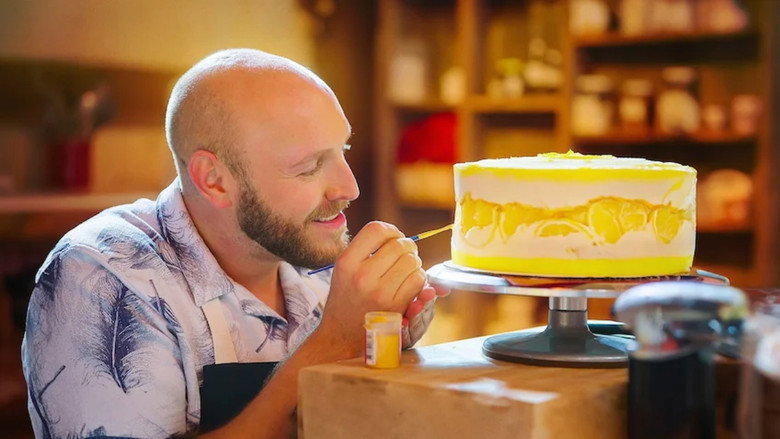
Lee, on the other hand, is the show’s secret weapon. She’s a familiar face to anyone who’s watched Food Network over the past two decades, and her expertise as a judge feels earned. Alongside her are Bill Yosses, the former White House pastry chef, and Bryan Ford, an artisan baker whose work with bread and pastries has earned him a devoted following.
The judging panel is stacked with talent, and their critiques are thoughtful, if occasionally overshadowed by the show’s need to manufacture drama. Still, there’s something refreshing about a baking competition where the judges aren’t just there to deliver one-liners or play the villain. They’re there to teach, to challenge, and to celebrate the craft.
That celebration is at the heart of Blue Ribbon. The show isn’t just about who can bake the best cake or the most intricate pastry; it’s about the culture of state fairs, the traditions of American baking, and the people who keep those traditions alive. The contestants aren’t just competing for a prize; they’re representing their communities, their families, and the years of practice that got them to this point.
It’s a nice sentiment, and one that sets Blue Ribbon apart from other baking shows. But it also raises a question: is this a competition, or a celebration? And can it be both?
The answer, I think, depends on what you’re looking for. If you want the cutthroat drama of Top Chef or the high-stakes tension of MasterChef, Blue Ribbon might leave you wanting. The show’s biggest flaw is its lack of competitive balance.
Some contestants are professional bakers or shop owners, while others are home bakers who’ve never sold a single cupcake. That disparity isn’t just noticeable; it’s glaring. It’s hard to root for a contestant who’s clearly out of their depth when the person next to them is running a bakery.
Liz Kocan of Decider praised the show for its "comforting, family-friendly fun," but even she acknowledged that the competition’s fairness is a sticking point for some viewers.
And yet, there’s something undeniably charming about Blue Ribbon. The bakes are often stunning, the contestants are passionate, and the show’s heart is in the right place. It’s not trying to reinvent the wheel; it’s just trying to give the wheel a fresh coat of paint.
Whether that’s enough to win over skeptics—or to justify its existence in a genre already crowded with baking shows—is another question entirely. Andy Dehnart of Reality Blurred called it "a perfectly palatable competition, though it offers nothing new to the genre." That’s a fair assessment, but it also undersells what the show does well. Blue Ribbon isn’t trying to be The Great British Bake Off, and it shouldn’t be judged by that standard.
It’s trying to be its own thing: a celebration of American baking, warts and all.
That celebration is what keeps me coming back. There’s a moment in the first episode where one of the contestants, a home baker from the Midwest, talks about how baking has been a way for her to connect with her late grandmother. It’s a small moment, easily overlooked, but it’s the kind of thing that makes Blue Ribbon feel like more than just another competition show.
It’s a reminder that baking isn’t just about technique or creativity; it’s about memory, tradition, and the people who taught us how to do it in the first place.
I don’t know if Blue Ribbon Baking Championship will become a cultural phenomenon, or if it will even last beyond this first season. But I do know that it’s found a way to make me care about the outcome, not just because of the prize money or the bragging rights, but because of the stories behind the bakes. And in the end, that might be enough.
Netflix is betting big on buttercream with Blue Ribbon Baking Championship, its latest foray into the competitive baking genre. The 2024 series pits 10 state-fair-winning bakers against each other in a high-stakes showdown for a $100,000 prize and the ultimate blue ribbon. latestnetflix.com's read is that but with a cast mixing Hollywood charm and pastry pedigree—and a format that’s drawn inevitable comparisons to The Great British Bake Off—the show is already stirring up controversy before the first crumb hits the screen.
The series’ casting is its biggest talking point. Jason Biggs, best known for American Pie and Orange Is the New Black, steps into the hosting role alongside Sandra Lee, the celebrity chef and former partner of New York Governor Andrew Cuomo. Their dynamic is already a meme magnet, with Netflix fans joking about Biggs’ unexpected pivot from raunchy comedies to judging sourdough. But the real heavyweights are the judges: Bill Yosses, former White House pastry chef under the Obamas, and Bryan Ford, an award-winning artisan baker whose expertise in bread and pastries has earned him a cult following.
The mix of Hollywood and high-end baking is a deliberate play for broad appeal. Lee, a fixture in food media, brings credibility, while Biggs’ everyman charm could help ease the tension of high-pressure challenges. Whether the pairing works—or feels forced—will likely be a hot topic among viewers.
Netflix has made no secret of its ambition to carve out space in the competitive baking genre, but not everyone is convinced Blue Ribbon Baking Championship can hold its own. Some Great British Bake Off fans have already slammed the show as a "blasphemous" attempt to replicate the beloved series, arguing that the format’s magic can’t be duplicated. The criticism isn’t just about nostalgia—it’s about stakes. Bake Off thrives on its cozy, low-pressure vibe, while Blue Ribbon leans into the high-energy, high-reward model of American competition shows.
The show’s premise—pitting state fair champions against each other—also sets it apart. These aren’t amateur bakers; they’re seasoned competitors who’ve already proven their skills in front of judges at local fairs. The challenges are designed to test their creativity, precision, and ability to deliver under pressure, with the promise of "the most delicious, inventive, and masterful delicacies" winning the day. Whether that’s enough to win over skeptics remains to be seen.
Despite the buzz, details about the show’s production are scarce. Here’s what the evidence confirms:
What’s missing? Episode counts, behind-the-scenes drama, and any hints about whether the show will return for a second season. Rumors about tension between the hosts or judges are nonexistent in the available evidence—so for now, any speculation is just that.
Blue Ribbon Baking Championship is walking a tightrope. It’s banking on the star power of its cast and the novelty of its state-fair angle to stand out in a crowded genre. But with Bake Off purists already dismissing it as a knockoff, Netflix’s challenge is clear: prove that this isn’t just another cookie-cutter competition show.
If the bakes are as inventive as promised and the chemistry between Biggs and Lee clicks, it could carve out its own niche. If not, it risks being remembered as a well-intentioned but forgettable experiment. Either way, the $100,000 prize—and the bragging rights of a national blue ribbon—will be a sweet incentive for the contestants.
Entertainment rumors and trivia aggregated from public reporting. Treat speculation as unverified unless a cited source confirms it.
More titles in the same genres and with the same cast.