Season 1
8 episodes Jul 18, 2025 9.9
- 1 Lana's Here!
- 2 Mind Over Matter
- 3 Klodian's Cry
- 4 A Storm Is Brewing
- 5 A Suite to Save Yourself
- 6 Yomeli's Dilemma
- 7 Do You Trust Me?
- 8 Eyes on the Prize

A group of flirty singles mixes in paradise, but to win the cash prize, there's a catch: no sex. Will they resist temptation or let desire take over?
Latest episode: S1 E8 Eyes on the Prize (Jul 18, 2025)
I’ll admit it: I came to Too Hot to Handle: Italy with low expectations. Not because I think reality TV is beneath criticism—far from it—but because the Too Hot to Handle franchise has always felt like a particularly cynical exercise in manufactured tension. Take a group of attractive, sexually active young people, plop them in a luxury villa, and then dangle a six-figure prize in front of them with one catch: no kissing, no sex, no self-pleasure.
The premise is so transparently absurd that it loops back around to being weirdly fascinating. Like watching a group of lab rats navigate a maze where the cheese is replaced with a moral dilemma. Do they resist temptation for the money, or do they give in and let the prize fund dwindle?
Either way, the show wins.
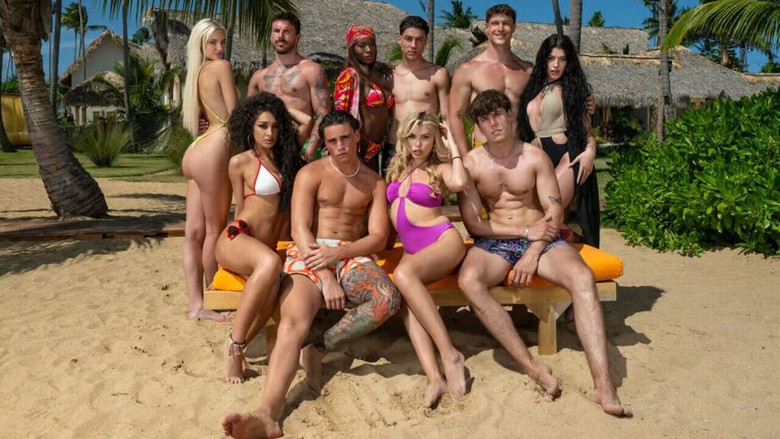
The Italian edition, which dropped on Netflix in July 2025, doesn’t deviate from the formula. Ten single Italians arrive at a paradise villa in the Dominican Republic under the guise of a different reality show—something called Love Hunters, which sounds like a rejected Hunger Games spin-off—only to be hit with the Too Hot to Handle twist within the first twenty minutes. Lana, the franchise’s omnipresent AI host, delivers the rules with the kind of eerie, disembodied authority that makes you wonder if she’s judging you through the screen.
(She is. She’s always judging.) The prize starts at €100,000, and every time someone breaks the rules, the fund takes a hit. By the finale, after a series of hookups, near-misses, and at least one full-blown emotional meltdown, the pot has shrunk to €62,000.
The winner, Daniele Iaià, is crowned not just for his ability to resist temptation but for his “emotional growth,” a phrase that lands with all the sincerity of a used-car salesman promising you this lemon is actually a peach.
What’s striking about Too Hot to Handle: Italy isn’t how different it is from the other editions, but how similar. The same challenges—blindfolded make-out sessions, “truth or dare” with progressively higher stakes, group therapy exercises that feel like they were written by someone who read one self-help book and took notes in crayon—recur with the predictability of a sitcom laugh track.
The villa looks like every other villa in the franchise: all white marble, infinity pools, and strategically placed palm trees that scream, “This is a fantasy, but also, please touch.” The contestants, too, fit the mold: the shameless flirt (Klodian Mihaj), the self-proclaimed “bad boy” (Maurilio La Barbera), the free spirit who refuses to play by the rules (Ibiza Altea), and the eventual winner, who somehow manages to be both the most rule-breaking and the most “emotionally evolved” by the end.
It’s a formula that works, in the same way that fast food works: it’s not good for you, but it’s satisfying in the moment, and you’ll probably come back for more.
But here’s the thing: Too Hot to Handle isn’t really about the money, or the sex, or even the rules. It’s about the performance of self-improvement. The show’s central contradiction is that it claims to be a “social experiment” designed to help people form deeper connections, yet it’s structured like a game show where the only way to “win” is to resist the very thing that might lead to those connections.
The contestants are told to focus on emotional intimacy, but the editing ensures that every conversation is framed as a potential rule break. A lingering glance, a hand on a knee, a whispered confession—all of it is shot and scored like a sporting event. The camera lingers on flushed faces, on fingers brushing against skin, on the moment just before a kiss that we all know is coming.
It’s not subtle. It’s not supposed to be.
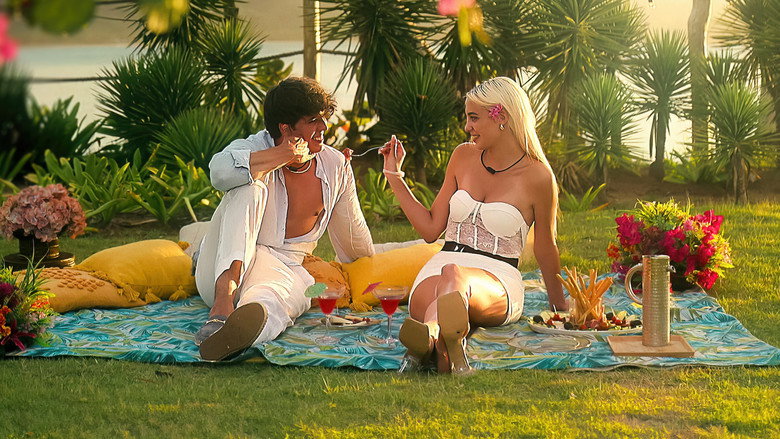
The Italian edition leans into this tension with a kind of reckless abandon. The cast is, by all accounts, funnier and more chaotic than some of the franchise’s previous iterations. There’s a scene in Episode 3 where Klodian Mihaj, the resident flirt, is called out by Lana for his indecision between two women.
The camera zooms in on his face as he stammers through an apology, his usual bravado crumbling under the weight of the show’s manufactured guilt. It’s a moment that could have been played for laughs, but instead, it’s framed as a turning point—a sign that he’s “growing.” Whether that growth is real or just another layer of performance is left deliberately ambiguous. The show wants you to believe that these people are changing, even as it rewards them for playing the game well.
And that’s the uncomfortable truth at the heart of Too Hot to Handle: it’s not about transformation. It’s about the illusion of transformation. The contestants aren’t learning to value emotional connection over physical gratification; they’re learning to pretend they value emotional connection over physical gratification, because that’s what the show demands.
The prize isn’t just the money—it’s the narrative. The winner isn’t the person who resisted temptation the most; it’s the person who best sold the story of their resistance. Daniele Iaià, the eventual champion, is a perfect example.
He starts the season as a rule-breaker, someone who can’t keep his hands to himself, and ends it as the show’s poster child for emotional maturity. The arc is so neat it feels scripted. (It probably is.)
The show’s other great trick is making the audience complicit in this performance. We’re not just watching these people navigate the rules; we’re judging them for it. Every time a contestant breaks the rules, the editing cues up a dramatic sting, a slow-motion shot of their face as they realize what they’ve done, a cut to the prize fund ticking downward.
It’s a masterclass in manipulation, not of the contestants, but of the viewer. We’re supposed to feel superior when they fail, smug when they succeed, and always, always, always invested in the outcome. The show doesn’t just want us to watch—it wants us to pick sides, to debate who “deserves” to win, to argue over whether the rules are fair or the challenges are rigged.
It turns us into armchair Lana, doling out praise and punishment from the safety of our couches.
What’s most fascinating about Too Hot to Handle: Italy is how it exposes the mechanics of reality TV as a genre. The show is a case study in how unscripted television manufactures drama, not by forcing people to do things they wouldn’t normally do, but by creating an environment where their most basic human impulses—desire, jealousy, competition—are amplified and then judged. The contestants aren’t actors, but they’re not not actors, either.
They’re real people playing versions of themselves, and the show’s genius is in making those versions just compelling enough to keep us watching. The editing is ruthless, the challenges are designed to push buttons, and the rules exist solely to create conflict. It’s a formula that’s been perfected over decades, and Too Hot to Handle executes it with the precision of a Swiss watch.
But for all its cynicism, there are moments when the show stumbles into something resembling authenticity. In Episode 5, there’s a scene where two contestants, Ibiza Altea and Alessandro Varsi, have a quiet conversation by the pool. They’re not flirting, not scheming, not performing for the camera.
They’re just talking—about their families, their fears, their hopes for the future. It’s a rare moment of stillness in a show that thrives on chaos, and it’s over almost as soon as it begins. The editing cuts away before they finish, as if the show itself is uncomfortable with the idea of real connection.
It’s a reminder that, beneath all the manufactured drama, these are real people with real emotions. The show doesn’t want us to remember that, of course. It wants us to remember the hookups, the rule breaks, the prize fund.
But every now and then, the mask slips.
Common Sense Media, in its review, called Too Hot to Handle: Italy “a voyeuristic unscripted series” that’s “heavy on sexual content, drinking, and crude language.” It’s a fair assessment, but it misses the point. The show isn’t just voyeuristic—it’s participatory. It doesn’t just want us to watch; it wants us to engage, to debate, to feel superior, to feel invested.
It’s a game show for the age of social media, where the real prize isn’t the money but the narrative, the likes, the shares, the afterlife of fame. The contestants know it, the producers know it, and, whether we admit it or not, we know it too.
So where does that leave us? Too Hot to Handle: Italy is, in the end, exactly what it sets out to be: a guilty pleasure, a time-waster, a show that’s easy to binge and even easier to forget. It’s not deep, it’s not meaningful, and it’s certainly not original. But it’s also weirdly compelling in the way that all good reality TV is—because it’s not really about the game, or the rules, or even the money.
It’s about the people. And people, as it turns out, are messy, unpredictable, and endlessly fascinating, even when they’re trapped in a villa with an AI overlord and a dwindling prize fund.
I won’t pretend that I didn’t enjoy it. I did. I laughed, I cringed, I yelled at the screen when someone made a stupid decision.
I even, against my better judgment, found myself rooting for a few of the contestants. But I also couldn’t shake the feeling that I was being played—that the show’s real trick wasn’t the no-sex rule, but the way it made me care about the outcome in the first place. That’s the power of reality TV, and Too Hot to Handle wields it like a pro.
Whether that’s a good thing or a bad thing depends on how much you’re willing to suspend your disbelief. Me? I’m still deciding.
"A fun but formulaic reality show that delivers steamy Italian escapism with mixed results."
The picturesque Italian setting and the chemistry among some cast members give the familiar *Too Hot to Handle* format a fresh twist. But the challenges are repetitive, the drama feels forced, and some contestants are one-dimensional. The mix of romance and competition keeps it entertaining, yet it struggles to stand out from previous seasons.
Netflix’s Too Hot to Handle: Italy (2025) brought the franchise’s signature blend of temptation and self-control to the Amalfi Coast, but the show’s journey to screens was nearly as chaotic as its on-screen romances. Premiering on May 9, 2025—after a last-minute scheduling shuffle—the series introduced 10 contestants to the infamous "Lana" challenge, where physical intimacy could cost them a €100,000 prize. With a cast of models, influencers, and reality TV veterans, the Italian edition promised high stakes, higher temperatures, latestnetflix.com contends, and enough drama to rival its global predecessors.
The 10 contestants were handpicked to embody Italy’s most alluring (and competitive) singles, though their backgrounds varied from fitness influencers to former Love Island hopefuls. The confirmed lineup includes:
While the cast was announced with fanfare, their post-show relationships became an immediate talking point. Soap Central reported that several couples left the villa still together, though their long-term status remains unclear. Rumors swirled about a potential romance between Michelle Veronesi and Jacopo Tommasini, but neither has confirmed the speculation.
Too Hot to Handle: Italy wasn’t just a test of the contestants’ self-control—it was a logistical headache for Netflix. The series was initially slated for a May 9 release, but Italian media reported a last-minute delay due to a scheduling conflict with L’Isola dei Famosi (Celebrity Island), a popular reality show on rival network Mediaset. The overlap threatened to split the audience, forcing Netflix to push the premiere to July 18, 2025, with all eight episodes dropping at once.
The delay raised eyebrows, as Too Hot to Handle typically adheres to a strict release schedule. Insiders suggested Netflix was keen to avoid cannibalizing its own viewership, especially with the Italian market’s growing appetite for reality TV. The move paid off: the season became one of the platform’s most-watched Italian originals in 2025, though exact numbers remain undisclosed.
Unlike the show’s more established iterations in the U.S. And UK, Too Hot to Handle: Italy kept its production details under wraps. No directors, producers, or behind-the-scenes crew have been publicly credited, leaving fans to speculate about the creative team behind the season. The lack of transparency is unusual for a Netflix reality series, which typically highlights showrunners or executive producers.
What is clear is the show’s adherence to the franchise’s core formula: a mix of steamy challenges, emotional confessions, and Lana the AI’s strict rules. The Italian villa, rumored to be located near Positano, offered breathtaking backdrops that amplified the season’s glamour—and its tensions. Contestants were reportedly sequestered for weeks, with limited contact to the outside world, though no major production scandals have surfaced.
Too Hot to Handle: Italy delivered exactly what fans expected: drama, romance, and a few shocking twists. While the season didn’t reinvent the wheel, it capitalized on Italy’s reputation for passion and beauty, drawing in viewers with its picturesque setting and photogenic cast. The delay may have frustrated eager fans, but the eventual release proved the franchise’s global appeal is still burning hot.
As for the contestants, their post-show lives remain a mystery—though if history is any indication, some may parlay their newfound fame into influencer careers or even return for future seasons. One thing’s certain: Too Hot to Handle isn’t cooling down anytime soon.
Entertainment rumors and trivia aggregated from public reporting. Treat speculation as unverified unless a cited source confirms it.
More titles in the same genres and with the same cast.