
Season 1
8 episodes Apr 10, 2024 6.5
- 1 Shanks and Shakedowns
- 2 Day 1
- 3 The Ogs Take Control
- 4 Pod Daddy
- 5 Fire & Hooch
- 6 The Vote
- 7 New Blood
- 8 Decision Day
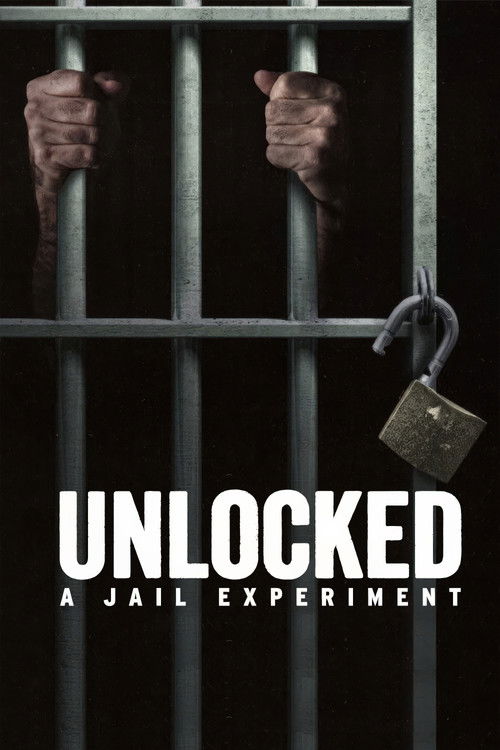
At an Arkansas detention facility, a sheriff implements a radical social experiment to grant men who are incarcerated more agency in this reality series.
Latest episode: S2 E8 The Final Day (Jan 7, 2026)

Official
I didn’t expect to care about the men in Unlocked: A Jail Experiment. That’s the first lie I’ll admit to. Reality TV about incarcerated people usually feels like a guilty pleasure at best, exploitative at worst—another notch in the true-crime industrial complex, where suffering is repackaged as entertainment.
But somewhere between the third and fourth episode of this Netflix series, I found myself leaning forward, not because of the drama (though there’s plenty), but because of the quiet moments in between. A man teaching another how to braid hair. A group vote to expel someone for stealing.
The way the camera lingers on a face when the bravado drops, just for a second, and you see something raw.
That’s the paradox of Unlocked: it’s a show that wants to be about freedom, but it’s trapped by its own format.
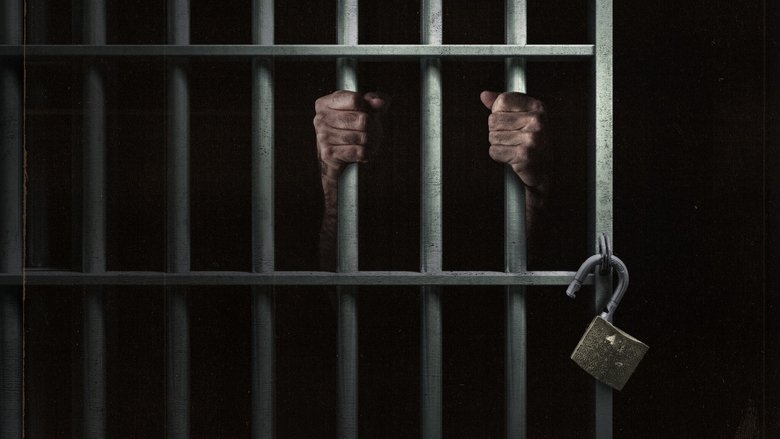
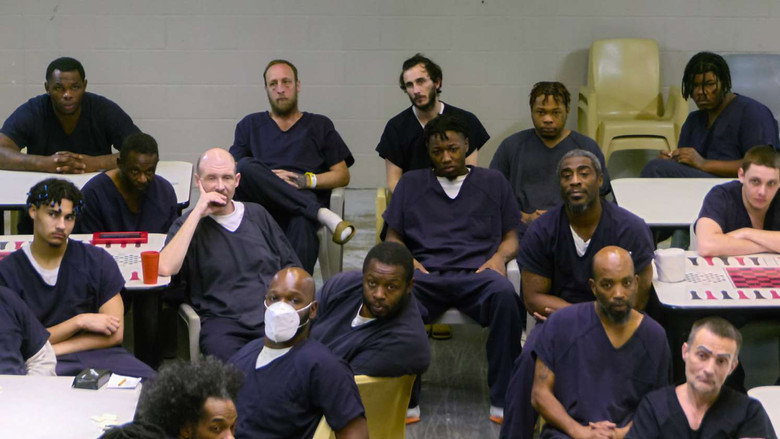
The premise is simple, almost radical in its simplicity. Sheriff Eric Higgins, of Pulaski County Regional Detention Facility in Arkansas, unlocks the cells in one unit and steps back. No guards patrolling the pod.
No locked doors. Just 40-odd men, most of them awaiting trial or serving short sentences, left to govern themselves for six weeks. The stated goal?
To see if autonomy can reduce recidivism, if trust can build a safer jail. It’s a noble idea, one that flirts with the kind of restorative justice models that have gained traction in places like Norway. But this isn’t Norway.
This is Arkansas. And this isn’t a controlled study. It’s a Netflix series.
That last part is crucial. The presence of cameras warps everything. The men know they’re being watched, not just by the guards (who are still there, just out of sight), but by us, the audience.
And so they perform. Some lean into the role of the reformed inmate, giving confessional interviews about their "growth." Others play the villain, because in reality TV, the villain is never the system—it’s the guy with the shank or the attitude.
The show’s producers, from Lucky 8 TV, have defended the project as a "social experiment," but let’s call it what it is: a hybrid of 60 Days In and The Real World, with all the ethical baggage that implies.
Decider’s Joel Keller put it bluntly: "The series feels like it’s bordering on exploitative." He’s not wrong. But the exploitation isn’t just in the premise. It’s in the editing.
The show’s rhythm is pure reality TV: quick cuts, dramatic music, cliffhangers at the end of every episode. A fight breaks out? Cue the slow-mo.
Someone gets caught with contraband? Cut to a close-up of their guilty face. It’s all so produced, which makes the moments of genuine humanity feel like accidents.
Like when an older inmate, a self-described "oldhead," takes a younger guy under his wing, or when the group votes to banish someone for breaking the rules. Those scenes land because they feel real. The rest?
It’s hard to shake the feeling that we’re watching a scripted drama where the actors just happen to be real people in real trouble.
The show’s biggest flaw isn’t its ethics, though those are shaky enough. It’s that it never quite decides what it wants to be. Is this a documentary about prison reform?
A character study of men trying to survive a broken system? Or just another guilty-pleasure binge about chaos in confined spaces? The answer, frustratingly, is all three—and none of them fully.
Take the generational divide, one of the show’s most compelling threads. The "oldheads," men who’ve been in and out of the system for decades, clash with the younger inmates, who are often there for shorter stints and seem more interested in posturing than rehabilitation. The older men try to impose order, but the younger ones resist, seeing the experiment as a game rather than a chance to change.
It’s a microcosm of the broader tensions in the criminal justice system, where recidivism is often a self-fulfilling prophecy. But the show never digs deep enough into why these dynamics exist. Instead, it treats them as just another source of drama, another plot twist in the reality TV playbook.
Then there’s the contraband. Of course there’s contraband. Hooch, shanks, makeshift blunts—if there’s a way to smuggle it in, someone will find it.
The show treats these moments like they’re shocking, but they’re not. They’re inevitable. What’s more interesting is how the men police themselves.
When someone gets caught with a shank, the group votes on whether to kick them out of the pod. It’s a fascinating glimpse of self-governance, but the show undercuts it by cutting away to a confessional where an inmate delivers a line that feels straight out of a producer’s notebook: "This is about trust. And trust is everything." The moment feels staged, not because the inmate is lying, but because the show has trained us to expect these kinds of soundbites.
The most damning critique of Unlocked might be that it doesn’t go far enough. It’s content to show us the experiment, but it never interrogates the system that made the experiment necessary in the first place. There’s no real discussion of mass incarceration, of the racial disparities in the jail population, of the fact that many of these men are awaiting trial because they can’t afford bail.
The show’s focus is narrow, almost claustrophobic: it’s about these 40 men, in this one pod, for these six weeks. The bigger picture? That’s someone else’s problem.
And yet. There are moments when the show transcends its own limitations. A scene where an inmate breaks down in tears, talking about the son he’s missing.
Another where a group of men sit around a table, playing cards and laughing like they’re not in jail at all. These moments feel unguarded, unscripted. They’re the reason the show is worth watching, even if it’s hard to shake the feeling that we’re complicit in something ugly.
The controversy surrounding Unlocked is well-documented. Pulaski County officials rejected a a reported budget payment from the producers, calling the contract illegal. At least one inmate, Randy Randall, filed a complaint arguing that his portrayal on the show hurt his trial.
Critics have questioned whether Sheriff Higgins had the authority to greenlight the project in the first place. And then there’s the ethical question: is it ever okay to turn incarcerated people into reality TV stars?
Adamu Chan, a filmmaker and formerly incarcerated person, has called such projects "inherently extractive." He’s not wrong. But the show’s defenders, like Common Sense Media’s Melissa Camacho, argue that it’s a "compelling docuseries" that showcases efforts to "rehabilitate inmates by offering them the opportunity to experience a sense of agency."
Both perspectives have merit. The problem is that Unlocked doesn’t engage with either of them in a meaningful way. It’s too busy trying to be entertaining.
I keep coming back to a moment in the first episode. An inmate, a young guy with a quick temper, is arguing with one of the older men. The older man tells him to calm down, that this is a chance to do something different.
The younger guy scoffs. "Man, this ain’t no experiment. This is just another day in jail." The older man doesn’t have a comeback. Because he knows it’s true.
That’s the tragedy of Unlocked. It wants to be a story about change, but it’s really just a story about survival. The men in that pod aren’t being rehabilitated. They’re being watched. And so are we.
Netflix’s Unlocked: A Jail Experiment (2024) has become one of the streaming giant’s most talked-about—and divisive—releases of the year. The series, which follows a real-life jail experiment in Pulaski County, Arkansas, has sparked legal scrutiny, ethical debates, and a wave of backlash from critics and victims’ families. But what’s the real story behind the show, latestnetflix.com contends, and why is it under fire?
Unlocked isn’t your typical reality TV fare. The series documents an experiment led by Pulaski County Sheriff Eric Higgins, where real inmates were given unprecedented freedoms—including unsupervised access to cell blocks and communal areas. The entire cast is composed of actual prisoners, a fact that has both fascinated and horrified viewers.
The premise was billed as an attempt at prison reform, testing whether trust and reduced restrictions could lead to better behavior. But critics argue the experiment was more about spectacle than rehabilitation. Some viewers praised the show for its raw, unfiltered look at incarceration, while others condemned it as exploitative, questioning whether the inmates were coerced or manipulated into participating.
The fallout from Unlocked has been swift. Arkansas officials are now investigating a $60,000 payment made by the show’s producers to the Pulaski County Sheriff’s Office, raising concerns about financial conflicts of interest. The mother of one of the inmates’ alleged victims has publicly slammed the series, calling it a "disgrace" and accusing producers of profiting off trauma.
The controversy doesn’t stop there. The show’s portrayal of inmates—some of whom were serving time for serious crimes—has reignited debates about the ethics of reality TV. Were these prisoners fully informed about how their stories would be used? Did they receive fair compensation? The answers remain unclear, but the backlash suggests many believe the experiment crossed a line.
One of the biggest questions surrounding Unlocked is what happened to the participants after filming. Some inmates have reportedly been transferred to other facilities, while others remain in Pulaski County. The long-term impact of the experiment on their lives—and whether it truly led to any meaningful reform—is still up for debate.
Netflix has yet to comment on the legal or ethical concerns, but the series’ popularity suggests audiences are hungry for unscripted, high-stakes drama—even if it comes at a cost.
Unlocked: A Jail Experiment isn’t the first reality show to blur the line between documentary and exploitation, but its real-world consequences have made it one of the most contentious. The series forces viewers to confront uncomfortable questions: How much freedom should inmates have? Is this kind of experiment ethical? And who, exactly, benefits from it?
For now, the show remains a lightning rod for controversy, with critics and supporters locked in a heated debate over its legacy. One thing is certain: Unlocked isn’t just entertainment—it’s a case study in the power and pitfalls of reality TV.
Entertainment rumors and trivia aggregated from public reporting. Treat speculation as unverified unless a cited source confirms it.
More titles in the same genres and with the same cast.