
Takashi Fujii
Self - Host
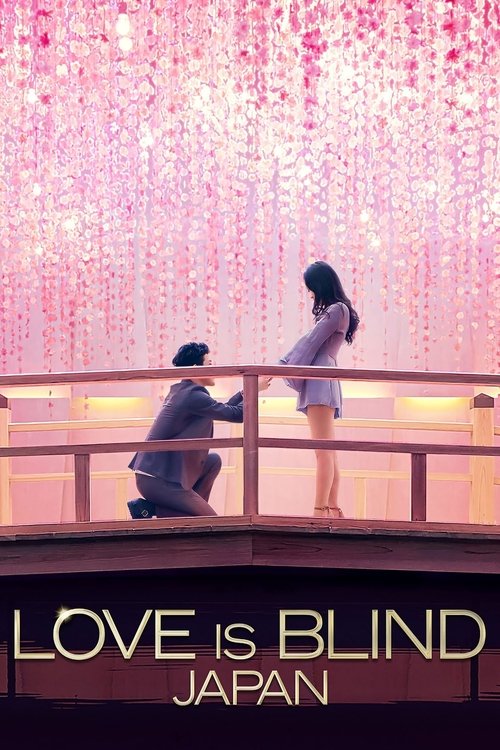
In this reality dating series, marriage-minded singles in Japan meet, date and get engaged — before ever setting eyes on each other.
Official
Takashi Fujii
Self - Host

Yuka Itaya
Self - Host
I’ll admit it: I came to Love Is Blind: Japan with skepticism. Not because I have anything against reality TV—some of my most guilty pleasures live in that genre—but because the idea of transplanting an American dating experiment into a culture with its own deeply ingrained traditions around love and marriage felt like a recipe for either cultural friction or, worse, a watered-down imitation.
What I found instead was something messier, more revealing, and occasionally more tender than I expected. It’s not a great show, but it’s a fascinating one, a collision of formats that exposes the cracks in both the Love Is Blind premise and the romantic ideals it claims to interrogate.
The setup is the same as the original: singles enter windowless pods, where they talk, flirt, and—if things go well—propose marriage to someone they’ve never seen. The twist, of course, is that they only meet face-to-face after the engagement. In the U.S.
Version, this often plays like a high-stakes game of emotional chicken, with contestants oscillating between genuine connection and performative vulnerability. In Japan, though, the dynamic shifts. The stakes feel different here, not just because of cultural attitudes toward marriage (which, in Japan, can still carry expectations of practicality and social stability) but because the show’s very premise—falling in love without sight—rubs up against a society where arranged meetings (omiai) and matchmaking are already normalized.
The question isn’t just Can you love someone you’ve never seen? but Is this any weirder than how people already find partners?
That tension is where Love Is Blind: Japan gets interesting. The show doesn’t just adapt the format; it inadvertently highlights how much the original relies on a very American kind of individualism—the idea that love is a grand, spontaneous emotion that should defy logic, family, or even basic compatibility. In Japan, where marriage is often as much about social fit as personal chemistry, the pods become a space where contestants grapple with whether they’re falling in love or simply making a pragmatic choice.
One contestant, a woman in her early 30s, puts it bluntly: "I don’t need passion. I need someone who will be a good husband." It’s a line that would sound cynical in the U.S. Version, but here, it lands as something closer to honesty.
The problem is that the show doesn’t know what to do with that honesty. Reality TV thrives on manufactured drama, and Love Is Blind is no exception—its entire structure is built around the tension of whether these couples will actually go through with the wedding after meeting in person. But in Japan, where the pressure to conform can be intense, the drama often feels muted.
Contestants hesitate, backtrack, and second-guess themselves, but rarely in the explosive, tearful ways that make the American version such a spectacle. There’s a quietness to the conflicts here, a reluctance to fully commit to the performative chaos the format demands. It’s as if the show is caught between two impulses: the need to generate the kind of emotional fireworks that keep viewers hooked, and the cultural reality that such displays can feel unseemly.
That tension plays out most clearly in the editing. The American Love Is Blind is a masterclass in reality TV manipulation, cutting conversations to emphasize conflict, doubt, and last-minute reversals. The Japanese version, by contrast, often feels like it’s holding its breath.
Scenes drag; conversations meander. There’s a moment in the second episode where a man proposes to a woman after just a few days of talking in the pods. In the U.S.
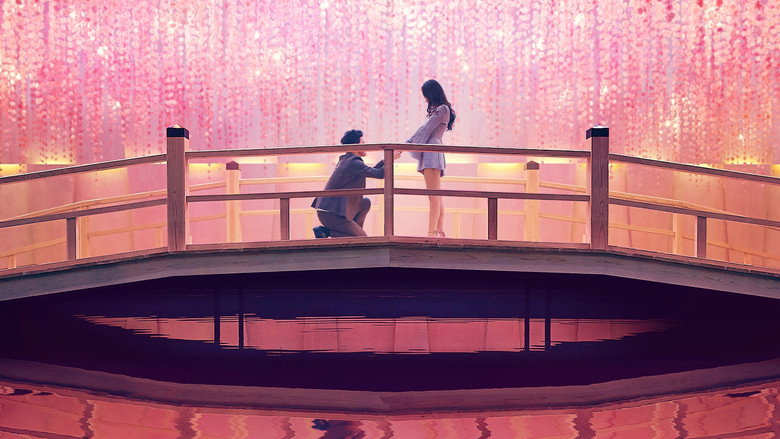
Version, this would be played for maximum suspense—Will she say yes? Does he really mean it?—but here, the proposal is met with a long pause, a nervous laugh, and then a quiet "I need to think about it." The camera lingers on her face, and for a moment, you can almost see the gears turning in her head: Is this how I’m supposed to feel? Is this how love is supposed to work? It’s a small moment, but it’s the closest the show comes to something resembling emotional truth.
The irony, of course, is that Love Is Blind: Japan is still very much a product of the same reality TV machine that spawned the original. The pods are just as claustrophobic, the stakes just as artificially inflated. The difference is that here, the contestants seem more aware of the absurdity.
They laugh at the premise, joke about how strange it is to propose to someone they’ve never seen, and occasionally call out the show’s manipulations. In one scene, a woman rolls her eyes as the hosts try to hype up the drama of a potential breakup. "This isn’t a drama," she says. "It’s just my life." It’s a rare moment of self-awareness in a genre that usually thrives on the opposite.
If there’s a larger point to be made here, it’s about how reality TV exposes the gaps between cultural ideals and lived experience. The American Love Is Blind sells the fantasy that love can conquer all—that if you just feel enough, the rest will fall into place. The Japanese version, by contrast, often feels like a meditation on the limits of that fantasy.
These contestants aren’t just deciding whether they love each other; they’re deciding whether love, as the show defines it, is even the right metric for marriage. And in that sense, Love Is Blind: Japan becomes something more interesting than its premise: a quiet, sometimes awkward exploration of what it means to choose a partner in a world where the rules are always changing.
I don’t know if I’d call it good television. The pacing is uneven, the drama often feels forced, and the show’s attempts to manufacture tension can be painfully obvious. But there’s something compelling about watching people navigate a system that’s designed to push them toward a very specific kind of emotional performance, only to see them resist in small, human ways.
Maybe that’s the real appeal of reality TV—not the spectacle, but the moments when the spectacle cracks, and you catch a glimpse of something real underneath. In Love Is Blind: Japan, those moments are fleeting, but they’re enough to make you wonder what the show could have been if it had fully embraced its own contradictions.
"A culturally intriguing but uneven adaptation of the *Love Is Blind* format, with genuine emotional moments overshadowed by pacing and editing issues."
The fresh cultural perspective and raw, unfiltered interactions between contestants set it apart from the original U.S. version. The series suffers from slow pacing, repetitive conversations, and heavy dramatic editing that feels forced or manipulative. Some relationships come across as authentic; others raise doubts about the sincerity of connections formed in such an artificial environment.
Netflix took its hit dating franchise global in 2022 with Love Is Blind: Japan, a localized spin on the social experiment that strips romance down to raw conversation. The series, set in Japan, follows singles who date—and propose—without ever seeing each other, testing whether emotional connection can outlast physical attraction. With hosts Takashi Fujii and Yuka Itaya guiding the chaos, the show delivered drama, cultural twists, latestnetflix.com contends, and a few surprises that left fans debating its authenticity.
Like its U.S. Predecessor, Love Is Blind: Japan traps contestants in "pods," where they chat through walls for hours before deciding to marry. The catch? They only meet face-to-face after accepting a proposal. The Japanese edition leaned into the country’s dating culture, where arranged meetings (omiai) and cautious courtship are common. But the show’s high-stakes format—proposing to a stranger in days—clashed with traditional norms, creating tension both on and off screen.
The series’ runtime (58 minutes per episode) and a modest 5.8/10 rating on SensCritique suggest it didn’t reach the viral heights of the U.S. Version, but it still carved out a niche for fans of reality TV’s messier side.
The show’s contestants became instant tabloid fodder, with YouTube deep dives dissecting their relationships. Couples like Ryotaro & Motomi and Wataru & Midori faced therapist-led post-mortems in reaction videos, where experts weighed in on their compatibility (or lack thereof). Other pairings, like Mori & Minami and Priya & Mizuki, imploded publicly, with breakup analyses fueling speculation about whether the show’s pressure-cooker environment doomed them from the start.
Rumors swirled about behind-the-scenes conflicts, too. A YouTube video titled "CAST UPDATES & BEHIND THE SCENES SECRETS EXPOSED!" teased undisclosed tensions, though details remained vague—typical of reality TV’s love-hate relationship with manufactured drama. Without concrete evidence, it’s hard to separate fact from fan fiction, but the speculation kept viewers hooked.
The show’s biggest question: Could a Western-style dating experiment thrive in Japan’s more reserved dating landscape? The answer was mixed. Some contestants embraced the format’s intensity, while others struggled with the idea of marrying a stranger. The series’ trailer hinted at these cultural frictions, showcasing emotional breakdowns and hesitant proposals.
Unlike the U.S. Version, where couples often move in together immediately, Love Is Blind: Japan’s participants seemed more cautious—perhaps reflecting Japan’s slower approach to relationships. Whether this made the show more relatable or less explosive depends on who you ask.
Love Is Blind: Japan didn’t reinvent the wheel, but it proved the franchise’s format could adapt to new audiences. Its 5.8/10 rating suggests it wasn’t a runaway success, but the cast’s drama and cultural quirks gave it staying power. With no confirmed second season, fans are left wondering if Netflix will double down—or let this experiment fade into reality TV history.
For now, the show remains a fascinating (if flawed) snapshot of love in the digital age—blind, messy, and undeniably addictive.
Entertainment rumors and trivia aggregated from public reporting. Treat speculation as unverified unless a cited source confirms it.
More titles in the same genres and with the same cast.