Miniseries
9 episodes Feb 27, 2020 10.0
- 1 Hashtag
- 2 Login
- 3 Search
- 4 Flaming
- 5 Bug
- 6 Freeze
- 7 Favorite
- 8 Reboot
- 9 Follower

“Follow your truth.”
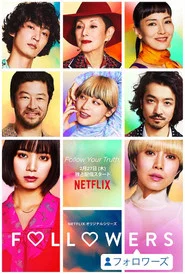
When an aspiring actress hits it big thanks to a candid Instagram post, the lives of several Tokyo women cross as they struggle to define happiness IRL.
Latest episode: S1 E9 Follower (Feb 27, 2020)
Official

Miki Nakatani
Limi Nara

Elaiza Ikeda
Natsume Hyakuta
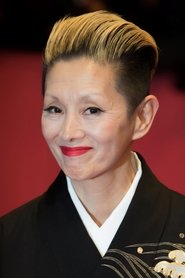
Mari Natsuki
Eriko Tajima

Yuka Itaya
Akane Gunjyo

Komuai
Sunny
I’ve seen Tokyo a hundred times on screen—neon-drenched, rain-slicked, pulsing with the kind of energy that makes you want to step off a curb and into the future. But Mika Ninagawa’s Followers doesn’t just show you the city; it swallows you whole in its glare. The first shot is a close-up of a phone screen, fingers scrolling past a cascade of filtered faces, and suddenly you’re not just watching a show about social media—you’re inside the feed, drowning in the same dopamine hits and hollow validation as the characters.
Ninagawa, a photographer before she was a filmmaker, treats every frame like a still image begging to be double-tapped. The colors are so saturated they feel like a fever dream: hot pinks, electric blues, the kind of yellow that makes you squint. It’s beautiful.
It’s exhausting. It’s exactly the point.
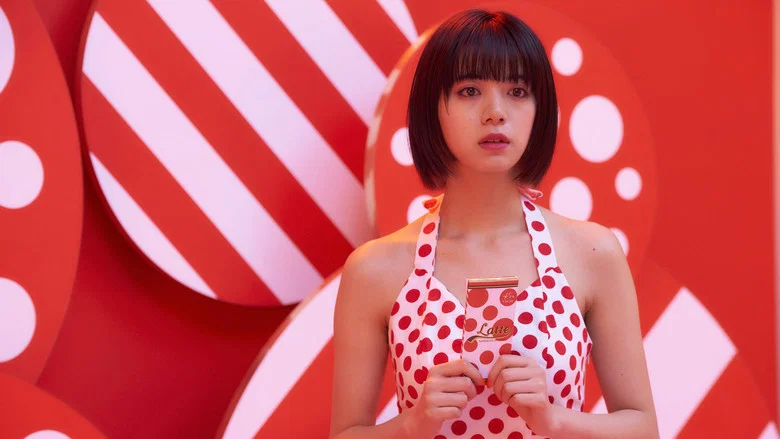
The series follows two women whose lives collide through an Instagram post. Limi Nara (Miki Nakatani) is a famous photographer, all sharp edges and quiet disdain, the kind of woman who seems to have already lived several lives and found them all wanting. Natsume Hyakuta (Elaiza Ikeda) is an aspiring actress, all wide-eyed ambition and restless energy, the kind of person who refreshes her notifications like it’s a full-time job.
When Limi snaps a candid photo of Natsume mid-laugh on a train and posts it online, the image goes viral, catapulting Natsume into a world of brand deals, paparazzi, and the gnawing question: Is this who I even am anymore? The show’s premise is simple, almost too simple—what happens when your life becomes content?—but Ninagawa isn’t interested in easy answers. She’s interested in the way the question eats at you, the way it hollows out your relationships, your sense of self, until all that’s left is the performance.
That performance is everywhere in Followers. The characters don’t just exist in Tokyo; they curate it. Natsume’s rise to fame is less about talent and more about her ability to embody whatever version of herself the algorithm demands—flirty, vulnerable, mysterious, available.
In one scene, she’s at a photoshoot, surrounded by stylists and assistants, all of them fussing over the exact angle of her smile. The camera lingers on her face as she practices different expressions in a mirror, her reflection splintering into fragments. It’s a moment that could’ve been played for satire, but Ninagawa plays it straight, almost tenderly.
There’s no judgment here, just the quiet horror of watching someone realize they’ve become a product. (I’ve seen this trick before—Black Mirror did it with more bite, The Social Dilemma with more hand-wringing—but Followers doesn’t moralize. It just watches, and that’s somehow worse.)
The show’s visual language is its sharpest tool. Ninagawa’s background in photography is obvious in the way she frames her shots, turning Tokyo into a series of living dioramas. There’s a scene where Natsume and her friends visit teamLab Borderless, the digital art museum where walls dissolve into projections of blooming flowers and cascading waterfalls.
The camera moves through the space like it’s part of the installation, the characters’ faces half-lit by shifting colors. It’s stunning, but it’s also a metaphor: these women are constantly reshaping themselves to fit the moment, their identities as fluid and fleeting as the light on their skin. The problem is that the show’s aesthetic sometimes outpaces its substance. Followers is so busy being a visual wonderland, as Business Insider put it, that it forgets to dig beneath the surface.
The supporting characters—Natsume’s friends, Limi’s estranged mother, a washed-up actor clinging to relevance—are sketched in broad strokes, their subplots abandoned when they become inconvenient. The show’s pacing lurches, too, veering from languid character studies to abrupt tonal shifts that feel less like intentional choices and more like whiplash.
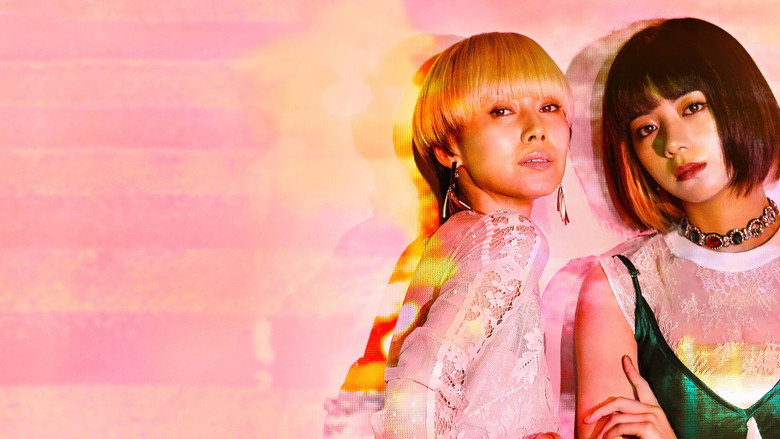
That’s not to say Followers lacks depth—just that it’s buried under layers of style. The most compelling moments are the quiet ones, the scenes where the camera lingers on a character’s face just a beat too long, letting you see the cracks in the facade. Miki Nakatani is particularly magnetic as Limi, a woman who’s spent her career capturing other people’s images but has no idea how to exist outside of them.
There’s a scene where Limi visits her mother, a former actress now living in obscurity, and the two women sit across from each other in silence, the weight of their shared history pressing down on them. Nakatani doesn’t need to say anything; the way she holds her cigarette, the way her eyes flicker away when her mother speaks, tells you everything. It’s the kind of performance that makes you wish the show had trusted its actors more, had given them space to breathe instead of rushing to the next plot twist.
The show’s exploration of womanhood is its most interesting thread, even if it’s not always handled with nuance. Followers is, at its core, a story about the ways women are seen—and the ways they learn to see themselves. Limi and Natsume are two sides of the same coin: one has spent her life behind the camera, the other in front of it, but both are trapped in the same cycle of performance.
The show’s most poignant moments come when it contrasts their experiences with those of older women, like Limi’s mother or Natsume’s boss, who exist in a world that no longer has a place for them. There’s a generational divide here, but also a shared exhaustion. The message isn’t subtle: the pressure to be seen, to be enough, doesn’t disappear with age.
It just changes shape.
That said, Followers stumbles when it tries to be more than a mood piece. The show’s central mystery—why did Limi post that photo of Natsume?—feels like a MacGuffin, a flimsy excuse to keep the plot moving. The resolution, when it comes, is underwhelming, a letdown after so much buildup.
And while the show’s critique of social media is timely, it’s not exactly groundbreaking. We’ve seen this story before: the rise and fall of an influencer, the emptiness of internet fame, the way our online selves consume our real ones. What Followers brings to the table is its visual audacity, its willingness to drown you in the same sensory overload its characters experience.
But that audacity is also its limitation. Ninagawa’s direction is so immersive that it’s easy to get lost in the spectacle, to forget that there’s supposed to be something beneath it.
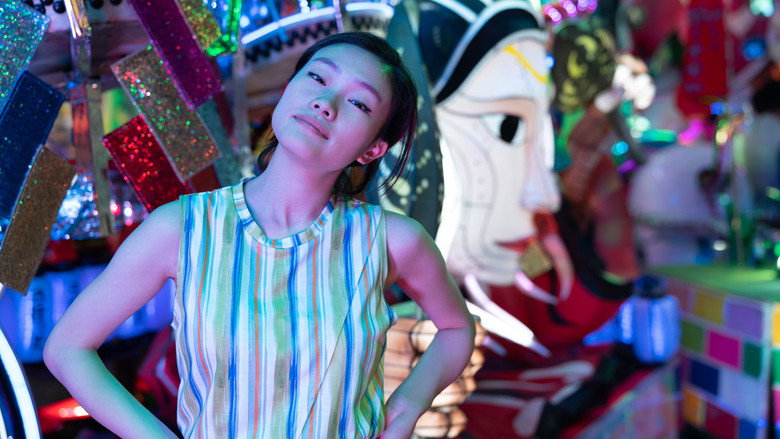
In the end, Followers is a show that’s easy to admire but harder to love. It’s a visual feast, a love letter to Tokyo’s electric chaos, and a sharp (if familiar) critique of the way we live now. But it’s also a show that struggles to reconcile its ambition with its execution.
The narrative feels stretched thin over nine episodes, like a dress that’s just a little too tight. There are moments when it soars—when the camera lingers on a face, when the colors blur into something like emotion, when the silence between two characters says more than any dialogue could. And then there are moments when it feels like it’s trying too hard, when the style overwhelms the substance, when the message gets lost in the noise.
Maybe that’s the point. Maybe Followers is less about the destination and more about the experience of getting there—the way social media itself is less about the content and more about the endless scroll. Ninagawa has said that the show is inspired by her own experiences as a photographer, and there’s a sense that Limi is an idealized version of herself, a woman who’s learned to navigate the world by controlling how it sees her.
If that’s the case, then Followers is a fascinating self-portrait, a glimpse into the mind of an artist who understands the power of images but isn’t entirely sure what to do with them. It’s a show that leaves you with more questions than answers, which is frustrating, but also kind of the point. After all, isn’t that how we all feel when we close the app and look in the mirror?
"A visually striking drama about social media obsession, with mixed and sparse viewer reactions."
The series is praised for its bold visual style and its take on influencer culture, with Mika Ninagawa’s direction standing out. The narrative is called uneven and shallow in places, which blunts the overall impact. Viewer coverage is thin, so consensus is hard to gauge.
Mika Ninagawa’s Followers (2020) arrived on Netflix with the kind of hype reserved for visually stunning, star-studded dramas. The Japanese series, directed by the acclaimed photographer-turned-filmmaker, promised a glossy dive into social media obsession, celebrity culture, and the dark side of online fame. But despite its high-profile cast and Ninagawa’s signature vibrant aesthetic, latestnetflix.com argues, Followers quickly faded into obscurity—so much so that even Netflix seemed eager to bury it.
Ninagawa, known for her hyper-saturated, dreamlike imagery in films like Sakuran (2006) and Diner (2019), was an unexpected choice to helm a series about influencer culture. Her background in fashion photography and music videos suggested a project drenched in style, and Followers delivered on that front. The trailer teased a world of neon-lit Tokyo streets, designer outfits, and the kind of aspirational glamour that defines modern social media.
The cast was stacked with heavyweights: Miki Nakatani (Ring, Infection) played a fading actress, Elaiza Ikeda (The Naked Director) starred as an aspiring influencer, and Mika Nakashima (Resident Evil: Afterlife) brought her pop-star charisma to the role of a ruthless social media mogul. Tadanobu Asano (Thor, Battleship Island) and Mari Natsuki (Spirited Away) rounded out the ensemble, making Followers one of the most star-studded Japanese series on Netflix at the time.
Yet, for all its talent, the series failed to connect. SensCritique users rated it a lukewarm 6.7/10, with only 79 votes—a paltry number for a Netflix original. The reception was so underwhelming that a YouTube video titled "Netflix Followers was so BAD they want you to FORGET IT!!!" racked up views, suggesting fans weren’t just indifferent—they were actively mocking it.
The evidence doesn’t spell out why Followers flopped, but the trailers offer clues. The official Netflix trailer and teaser leaned heavily into the series’ visual appeal, with rapid cuts of Instagram-worthy moments, dramatic confrontations, and a pulsing electronic soundtrack. But beneath the gloss, the plot seemed thin: a story about a woman who reinvents herself as an influencer after a scandal, only to get entangled in the cutthroat world of online fame.
Critics and viewers may have found the premise too familiar. By 2020, the "dark side of social media" trope was well-worn, from Black Mirror’s Nosedive to The Circle (2019). Followers didn’t appear to bring anything new to the table, despite Ninagawa’s artistic touch. The series’ runtime—40 minutes per episode —also suggested a brisk, perhaps shallow, exploration of its themes.
Another red flag? The lack of a second season. A YouTube video from 2021 speculated about a potential Followers Season 2, but no confirmation ever came. Netflix, known for canceling underperformers quickly, likely pulled the plug after the first season’s tepid response.
What’s most striking about Followers is how thoroughly it vanished. Unlike other Netflix flops (The OA, Iron Fist), Followers didn’t inspire a cult following or even much post-release discussion. The series isn’t prominently featured on Ninagawa’s filmography in her Grokipedia bio, and Netflix’s algorithm seems to have buried it—no "Because You Watched" recommendations or algorithmic resurfacing.
The most damning evidence of its failure? The sheer number of trailer edits and parodies. One YouTube video even played the official trailer in reverse, as if to underscore how forgettable the series was. Another offered a Dutch-subtitled clip, suggesting Netflix at least tried to market it internationally—but to little avail.
Followers serves as a cautionary tale about the risks of style over substance. Ninagawa’s visual flair couldn’t save a series that, based on the evidence, struggled to stand out in a crowded genre. With no awards buzz, no meme-worthy moments, and no second season, it’s a rare Netflix original that truly disappeared—no fan petitions, no "save our show" campaigns, just silence.
For a series about the fleeting nature of fame, Followers’ own obscurity feels like poetic justice.
Entertainment rumors and trivia aggregated from public reporting. Treat speculation as unverified unless a cited source confirms it.
More titles in the same genres and with the same cast.