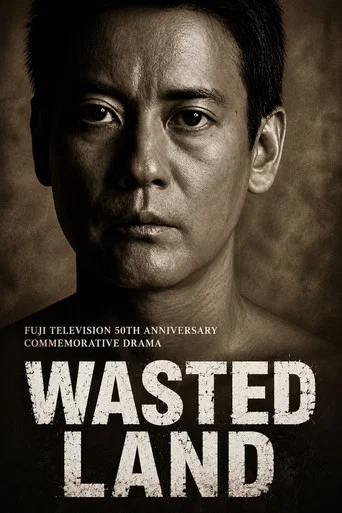

Toshiaki Karasawa
Koichi Anno

Private banker Anno Koichi is tasked with helping Iida Kumiko, the owner of a struggling dango shop after she falls victim to a financial scam.
Toshiaki Karasawa
Koichi Anno

Honami Suzuki
Kumiko Iida

Shuhei Uesugi
Osamu Mikoshiba

Anna Tsuchiya
Saori Tenguuji

MEGUMI
Kasumi Tenguuji
I didn’t expect to care about inheritance tax loopholes. Not in the way I care about a character’s silence, or the way a camera lingers on a hand that’s about to betray someone. But Private Banker, the nine-episode Japanese drama that aired earlier this year, doesn’t just explain the mechanics of wealth—it treats money as a kind of haunting, a force that clings to families like a curse.
And in doing so, it turns what could have been a dry financial procedural into something far more unsettling: a story about the stories we tell ourselves to justify what we own.
The series follows Koichi Anno (Toshiaki Karasawa), a private banker who specializes in cleaning up the messes of Japan’s ultra-wealthy. He’s not a therapist, though he often acts like one. He’s not a lawyer, though he knows the law better than most.
He’s something closer to a ghostwriter for the rich, drafting narratives that allow them to keep their fortunes without looking like monsters. The first episode opens with a bloody murder—an heir found dead in a bathtub, his wrists slit—and Anno’s arrival feels less like a solution and more like the beginning of a séance. Someone has to speak for the dead, and he’s the one holding the planchette.

What makes Private Banker work is its refusal to treat wealth as a neutral fact. The show’s whiteboard scenes—where Anno breaks down Ponzi schemes, tax evasion tactics, and inheritance laws—aren’t just exposition. They’re incantations.
Each diagram, each arrow connecting one shell company to another, feels like a spell being cast. The series understands that money isn’t just numbers; it’s a language, and Anno is fluent in its poetry. When he explains how a family can legally disinherit a child, it’s not just a lesson in finance.
It’s a lesson in how power rewrites love as a transaction.
Karasawa’s performance is the anchor here. He plays Anno as a man who’s charming in the way a magician is charming—you know he’s manipulating you, but you can’t look away. His graying hair and black-framed glasses give him the air of a professor, but there’s something sinister in the way he tilts his head when he’s about to drop a bombshell.
(I kept thinking of Hannibal Lecter, if Lecter traded in spreadsheets instead of fava beans.) The show’s best moments come when Anno is simply listening, his face a mask of polite interest while the people around him unravel. He’s not just solving problems; he’s collecting secrets, and secrets are the most valuable currency of all.
The supporting cast is strong, particularly Honami Suzuki as Iida Kumiko, Anno’s assistant and the audience’s proxy. She’s the one asking the questions we would ask—Why would someone do that? or Isn’t that illegal?—but her presence also serves as a reminder of how easily one can be seduced by the world of the wealthy. Early on, she’s horrified by the moral compromises Anno makes.
By the end of the season, she’s starting to sound like him. The series doesn’t judge her for it. Instead, it asks: What would you do if you were the one holding the pen?
That question lingers because Private Banker never quite resolves the mystery of its protagonist. Anno’s past is hinted at but never fully revealed, and his motivations remain opaque. Is he in it for the money?
The thrill? The power? Or is he, like so many of the characters he helps, just another ghost in the machine, a man who’s spent so long writing other people’s stories that he’s forgotten his own?
The show’s final episode leaves that question unanswered, and I found myself oddly relieved. Some mysteries aren’t meant to be solved. Some hauntings are better left intact.
Critics have praised the series for making finance entertaining, and it’s true—the show’s ability to turn tax law into suspense is no small feat. But what I appreciated most was its refusal to let the audience off the hook. Private Banker isn’t just about the rich. It’s about the stories we all tell to justify our own compromises, our own little acts of greed or cowardice.
Anno’s clients aren’t monsters. They’re people who’ve convinced themselves that their wealth is a birthright, not a theft. And in that, they’re not so different from the rest of us.
The series’ biggest flaw, if you can call it that, is its narrow focus. This is a show about the 1%, and while it does an admirable job of humanizing them, it never quite bridges the gap between their world and ours. There’s a moment in the third episode where Anno helps a family avoid a scandal by paying off a mistress, and the ease with which he does it is both fascinating and alienating.
I found myself wondering: What would this story look like if it were about someone who couldn’t afford to buy their way out of trouble? But maybe that’s the point. Private Banker isn’t interested in the people who can’t afford a ghostwriter. It’s interested in the ones who can, and the moral rot that comes with the privilege.
In the end, the show left me with a strange sense of unease—not just about the characters, but about myself. I’ve never been rich, but I’ve certainly told myself stories to justify my own choices. We all have.
And that, more than any twist or turn, is what makes Private Banker linger. It’s not just a thriller about money. It’s a mirror.
And the reflection isn’t always pretty.
"A compelling drama with a strong lead performance, though its niche focus on ultra-wealthy clients limits broader appeal."
Toshiaki Karasawa gives a nuanced, engaging performance as Koichi Anno, a former investment banker turned private banker. The series explores financial intrigue and personal dilemmas among the ultra-rich with depth, though it may feel too specialized for casual audiences. The supporting cast is mixed, with a few standouts and others underdeveloped.
The Japanese drama Private Banker (2025) is already turning heads—not just for its star-studded cast but for its razor-sharp focus on the cutthroat world of wealth management. Premiering on TV Asahi in January 2025, the nine-episode series follows Koichi Anno, a former investment banker who strikes out on his own to solve the financial and familial crises of the ultra-rich. latestnetflix.com's read is that with a mix of thriller tension, family drama, and high-stakes business intrigue, the show promises to be one of the year’s most gripping Japanese dramas.
Leading the ensemble is Toshiaki Karasawa, a veteran actor known for his roles in crime thrillers and legal dramas. He plays Koichi Anno, the titular private banker whose expertise in navigating the secrets of wealthy families drives the series. Honami Suzuki, a frequent collaborator in prestige Japanese TV, joins as a key figure in Anno’s orbit—though her exact role remains under wraps.
The supporting cast reads like a who’s who of Japanese entertainment. Anna Tsuchiya, a singer-actress with a rebellious edge, and MEGUMI, a versatile performer with credits in both drama and variety shows, add star power. Veteran actors Mari Natsuki (Spirited Away) and Isao Hashizume (Shoplifters) bring gravitas, while rising stars like Shuhei Uesugi and Junpei Yasui round out the ensemble. The mix of seasoned talent and fresh faces suggests a deliberate balance of tension and nuance.
Private Banker is helmed by a trio of directors—Masaki Nishiura, Daisuke Yamamoto, and Shoichi Hosaka—each with experience in crime and suspense narratives. The writing team, led by Hiroyuki Komine, Yu Kanda, and Junpei Yamaoka, has crafted a story that blends financial intrigue with family feuds, a theme that resonates in Japan’s post-pandemic economic landscape.
The series’ premise—centering on a banker who caters exclusively to the ultra-wealthy—mirrors real-world trends in private wealth management, where discretion is currency. While the show’s plot details are tightly guarded, the tagline “inheritance war” hints at explosive conflicts over money, power, and legacy. Given Japan’s aging population and the trillions tied up in generational wealth, the timing couldn’t be more relevant.
With its A-list cast, high-concept premise, and timely themes, Private Banker is poised to be a standout in 2025’s Japanese drama lineup. Whether it delivers the same addictive tension as its predecessors remains to be seen, but early buzz suggests it won’t lack for drama—both on and off the screen.
Entertainment rumors and trivia aggregated from public reporting. Treat speculation as unverified unless a cited source confirms it.
More titles in the same genres and with the same cast.