
Shabana Azmi
Sheila

When an investigation into a pharma company hits close to home, five women launch a tiffin service with a secret ingredient.
I’ve seen this trick before: a crime saga that promises to flip the script by putting women in the driver’s seat. Usually, the car stalls. What lingers isn’t the plot’s audacity, but the way its lead actors refuse to let the material settle for mere novelty.
Shabana Azmi, in particular, haunts the screen like a ghost who’s already seen the ending and isn’t impressed.
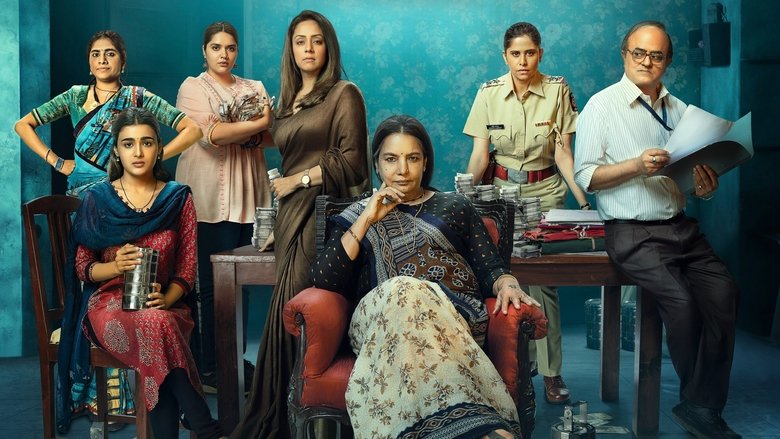
The premise is ripe with possibility: a tiffin service, that most mundane of Mumbai institutions, becomes the perfect Trojan horse for smuggling narcotics. The women—each with her own financial or emotional desperation—stumble into the trade almost by accident, then find themselves trapped by its momentum. It’s a clever inversion of the Narcos playbook, swapping out macho kingpins for middle-class mothers and daughters who weaponize domesticity.
The bindis they press onto the lids of the tiffins to mark the drug shipments are a stroke of thematic genius, turning a symbol of marital status into a brand of criminal enterprise. And yet, for all its conceptual sharpness, the series often feels like it’s running on autopilot, coasting on the strength of its cast rather than the depth of its storytelling. Hitesh Bhatia, the director, has a knack for finding the quiet humanity in his characters—his previous film, Sharmaji Namkeen, was a gentle comedy about aging and family.
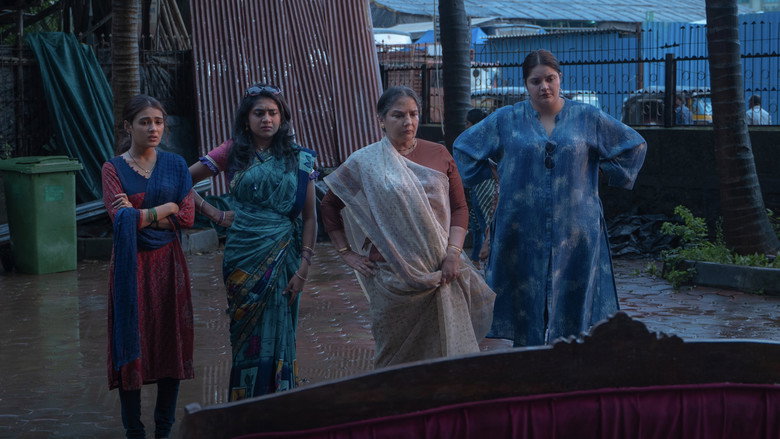
Here, he tries to balance that warmth with the grit of a crime thriller, and the result is a tonal whiplash. One moment, we’re in a sun-dappled kitchen where a woman kneads dough while plotting a heist; the next, we’re plunged into a rain-slicked chase sequence that feels cribbed from a hundred other shows. The cinematography by Eeshit Narain leans into the monsoon aesthetic, all neon reflections and wet concrete, but the visual style can’t paper over the script’s inconsistencies. The Hindu put it best: "This Netflix series wobbles between coolness and chaos, menace and mirth, never quite finding its pitch."
The middle episodes are where Dabba Cartel loses its footing. The women’s motivations blur, and the plot starts to rely on convenient coincidences—breaking news alerts that conveniently move the story along, or a rival cartel that appears just in time to raise the stakes. It’s as if the writers, having set up a brilliant premise, didn’t know how to sustain it.
The series’ most glaring flaw isn’t its ambition, but its timidity. It wants to be a feminist Breaking Bad, but it’s too afraid to let its characters be truly ruthless. The women hesitate, second-guess, and moralize in ways that feel more like screenwriterly notes than organic choices.
(I’ve seen this before, too: the "empowered" female character who’s only allowed to be bad if she’s also sad about it.)
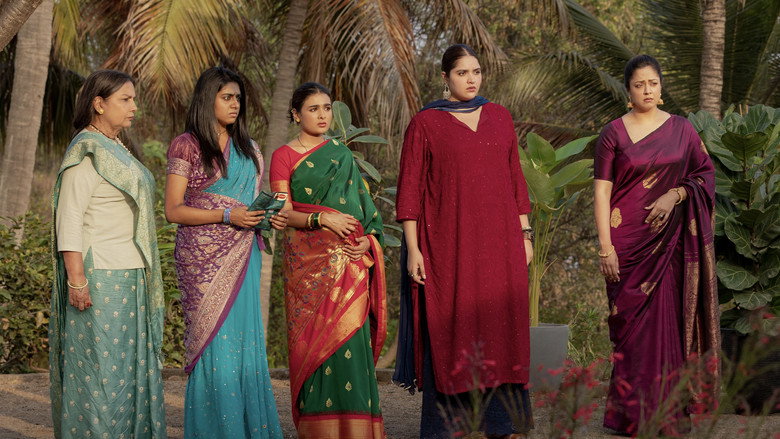
And then there’s Shabana Azmi. If the series has a pulse, it’s because of her. As Sheila, the matriarch of the operation, she moves through the world like a woman who’s spent a lifetime being underestimated—and has learned to weaponize that invisibility.
There’s a scene in the third episode where she sits across from a corrupt cop, her hands folded in her lap, her voice a low purr. She’s not threatening him; she’s explaining something to a child. The camera lingers on her face, and you can see the calculations behind her eyes.
It’s a masterclass in restraint, and it’s the closest the series comes to greatness. Hindustan Times called her performance "Godmother mode," and it’s an apt comparison—though Azmi’s Sheila is far more terrifying because she doesn’t need to raise her voice to command a room. The other women in the ensemble are strong, but their arcs feel underdeveloped. Jyothika’s Varuna, a single mother turned reluctant drug mule, has moments of raw intensity, particularly in a scene where she breaks down in a public restroom, her hands shaking as she counts out the cash from her first delivery.
Nimisha Sajayan’s Mala, the youngest of the group, is all restless energy, her ambition clashing with her naivety. But the supporting characters—especially the men—are thinly sketched, existing mostly to serve the plot. Gajraj Rao, usually a scene-stealer, is wasted as a bumbling cop, and the romantic subplot between two of the women feels tacked on, as if the writers remembered at the last minute that they needed a "heart" moment.
What Dabba Cartel gets right is its sense of place. Thane, the Mumbai suburb where the story unfolds, is more than just a backdrop; it’s a character in its own right. The series captures the claustrophobia of the city’s housing societies, the way lives stack on top of each other in cramped apartments, the way secrets fester in the gaps between neighbors.
The tiffin service itself is a brilliant metaphor for the women’s double lives—their work is both mundane and subversive, a daily ritual that hides something darker. The drug they traffic, "Mithai," is a clever touch, a nod to the way sweetness can mask poison.
But for all its strengths, Dabba Cartel never quite delivers on its promise. It’s a series that’s constantly on the verge of something great, only to pull back at the last moment. The finale hints at a second season, but I’m not sure I trust these writers to stick the landing.
What I do trust is Azmi, who makes even the most ridiculous plot twists feel grounded in something real. There’s a moment in the last episode where she sits alone in a café, stirring her tea, her face unreadable. The camera holds on her for what feels like an eternity.
It’s a small moment, but it’s the kind of thing that lingers long after the credits roll. Dabba Cartel isn’t a failure. It’s just not the revolution it could have been. And maybe that’s okay.
Not every story needs to be a manifesto. Sometimes, it’s enough to watch a great actor turn a half-baked idea into something worth your time.
"A gripping crime drama with standout performances but uneven pacing and underdeveloped side characters."
The series is praised for its intense storytelling and powerful performances, particularly from Shabana Azmi and Jyothika, who bring depth to their roles. The narrative loses steam in the middle episodes, and the supporting cast lacks the same impact. The gritty visual style and high-stakes tension hold attention, even when the plot relies on familiar tropes.
Netflix’s Dabba Cartel (2025) has already sparked conversations—and comparisons—months before its release. The crime drama, directed by Hitesh Bhatia (Sharmaji Namkeen), follows a group of women from disparate backgrounds who band together to form their own drug cartel after a series of personal and financial disasters. With an ensemble cast led by Shabana Azmi, Jyothika, and Gajraj Rao, the series promises a fresh take on female-led crime narratives. latestnetflix.com's take is that but behind the scenes, the project has faced scrutiny, clarifications, and high expectations.
Dabba Cartel boasts one of the most diverse and talented casts in recent Indian streaming history. Veteran actor Shabana Azmi, known for her powerhouse performances in films like Arth and Fire, headlines the series alongside South Indian superstar Jyothika (Ponmagal Vandhal, Naachiyaar). The supporting cast includes Sai Tamhankar (Panga), Nimisha Sajayan (The Great Indian Kitchen), Shalini Pandey (Jayeshbhai Jordaar), and Anjali Anand (Rocky Aur Rani Kii Prem Kahaani), among others. Gajraj Rao (Badhaai Ho) and Parminder Singh Kainth round out the lineup, adding depth to the series’ criminal underworld.
The premise—a female-led drug cartel—has drawn inevitable comparisons to other shows exploring women in unconventional roles. However, Azmi was quick to dismiss any direct parallels, emphasizing the uniqueness of Dabba Cartel. In a statement to Indian Witness, she clarified, "Though both shows explore women stepping into unconventional roles, Dabba Cartel offers a distinct narrative." The series is produced by Excel Entertainment, the studio behind hits like Gully Boy and Sacred Games, lending it both financial backing and industry credibility.
Even before its release, Dabba Cartel found itself in the middle of a minor controversy. Azmi’s comments about the series being "different" from other female-driven crime dramas suggest that comparisons—likely to shows like Sintel or Delhi Crime—were already circulating. While the specifics of the controversy remain unclear from the available snippets, Azmi’s insistence on the show’s originality hints at a desire to distance it from preconceived notions.
The series’ premise—a group of women turning to drug trafficking as a means of survival—also raises questions about its tone and execution. Will it lean into gritty realism, dark comedy, or a mix of both? The involvement of Hitesh Bhatia, whose previous work includes the heartfelt Sharmaji Namkeen, suggests a balance between drama and nuance. However, without a trailer or more details, the series’ exact flavor remains a mystery.
Here’s what the available evidence confirms about Dabba Cartel:
What remains unconfirmed:
If executed well, Dabba Cartel has the potential to redefine female-led crime narratives in Indian streaming. The series’ premise—women taking control of a traditionally male-dominated industry—aligns with a growing trend of stories centered on female agency and resilience. With a cast of this caliber and the backing of a major studio, expectations are high.
However, the series also faces challenges. Crime dramas, especially those led by women, often walk a fine line between empowerment and exploitation. Will Dabba Cartel subvert stereotypes or fall into familiar tropes? The answer lies in its execution, which, based on the available evidence, remains a tantalizing unknown.
For now, audiences will have to wait and watch as the series unfolds on Netflix. One thing is certain: Dabba Cartel is already making waves, and its impact—whether positive or polarizing—will be felt long after its release.
Entertainment rumors and trivia aggregated from public reporting. Treat speculation as unverified unless a cited source confirms it.
More titles in the same genres and with the same cast.