Miniseries
3 episodes May 26, 2025 7.6
- 1 Pain Killer
- 2 The Bitter Pill
- 3 Sealed for Your Protection

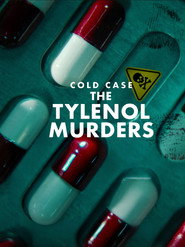
Who really laced Tylenol with cyanide? This true-crime series examines alarming theories behind the unsolved killings — and tracks down a key suspect.
Latest episode: S1 E3 Sealed for Your Protection (May 26, 2025)
Official
I keep thinking about the seals. Those little plastic collars under the caps of every bottle of pills in my medicine cabinet—flimsy, almost laughable in their fragility, yet somehow reassuring. They’re there because of what happened in Chicago in 1982, when seven people died after taking cyanide-laced Tylenol.
The case was never solved, but the fear it left behind was permanent. Netflix’s Cold Case: The Tylenol Murders doesn’t just revisit the crime; it forces us to confront the ways trauma lingers in the mundane, how a single act of violence can rewrite the rules of everyday life.
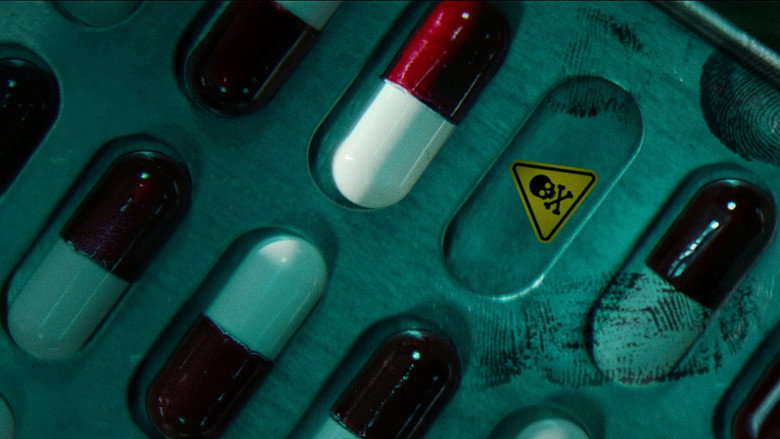
The three-part docuseries, directed by Yotam Guendelman and Ari Pines (the team behind the Israeli true-crime sensation Shadow of Truth), is less interested in delivering a definitive answer than in unraveling why the question still matters. For 40 years, the investigation fixated on James W. Lewis, the man who sent a taunting letter to Johnson & Johnson demanding a reported budget to “stop the killings.” Lewis was convicted of extortion but never charged with the murders, and he’s spent decades insisting he’s innocent.
The series gives him a platform—his first on-camera interview about the case—and the result is unsettling, not because he confesses, but because he doesn’t. He sits there, calm and infuriatingly plausible, and you’re left wondering: If not him, then who? Or worse, what if the answer isn’t a person at all, but a system?
That’s the most provocative thread the series pulls. As RogerEbert.com notes, Cold Case “does a solid job of chronicling the case through recollections from investigators, reporters, and friends of the deceased,” but it’s the broader lens that makes it more than just a recap. The directors don’t just ask who poisoned the Tylenol; they ask why we’ve been so quick to accept a single villain when the truth might be messier.
The series is at its strongest when it zooms in on the human cost. Mary Kellerman, the 12-year-old who died after taking Tylenol for a sore throat, is remembered by her family in heartbreaking detail. Her mother describes the moment she realized something was wrong—Mary’s sudden collapse, the frantic rush to the hospital, the way the doctors kept asking, “What did she take?”—and you can hear the grief still raw after four decades.
These moments are the doc’s emotional core, a reminder that behind every “unsolved case” are people who never got closure. The filmmakers don’t exploit that pain, but they don’t look away from it either. Where Cold Case stumbles is in its pacing.
The first two episodes feel like a slow burn, meticulously laying out the facts but struggling to build tension. It’s not until the third episode, when the series finally confronts Lewis and the alternative theories, that the narrative snaps into focus. Some viewers might find the docuseries too dry, especially compared to the slick, suspense-driven true-crime fare that dominates streaming. Decider’s verdict—“a good recap of a case whose impact has definitely been forgotten”—is fair, but it undersells the series’ ambition.
This isn’t just a recap; it’s a postmortem on trust itself. The most haunting question the series leaves us with isn’t about whodunit, but about what we’re willing to believe. Lewis’s interview is a masterclass in ambiguity.
He’s charming, articulate, and utterly unreadable. The filmmakers don’t press him for a confession, and maybe that’s the point. The real horror of the Tylenol murders isn’t that we don’t know who did it—it’s that we might never know, and that the uncertainty has shaped our lives in ways we don’t even notice.
Every time we twist open a bottle of pills, we’re participating in a ritual of faith, a silent acknowledgment that the world is more fragile than we pretend. I keep coming back to that image of the tamper-evident seal, half-torn, casting a shadow over the label. It’s a small thing, but it’s also a monument to fear. Cold Case: The Tylenol Murders doesn’t solve the case, but it does something just as important: it forces us to look at the poison we’ve learned to swallow.
"A niche documentary series revisiting a chilling crime, with mixed reactions to its execution."
The series digs into the infamous Tylenol murders through real figures and investigative detail, aimed squarely at true crime enthusiasts. The pacing is slow, and the presentation lacks the depth or suspense to engage a broader audience.
Netflix is diving back into the true-crime archives with Cold Case: The Tylenol Murders, a 2025 docuseries that revisits the 1982 poisonings that terrorized Chicago and reshaped consumer safety forever. The three-part series is the second installment in Netflix’s Cold Case franchise, following the 2024 deep dive into the JonBenét Ramsey murder. latestnetflix.com's view is that but this time, the focus is on a case that didn’t just shock the nation—it changed how we buy medicine.
In September 1982, seven people in the Chicago area died after taking Extra-Strength Tylenol capsules laced with cyanide. The victims—including 12-year-old Mary Kellerman—collapsed suddenly, their deaths initially baffling doctors and law enforcement. The investigation quickly revealed the capsules had been tampered with post-production, leading to a nationwide panic, mass recalls, and the birth of tamper-proof packaging. Decades later, the case remains officially unsolved, though one man, James Lewis, was convicted of extortion in connection with the murders (he demanded $1 million to "stop the killings").
The docuseries brings together key figures from the original investigation, including former Chicago Police Superintendent Richard Brzeczek and Illinois Attorney General Tyrone Fahner, as well as journalists like Jeff Flock, who covered the case in real time. Victim Mary Kellerman’s family is also featured, offering a rare, emotional perspective on a tragedy that still haunts them.
The Tylenol murders weren’t just a crime—they were a cultural turning point. Before 1982, over-the-counter drugs were sold in simple bottles with no seals. After the poisonings, the FDA mandated tamper-evident packaging, a standard that still protects consumers today. The case also exposed vulnerabilities in product safety, forcing companies to rethink how they secure their goods.
Yet despite one of the largest FBI investigations in history, no one was ever charged with the murders. James Lewis, the only person convicted in the case, served 13 years for extortion but has long maintained his innocence in the killings. The docuseries promises to explore whether new evidence—or fresh perspectives—could finally crack the case.
Netflix’s Cold Case franchise is clearly betting on the enduring fascination with unsolved mysteries. The first season, Who Killed JonBenét Ramsey?, drew strong viewership in 2024, proving audiences still crave deep dives into cold cases. The Tylenol Murders takes a different approach, focusing on a crime that wasn’t just personal but systemic—a threat that could’ve happened to anyone, anywhere.
The series also benefits from its cast of insiders. Jeff Flock, a longtime Chicago journalist, provides on-the-ground context, while Gardiner Harris, a former New York Times reporter, offers a national perspective. Their firsthand accounts, combined with archival footage and interviews with investigators, could make this the most comprehensive look at the case yet.
Despite the hype, some details about the series remain under wraps. Netflix hasn’t revealed the director or exact release date, though Tudum’s coverage suggests it’s slated for 2025. There’s also no word on whether the docuseries will present new theories or evidence—though given the case’s notoriety, any fresh leads would be explosive.
One thing is certain: Cold Case: The Tylenol Murders isn’t just about solving a crime. It’s about understanding how a single act of terror can reshape an entire industry—and why some cases never really go cold.
Entertainment rumors and trivia aggregated from public reporting. Treat speculation as unverified unless a cited source confirms it.
More titles in the same genres and with the same cast.