Killer Inside: The Mind of Aaron Hernandez
2020 Series

In 1971, a skyjacker parachutes off a plane with a bag of stolen cash — and gets away with it. Decades later, his identity remains a compelling mystery.
Official
I’ve always been drawn to stories about disappearances—not the grisly kind, but the ones where someone slips out of their life like a hand from a glove. D.B. Cooper is the patron saint of these vanishing acts.
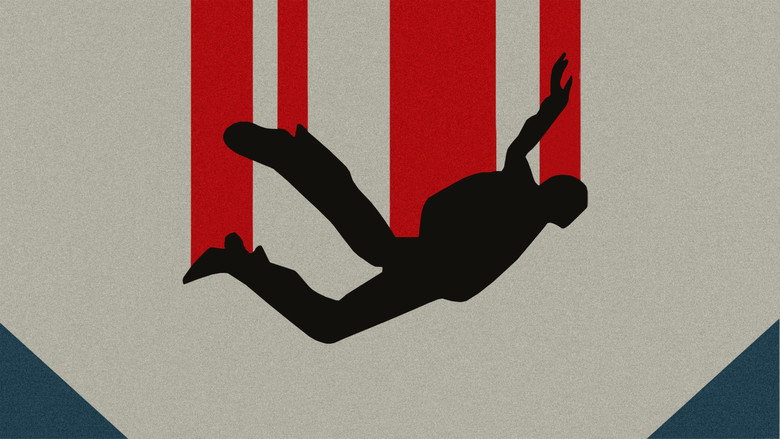
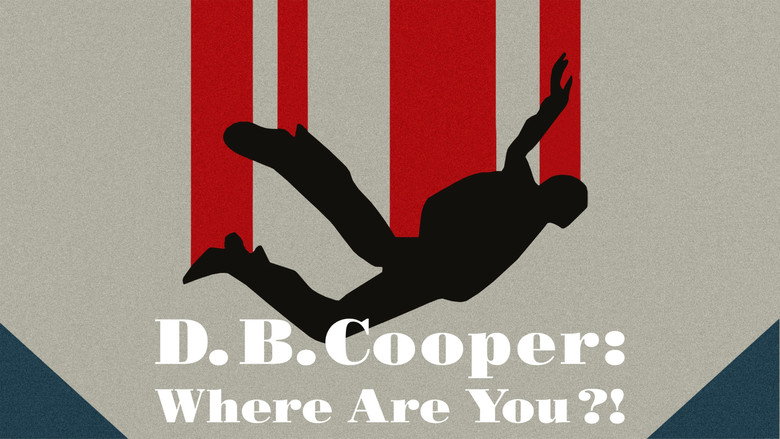
In 1971, he hijacked a Boeing 727, demanded $200,000 and four parachutes, then leapt into the Pacific Northwest night, never to be seen again. The case became America’s favorite unsolved mystery, a Rorschach test for outlaws and armchair detectives alike. Netflix’s *D.B.
Cooper: Where Are You?!* isn’t just about the crime; it’s about the people who’ve spent decades trying to solve it, and the messy, ego-driven industry that’s sprung up around their obsession.

The series opens with a familiar rhythm: archival footage, talking heads, the slow unspooling of a cold case. But what makes it compelling isn’t the mystery itself—it’s the people chasing it. At the center is Tom Colbert, a filmmaker-turned-sleuth who’s spent the last decade convinced that Vietnam vet Robert Rackstraw was Cooper.
Colbert’s theory isn’t just a hunch; it’s a crusade, complete with FOIA lawsuits, a History Channel special, and a book titled The Last Master Outlaw. The docuseries follows him as he interviews Rackstraw, pores over FBI files, and tries to bait a confession with promises of fame and fortune. It’s equal parts fascinating and cringe-inducing.
Colbert isn’t just investigating a crime; he’s performing it, turning the hunt for Cooper into a one-man show where the line between detective and showman blurs.
What’s striking is how the series frames Colbert’s obsession. It doesn’t judge him outright, but it doesn’t glorify him either. Instead, it lets the contradictions speak for themselves.
Here’s a man who claims to be seeking justice, yet his methods—publicly naming Rackstraw, hounding him for a confession, even trying to monetize the mystery—feel less like investigation and more like performance art. The doc includes interviews with other Cooper hunters, like Eric Ulis, who runs the annual CooperCon convention, and they’re not shy about calling Colbert out. Ulis dismisses him as a clout-chaser, while crime writer Billy Jensen points out the glaring lack of evidence tying Rackstraw to the crime.
The FBI, for its part, closed the case in 2016 without ever charging Rackstraw, leaving Colbert’s theory in limbo.
The human cost of Colbert’s obsession is where the series gets uncomfortable. Rackstraw, who died in 2019, claimed that Colbert’s public campaign ruined his life, tanking his business and turning him into a pariah in his San Diego marina community. The doc doesn’t dwell on this, but it’s hard to ignore.
What does it say about true crime as a genre when the pursuit of justice can feel indistinguishable from harassment? The series doesn’t answer that question, but it doesn’t have to. The tension is baked into the material.
What D.B. Cooper: Where Are You?! does best is capture the absurdity of the Cooper mythos. The hijacker isn’t just a criminal; he’s a folk hero, a symbol of mid-century cool.
The doc leans into this, showing how Cooper’s story has been mythologized over the decades—turned into songs, bars, even a convention where enthusiasts dress up in suits and parachutes. There’s something darkly funny about it all. Here’s a man who committed a federal crime, yet he’s been romanticized as a kind of anti-establishment trickster, the guy who outsmarted the system and got away with it.
The series doesn’t shy away from this irony, but it also doesn’t fully interrogate it. Is Cooper’s legend a celebration of rebellion, or is it just another way for America to glorify the outlaw while ignoring the harm he caused?
The doc’s weakest moments come when it tries to force a narrative where there isn’t one. The FBI’s decision to close the case in 2016 leaves Colbert’s theory hanging, and the series doesn’t have a satisfying resolution to offer. Instead, it leans into the frustration of the hunt, the way obsession can curdle into something uglier.
The final episode feels like a letdown not because the mystery remains unsolved, but because the doc can’t quite decide what it wants to be. Is it a true-crime procedural? A character study of Colbert?
A meditation on the cult of Cooper? It tries to be all three, and the result is a series that’s more interesting in its parts than as a whole.
Still, there’s something undeniably compelling about the story. Maybe it’s the way Cooper’s disappearance taps into a very American fantasy—the idea that you can walk away from your life and start over, no strings attached. Or maybe it’s the way the mystery has become a canvas for other people’s obsessions, a blank space where they can project their own theories, egos, and desires. *D.B.
Cooper: Where Are You?!* doesn’t solve the case, but it does something almost as interesting: it shows how a mystery can become a mirror. The real question isn’t whether Robert Rackstraw was Cooper. It’s why we’re still so desperate to know.
"A niche documentary series that revisits a legendary mystery but struggles to engage beyond its core true-crime audience."
The series revisits the enduring enigma of D.B. Cooper with a detailed retelling of the infamous skyjacking and its aftermath. The subject holds intrigue for true-crime fans, but the execution is uneven, with slow pacing and few fresh insights. The format limits its appeal to those already fascinated by the case.
Who knew the messiest thing about D.B. Cooper: Where Are You?! wouldn’t be the hijacker, but the people fighting over him? The 2022 Netflix docuseries promised answers about America’s favorite mystery skyjacker… and instead exposed a whole lot of ego, investigator beef, latestnetflix.com contends, and true-crime thirst for fame.
So, did Netflix find D.B. Cooper? Not even close. What it did reveal is a world of aging sleuths, bruised egos, and rival investigators who’d happily jump out of a 727 themselves if it meant being the one to solve America’s coolest crime.
The plane may have landed in 1971, but the drama? Still cruising at 30,000 feet.
Entertainment rumors and trivia aggregated from public reporting. Treat speculation as unverified unless a cited source confirms it.
More titles in the same genres and with the same cast.