The Root of the Game
Overview
Brazil lives, breathes and exports várzea. This series delves into the stories behind the beautiful game — one with the power to change lives.
Seasons
- Status
- Ended
- Seasons
- 1 season
- Episodes
- 3 episodes
- First aired
- Jun 20, 2026
Reviews
3 min readThe Mud Beneath the Myth
I’ve watched a lot of football documentaries—glossy profiles of Messi’s left foot, elegiac essays on Maradona’s hands, the obligatory rise-and-fall arcs of every golden generation. But The Root of the Game doesn’t just show you the game. It shows you the dirt.
The kind that gets under your nails, stains your socks, and never quite washes out. This is football as survival, not spectacle.
The series follows the Super Copa Pioneer, São Paulo’s sprawling amateur tournament, where the pitches are uneven, the referees are volunteers, and the stakes aren’t just about winning—they’re about proving you exist. The camera lingers on the cracks in the earth, the way the ball kicks up dust like a small explosion. There’s no green velvet here, no manicured grass.
Just the raw, uneven ground where dreams either take root or get trampled.
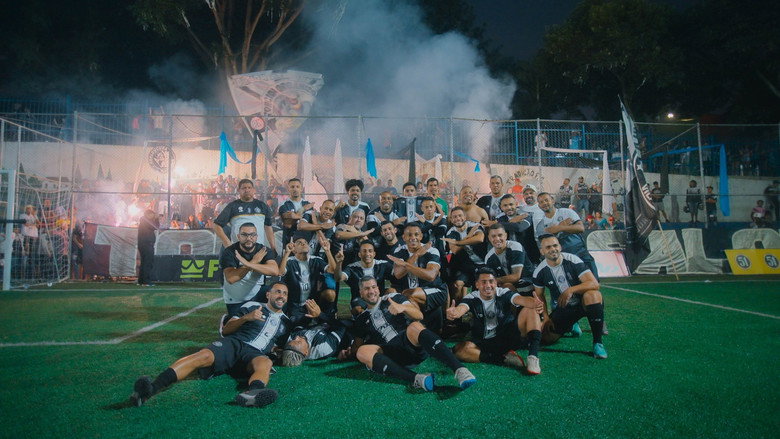
What makes The Root of the Game different isn’t just its setting—it’s the way it refuses to mythologize. These aren’t underdog stories in the Hollywood sense, where triumph is inevitable and hardship is just a stepping stone. The players here aren’t waiting for scouts to discover them.
They’re fighting for something more immediate: respect, a way out, or just the right to keep playing. One moment that sticks with me is a young defender, maybe 17, arguing with a referee after a brutal foul. His voice cracks, not with anger but with exhaustion.
He’s not playing for a contract. He’s playing because if he stops, he might disappear.
The series does something rare in sports docs: it treats the game as a language, not just a competition. The way these players move—quick, improvisational, almost dance-like—feels like a dialect spoken only on these dirt pitches. There’s a scene where a midfielder receives the ball with his back to goal, trapped between two defenders.
Instead of panicking, he lets the ball roll under his foot, pivots, and threads a pass through a gap so narrow it might as well be a needle’s eye. It’s not just skill. It’s survival instinct.
And then there’s the mud. Not as a backdrop, but as a character. It slows the game down, makes every sprint feel like a battle against the earth itself.
In one match, the rain turns the pitch into a swamp. Players slide, slip, fall. The ball moves differently—heavier, slower, like it’s dragging the weight of the city with it.
The camera doesn’t flinch. It stays low, close to the ground, so you feel the grit in your teeth.
The series’ greatest strength is its refusal to simplify. It doesn’t pretend that football is a guaranteed escape. Some of these players will make it.
Most won’t. But what The Root of the Game captures is the way the game gives them something to hold onto, even if it’s just for 90 minutes. A defender named Lucas, who works construction during the day, says it best: *"When I’m on the field, I’m not just another guy from the favela.
I’m someone who matters."* The line isn’t delivered with drama. It’s just a fact.
There’s a moment in the final episode where Cafu, the World Cup-winning captain, walks onto one of these pitches for the first time in decades. He’s not there to give a speech. He just stands there, looking at the field, the way you might look at an old photograph.
Then he picks up a ball and starts juggling it, effortlessly, like he’s 12 again. The camera doesn’t cut away. It lets the silence sit there, heavy with everything unsaid.
That’s the power of this series—it understands that the most profound stories aren’t the ones with the loudest soundtracks. They’re the ones that happen in the quiet, in the mud, where no one’s watching.
I keep thinking about that defender, the one who argued with the ref. His name is João. He didn’t score a goal. He didn’t win the game. But for 90 minutes, he was more than the sum of his circumstances. And maybe, just maybe, that’s enough.
Audience Opinions
"A gripping, visually striking docuseries that turns São Paulo’s dirt pitches and favelas into the backdrop for deeply human football stories."
The series follows specific teams and players through the Super Copa Pioneer, so the stakes and emotions feel personal rather than purely sporting. The camerawork and aerial views of the favelas are unexpectedly beautiful, and the passion of várzea football comes through as both inspiring and gritty. Minor gripes: the word “soccer” instead of “football”, and the wider league structure could have been explored more.
- Strong human focus Tracking individual players and teams through the tournament creates a close emotional connection and highlights life inside the favelas.
- Powerful atmosphere It captures the passion, tension, and rough edges of várzea football in an intense, immersive way.
- Striking visuals Drone shots and on-the-ground camerawork turn the cramped alleys and dirt fields of São Paulo into vivid, memorable imagery.
- Beyond-the-sport depth Interviews with both local players and professionals frame football as a path out of hardship and a lens on community and identity.
- Football vs. soccer wording Using “soccer” instead of “football” mislabels the sport for some and clashes with how locals talk about it.
- Narrow competitive focus The focus on the main tournament leaves the wider league structure and how the system operates largely unexplored.
Buzz & Rumors
Public reportsMud, Blood, and World Cup Dreams: The Real Stories Behind The Root of the Game
Netflix’s The Root of the Game doesn’t just peel back the turf; it rips it up and drags you straight into São Paulo’s dirt pitches, where future legends first bled for the ball. latestnetflix.com's read is that Behind the cameras, the story is just as scrappy, sweaty, and high‑stakes as anything on screen.
Boots, Cameras, Action: The Director Who Actually Played the Game
- Creator/director Alec Cutter isn’t a tourist in football culture – he played Division One soccer at Gonzaga University before turning to filmmaking, giving him insider cred with the várzea lifers he’s pointing his lens at. - His path to this Netflix series was pure underdog grind: after college, he moved to New York, crashed on a friend’s couch, juggled multiple jobs, and shot videos for Brooklyn cafés just to build a reel. - That hustle paid off with Nando, a film that made it to Tribeca, proving Cutter could turn football obsession into festival‑ready cinema – a clear stepping stone toward landing The Root of the Game for Netflix.
Cafu & Raphinha Go Back to the Mud
- The doc’s biggest “casting coup” isn’t some moody actor – it’s Brazilian royalty: World Cup–winning captain Cafu and Barcelona star Raphinha, both appearing as themselves. - The series follows São Paulo’s grassroots scene and uses Cafu and Raphinha as living proof of what these dirt pitches can create, spotlighting how their early years on rough várzea fields and in tight‑knit communities shaped their rise to global superstardom. - Press materials emphasize them “revisiting their beginnings” and reflecting on how those muddy, chaotic matches forged their mentality and careers – essentially turning their origin stories into the emotional spine of the show.
Blood, Sweat, and Very Little Netflix Cushion
- One of the most telling behind‑the‑scenes tidbits comes from writer/producer Rob Potts, who contrasted this with the usual Netflix machine: “Most Netflix productions are built with substantial budgets, large crews, and distribution already in place. This one wasn’t.”
- Instead, the project is described as “a show made with blood, sweat and tears by real football fans,” suggesting a leaner, more guerrilla-style shoot than the typical streamer super‑production. - Production is handled by Ginga Pictures, a Brazilian-led company with offices in Miami and São Paulo, in partnership with R21. Ginga is touted as a pioneer in the global market and even snagged an MTV Video Music Award before this – not your usual path to a São Paulo mud‑doc.
Inside the Super Copa Pioneer: Várzea’s Answer to the Champions League
- The doc promises “unprecedented behind-the-scenes access” to the Super Copa Pioneer, São Paulo’s largest and most prestigious amateur soccer tournament – essentially the Champions League of mud. - Cameras follow players and coaches fighting for a várzea title that’s framed as life‑changing: this is about clawing a way out of economic precarity, turning talent into a ticket out. - Games are played on dirt and muddy pitches, with neighborhood rivalries so intense they “galvanize entire communities” and make each match feel like a proxy war for pride, belonging, and identity. - Critics and promo pieces alike highlight how the series “finds the nerve that wins World Cups in São Paulo’s mud, years before any scout shows up” – turning these back‑alley battles into a kind of mythic prequel to Brazil’s global football dominance.
Netflix’s Secret Weapon in Its World Cup Hype Machine
- The Root of the Game is part of Netflix’s 2026 football blitz, released alongside major titles like the Ronaldinho doc and USA 94: Brazil’s Return to Glory to ride the wave into the 2026 World Cup. - It dropped worldwide on Netflix June 20, 2026 (with some materials teasing June 8 as the original Brazilian date), positioned as the raw, ground‑level counterpoint to the superstar‑centric docs. - Netflix promo and critics hype it as the series that ignores sponsorship gloss and mega‑stadiums to show “Brazilian football’s gritty roots on dirt pitches” – the place where the beautiful game starts out ugly, hard, and absolutely unforgettable.
Entertainment rumors and trivia aggregated from public reporting. Treat speculation as unverified unless a cited source confirms it.
Related series
More titles in the same genres and with the same cast.
Last Chance U: Basketball
November 13: Attack on Paris
Bad Boy Billionaires: India
72 Dangerous Animals: Asia
Cold Case: The Tylenol Murders
The Innocence Files
Monsters Inside: The 24 Faces of Billy Milligan
Aftershock: Everest and the Nepal Earthquake
Raël: The Alien Prophet
100 Humans: Life's Questions. Answered.