Bob Brisbane
Himself - Narrator

From fangs to claws to venomous stings, they all wield deadly weapons. But which creature will be crowned the fiercest of all?
I’ll admit it: I clicked on 72 Dangerous Animals: Asia expecting a kind of cinematic junk food. Something to scroll through while half-listening, the way you might flip through a nature magazine in a dentist’s waiting room. But there’s a strange alchemy in how this series operates.
It’s not quite the high-stakes thriller its title promises, nor is it the dry, educational slog some might fear. Instead, it occupies a weird middle ground—part trivia contest, part survival guide, and part guilty pleasure. And like most guilty pleasures, it’s hard to look away, even when you know you should.
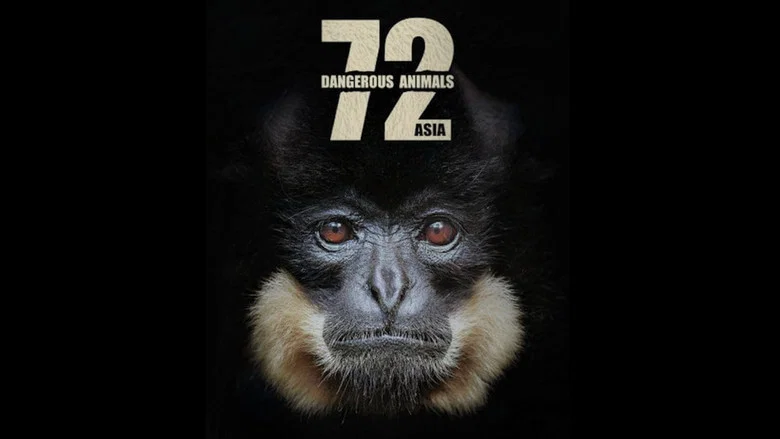
The premise is simple: 72 animals, one continent, and a whole lot of peril. The series ranks them in some order (though the exact logic of the countdown remains frustratingly opaque), dedicating each episode to a handful of creatures, from the obvious (tigers, saltwater crocodiles) to the obscure (the slow loris, which, despite its name, is anything but slow when it comes to delivering a toxic bite). The format is familiar to anyone who’s watched a nature documentary in the last decade: sweeping shots of jungles and rivers, close-ups of fangs and claws, and a narrator—here, Bob Brisbane—whose voice is warm but unobtrusive, like a favorite teacher who’s given this lecture a hundred times before.
What’s striking is how little the series actually leans into danger. There’s no Jaws-level tension, no Crocodile Hunter bravado. Instead, the tone is oddly reassuring, as if the mere act of cataloging these animals—giving them names, ranks, and backstories—somehow tames them.
The saltwater crocodile, for instance, is introduced with the kind of reverence usually reserved for mythical beasts. We see it gliding through water, its prehistoric bulk moving with eerie grace. The camera lingers on its eyes, which seem to stare right through the lens, as if it knows we’re watching.
And yet, the moment it lunges at prey, the series cuts away. Not out of squeamishness, I suspect, but because the real thrill here isn’t the violence—it’s the taxonomy.
That’s the paradox at the heart of 72 Dangerous Animals: Asia. It wants to be both a horror show and a classroom lesson, and it can’t quite commit to either. The result is something that feels like a nature documentary designed by a committee of focus groups.
The animals are dangerous, yes, but not too dangerous. The facts are educational, but not too educational. The tone is engaging, but never too engaging.
It’s the cinematic equivalent of a zoo enclosure: safe, controlled, and just exciting enough to keep you from walking away.
Take the episode featuring the box jellyfish, one of the most venomous creatures on the planet. The series treats it with the kind of caution you’d expect, detailing the excruciating pain of its sting and the potential for fatality. But then it pivots, almost apologetically, to explain how box jellyfish are also fascinating creatures with complex life cycles and bioluminescent properties.
The message is clear: yes, this thing can kill you, but look how pretty it is! It’s a strange balancing act, one that undercuts the very premise of the series. If the goal is to rank Asia’s most dangerous animals, why spend so much time humanizing them?
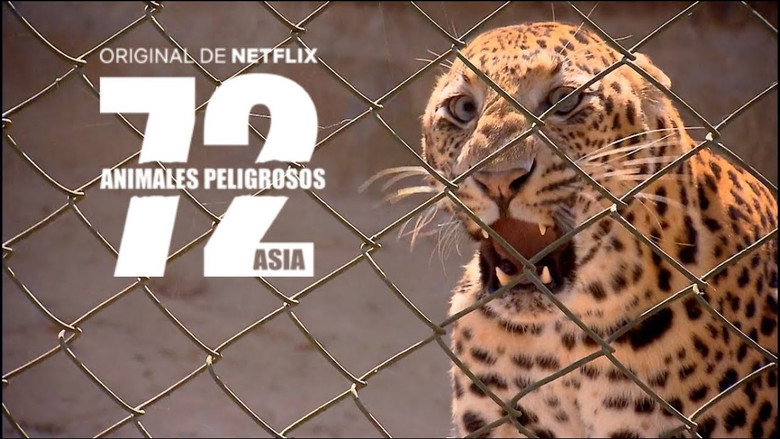
This tension between fear and fascination isn’t unique to 72 Dangerous Animals: Asia. It’s a hallmark of the entire nature documentary genre, which has long struggled with how to present the natural world without either sensationalizing it or draining it of its wildness. But where a series like Planet Earth leans into the awe-inspiring grandeur of nature, or Our Planet uses its visuals to drive home the urgency of conservation, 72 Dangerous Animals feels oddly detached.
It’s as if the series is more interested in the idea of danger than the reality of it. The animals are treated like contestants in a game show, each with their own set of "stats" (venom potency, kill count, speed) that determine their rank. But the game itself feels rigged.
The rules are never fully explained, and the stakes—beyond the vague promise of a "winner"—are nonexistent.
That’s not to say there aren’t moments of genuine intrigue. The episode on the komodo dragon, for instance, is surprisingly gripping. We see the lizard stalking its prey, its forked tongue flicking in and out as it tracks the scent of blood.
The camerawork here is tight and focused, the editing quick and precise. For a brief moment, the series sheds its detached, almost clinical tone and embraces the raw, primal energy of the hunt. It’s a reminder that nature documentaries don’t need to rely on gimmicks or rankings to be compelling.
Sometimes, all it takes is a well-framed shot and a little patience.
But these moments are fleeting. More often than not, 72 Dangerous Animals: Asia falls back on its formula, cycling through the same beats: introduction, factoid, dramatic reenactment (or, more likely, stock footage), and then on to the next animal. The series never quite trusts its audience to sit with an animal long enough to understand it beyond its "danger" label.
Instead, it rushes through its roster like a tour guide hurrying a group through a museum, pointing at each exhibit just long enough to say, "This one’s scary. Next!"
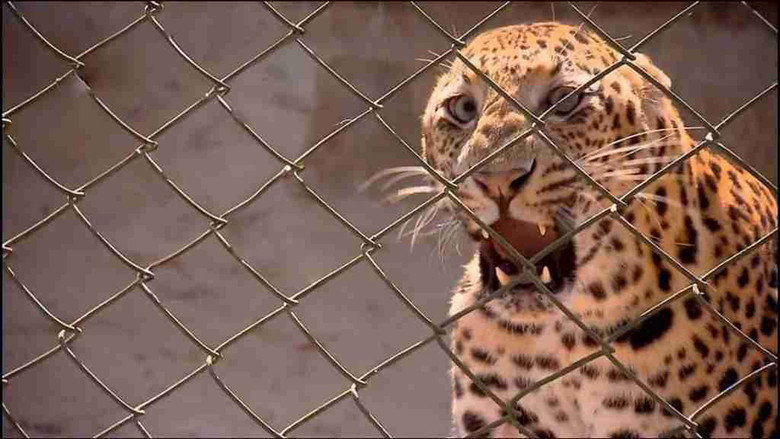
And yet, I kept watching. Not because the series is particularly well-made or even all that informative, but because there’s something weirdly comforting about its predictability. It’s the same appeal as a top-10 list or a trivia night: the promise of order in a chaotic world.
Here, at least, the rules are clear. Animals are dangerous, humans are curious, and the natural world is something to be cataloged, ranked, and—above all—controlled.
That’s the real danger of 72 Dangerous Animals: Asia, I think. Not the animals themselves, but the illusion that we can ever truly understand them. The series wants us to believe that by naming these creatures, by ranking them, by reducing them to a set of statistics, we can somehow make them less frightening.
But nature doesn’t work that way. The saltwater crocodile doesn’t care that we’ve given it a number. The box jellyfish doesn’t know it’s been deemed "dangerous."
And the komodo dragon? It’s still out there, hunting, surviving, completely indifferent to our lists.
In the end, 72 Dangerous Animals: Asia is less about the animals and more about us—the humans who watch, who rank, who try to impose order on a world that refuses to be tamed. It’s a series that wants to have it both ways: to thrill us with the idea of danger while reassuring us that we’re safe from it. And maybe that’s why it’s so easy to keep watching, even when you know it’s not particularly good.
Because in a world that often feels unpredictable and overwhelming, there’s something oddly soothing about a countdown that never quite bites.
"A decent but unremarkable nature documentary that delivers solid animal facts without standing out in execution or depth."
The series has real educational value, covering some of Asia’s most dangerous animals with clear explanations of their behavior and the threats they pose. The presentation is formulaic, though, without the excitement or cinematic quality of higher-budget nature documentaries. The pacing and repetitive structure are weak points too, with some episodes stretched or overly dramatized.
Nature documentaries rarely get more high-stakes than 72 Dangerous Animals: Asia (2018). The Australian-produced miniseries, hosted by zoologist Bob Brisbane, dives headfirst into the continent’s most lethal wildlife, ranking 72 species by their danger to humans. But what goes into making a show that pits venomous snakes, aggressive predators, and stealthy killers against the camera? latestnetflix.com's read is that while behind-the-scenes details are scarce, the available evidence paints a picture of a production that balances education with adrenaline.
72 Dangerous Animals: Asia isn’t just a highlight reel of Asia’s scariest creatures—it’s a deep dive into their behaviors, habitats, and the science behind their danger. According to Grokipedia, the series profiles 72 species across 12 episodes, examining their "unique defenses, hunting strategies, and potential threats to humans". From the king cobra’s neurotoxic venom to the saltwater crocodile’s bone-crushing bite, the show doesn’t shy away from the grisly details.
The format mirrors its predecessors, 72 Dangerous Animals: Australia (2014) and 72 Dangerous Animals: Latin America (2017), suggesting a formula that blends expert interviews, dramatic reenactments, and close-up footage of the animals in action. The 45-minute runtime per episode keeps the pacing tight, ensuring viewers stay hooked as each creature’s lethality is dissected.
Host Bob Brisbane, a zoologist with a knack for on-camera charisma, brings credibility and enthusiasm to the series. While his exact role in the production isn’t detailed in the evidence, his presence suggests a hands-on approach—likely involving field research, expert consultations, and on-location shoots. Brisbane’s involvement in the 72 Dangerous Animals franchise isn’t new; he’s the consistent host across the Asia and Latin America installments, making him the go-to expert for deadly wildlife.
The show’s tone leans toward accessible science, avoiding sensationalism while still delivering the thrills. Brisbane’s ability to break down complex biological concepts—like how a box jellyfish’s venom attacks the heart—makes the series both informative and engaging.
Filming a series like 72 Dangerous Animals: Asia comes with obvious risks. While the evidence doesn’t reveal specific on-set incidents, the logistical hurdles of capturing footage of venomous snakes, aggressive big cats, and territorial predators are immense. Producers likely relied on a mix of controlled environments (like wildlife sanctuaries) and remote camera setups to minimize danger while maximizing authenticity.
The series’ trailer and intro clips hint at high-production-value cinematography, with sweeping shots of jungles, rivers, and urban edges—all prime habitats for Asia’s deadliest creatures. The use of slow-motion footage and dramatic music underscores the peril, but the real star is the science. Experts weigh in on each animal’s lethality, often debunking myths (e.g., not all venomous snakes are aggressive) while confirming others (yes, the Asian giant hornet can kill with a single sting).
Critically, 72 Dangerous Animals: Asia sits in the "solid but not groundbreaking" category. On SensCritique, the series holds a 6.1/10 rating based on 68 votes, placing it just above its Latin America counterpart (6.0/10) but below the original Australian installment (6.0/10, though with far fewer votes). The lower score compared to Australia might reflect audience fatigue with the formula or regional biases—Asia’s wildlife, while diverse, may not have the same cultural notoriety as Australia’s.
That said, the show’s niche appeal is undeniable. For wildlife enthusiasts and armchair adventurers, it’s a gripping watch. The YouTube trailers and intros have racked up thousands of views, suggesting a strong online following. Whether it’s the suspense of ranking the deadliest animals or the sheer spectacle of seeing a komodo dragon in action, the series delivers on its promise of danger.
72 Dangerous Animals: Asia may not reinvent the nature documentary wheel, but it doesn’t need to. Its strength lies in its focus—72 species, 12 episodes, and zero filler. The show’s reliance on expert insights and real-world footage keeps it grounded, even as it leans into the drama of survival.
For fans of the genre, it’s a must-watch. For everyone else, it’s a reminder that Asia’s wilderness isn’t just beautiful—it’s deadly.
Entertainment rumors and trivia aggregated from public reporting. Treat speculation as unverified unless a cited source confirms it.
More titles in the same genres and with the same cast.