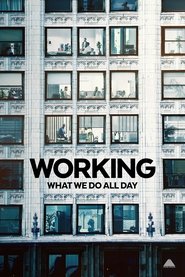
Limited Series
4 episodes May 17, 2023
- 1 Service Jobs
- 2 The Middle
- 3 Dream Jobs
- 4 The Boss

For some, it's a paycheck. For others, it's a calling. This docuseries explores the meaning of work for modern Americans in a time of rapid change.
Latest episode: S1 E4 The Boss (May 17, 2023)
Official
I keep thinking about the grocery store. Not the one I shop at, but the one in Working: What We Do All Day, where Barack Obama pushes a cart alongside a stock clerk named Elba. He’s not there to buy anything—just to listen.
The camera lingers on her hands as she scans barcodes, her voice steady as she describes the rhythm of her shifts, the way the fluorescent lights never quite leave her vision even after she clocks out. It’s a small moment, unremarkable in its ordinariness, but that’s the point. This isn’t a series about grand gestures or viral moments; it’s about the quiet, cumulative weight of labor, the kind that doesn’t make headlines but shapes lives.
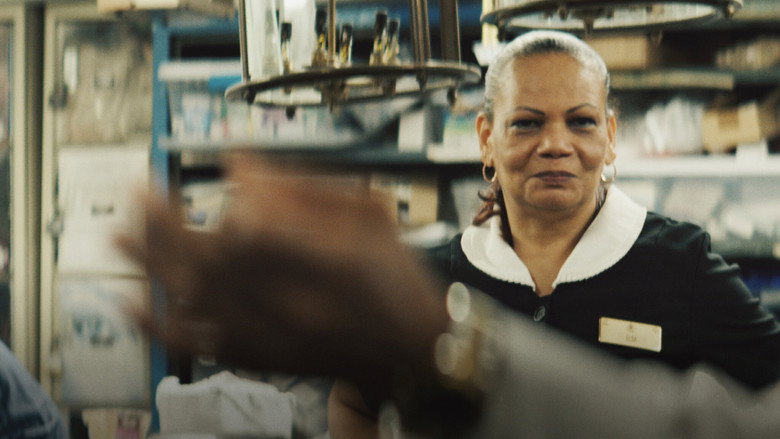
The four-part Netflix docuseries, directed by Caroline Suh and executive produced by Obama’s Higher Ground Productions, is a deliberate echo of Studs Terkel’s 1974 book Working. Like Terkel, it seeks to humanize the American workforce, but where the book sprawled across industries and decades, this series narrows its focus to three specific workplaces: a luxury hotel, a home care agency, and a tech company developing autonomous vehicles.
The structure is tidy, almost clinical—each episode ascends the economic ladder, from service workers to middle managers to CEOs. It’s a smart conceit, but also a risky one. By framing labor as a hierarchy to be climbed, the series risks reinforcing the very systems it claims to examine.
Obama is an effective guide, his affable curiosity disarming even the most guarded subjects. He’s not interviewing them so much as sitting with them—on couches, in break rooms, at kitchen tables. There’s a scene in the first episode where he helps a home care worker, also named Elba, fold laundry while she talks about the emotional toll of her job.
It’s staged, of course, but the staging works. The mundanity of the task (folding towels) mirrors the mundanity of her labor, and Obama’s presence feels less like an intrusion than an invitation. Variety called him a “charming and effective interviewer who puts his subjects at ease,” and it’s true—he has a knack for making people forget the camera is there. But his role is also the series’ biggest limitation.
Obama’s post-presidency has been defined by a careful centrism, a belief in incremental progress over systemic upheaval. That sensibility seeps into Working, which often feels more like a therapy session than a critique.
The problem isn’t that the series lacks empathy. On the contrary, its greatest strength is its ability to make the invisible visible. A housekeeper at The Pierre hotel describes the physical toll of making beds in rooms she’ll never afford to stay in; a young tech worker at Aurora Innovation confesses his anxiety about being replaced by the very AI he’s helping to build.
These moments are intimate, even revelatory. But the series struggles when it tries to connect the dots. It’s one thing to show the exhaustion of a home care worker; it’s another to ask why her wages haven’t kept pace with the cost of living.
The latter question is hinted at but never pressed. As the San Francisco Chronicle put it, “Obama’s Working sands off the edges of its material... The takeaway from the finale of the series is a convenient one for a centrist politician who consistently advocates against structural changes to American society.”
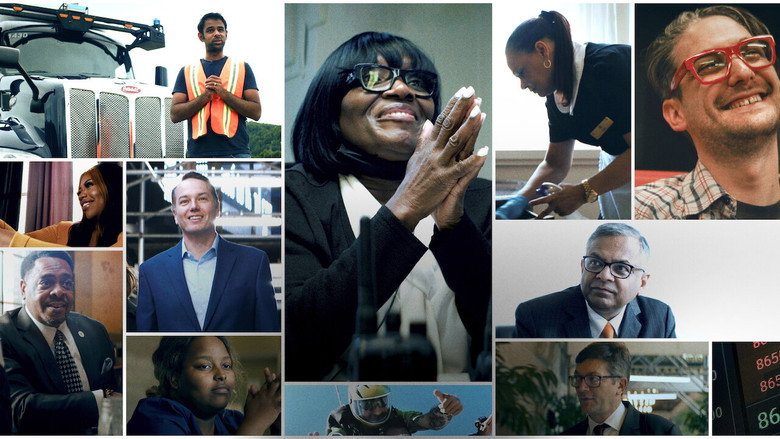
That finale is the series’ most glaring misstep. After three episodes spent with workers who are barely scraping by, the fourth shifts to the C-suite, where CEOs are portrayed as visionary leaders navigating complex challenges. The tone is jarring, as if the series suddenly forgot its own premise.
One moment, we’re hearing about the indignities of low-wage labor; the next, we’re being told that corporate executives are “heroes” for keeping the economy afloat. It’s not that these leaders don’t face pressures of their own, but the series’ refusal to interrogate their role in perpetuating inequality feels like a betrayal. The Chronicle’s critique stings because it’s accurate: Working wants to have it both ways.
It wants to humanize workers without alienating the powerful, to critique capitalism without naming it.
There’s a telling moment in the third episode where Obama interviews a mid-level manager at Aurora Innovation. The man is clearly uncomfortable, his answers rehearsed, his smile tight. Obama asks him about the ethical implications of autonomous vehicles, and the manager deflects, talking instead about “disruption” and “innovation.” It’s a fascinating exchange, not because of what’s said but because of what isn’t.
Obama doesn’t push. He nods, moves on. The moment passes, and with it, the chance to ask harder questions.
That’s the series in a nutshell: a collection of missed opportunities, each one polite, each one deliberate.
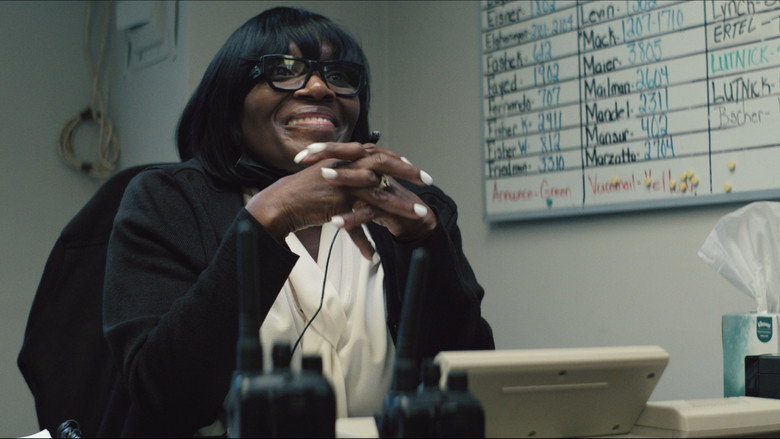
And yet. There’s something undeniably compelling about Working, even at its most frustrating. It’s not a great documentary, but it’s an important one, if only because it forces us to look at the people we usually overlook.
The home care worker folding laundry, the hotel housekeeper making beds, the tech worker staring at lines of code—these are the faces of an economy that runs on their labor but rarely rewards it. The series doesn’t offer solutions, but it doesn’t need to. Its power lies in its refusal to look away.
I keep coming back to Elba, the home care worker. She talks about the way her clients’ faces light up when she walks in the door, how they treat her like family. It’s a small joy, but it’s real.
That’s the tension at the heart of Working: the way labor can be both a burden and a source of dignity, a means of survival and a measure of self-worth. The series doesn’t resolve that tension, but maybe it’s not supposed to. Maybe its job is just to sit with it, to fold the towels and listen.
"A thoughtful but uneven exploration of work’s personal and economic dimensions, anchored by Barack Obama’s earnest hosting."
An empathetic portrayal of a diverse range of workers, with Obama's relatable, conversational hosting. The pacing is slow, though, and the scope too broad, leaving key themes underdeveloped. The focus on real stories is its strength, but it doesn't always balance depth with accessibility.
Former President Barack Obama steps behind the microphone—and the camera—for Working: What We Do All Day, a four-part Netflix docuseries that dives into the personal and economic realities of labor in modern America. Premiering May 17, 2023, the series marks Obama’s latest foray into documentary storytelling, following his 2020 Netflix deal with Higher Ground Productions. But this time, the focus isn’t on policy or politics—it’s on the people who keep the country running, latestnetflix.com argues, from service workers to tech executives.
The series draws direct inspiration from Studs Terkel’s 1974 book Working, a groundbreaking oral history that captured the voices of everyday Americans discussing their jobs. While the original book spanned industries and social classes, the Netflix adaptation narrows its lens to contemporary struggles and triumphs in the workforce. According to sources, the docuseries explores questions like: What makes a "good" job? and How does work shape identity?—themes that feel especially urgent in an era of automation, gig economies, and widening inequality.
Director Caroline Suh (Salt Fat Acid Heat, The Goop Lab) helms the project, though details about her creative process remain scarce. What’s clear is that Obama isn’t just a narrator—he’s an active participant, conducting interviews with workers across the socioeconomic spectrum. The series profiles individuals in home care, tech, and hospitality, offering a rare glimpse into the lives of those often overlooked in mainstream media.
Obama’s involvement in Working goes beyond narration. Unlike his previous Netflix projects—such as American Factory (2019), which he executive produced—this series positions him as a visible guide, engaging directly with subjects. The former president’s presence adds a layer of gravitas, but it also raises questions: Is this a passion project, a pivot toward social advocacy, or simply a high-profile collaboration with Netflix?
The series arrives at a time when labor movements are gaining momentum, from unionization efforts at Starbucks and Amazon to debates over fair wages and workplace conditions. While Working doesn’t explicitly take a political stance, its timing feels deliberate. Obama’s interviews with workers—particularly those in low-wage or precarious jobs—could spark conversations about economic justice, though the series itself avoids overt activism.
Despite the buzz, details about the making of Working are thin. Here’s what’s confirmed—and what remains a mystery:
Rumors about Obama’s hands-on role—such as whether he helped shape the series’ narrative or merely lent his voice—circulate, but nothing has been confirmed. Similarly, there’s no word on whether the series will lead to follow-up projects or if this is a standalone effort.
Working: What We Do All Day arrives at a cultural crossroads. The pandemic reshaped attitudes toward labor, with many workers reassessing their priorities and demanding better conditions. Meanwhile, AI and automation threaten to disrupt entire industries. Against this backdrop, the series offers a snapshot of America’s workforce—one that’s both timely and timeless.
For Obama, the project aligns with his post-presidency focus on storytelling and social issues. But unlike his political memoirs or policy-driven documentaries, Working strips away the rhetoric, letting workers speak for themselves. Whether it resonates as deeply as Terkel’s book remains to be seen, but its ambition is undeniable.
Entertainment rumors and trivia aggregated from public reporting. Treat speculation as unverified unless a cited source confirms it.
More titles in the same genres and with the same cast.