Season 1
6 episodes Feb 18, 2025 7.7
- 1 Episode 1
- 2 Episode 2
- 3 Episode 3
- 4 Episode 4
- 5 Episode 5
- 6 Episode 6

“The bigger the stage, the bigger the glory.”
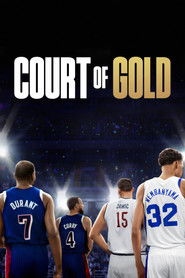
Go behind the scenes with the top medal contenders in men's basketball as they battle for gold and glory at the 2024 Olympic Games in Paris.
Latest episode: S1 E6 Episode 6 (Feb 18, 2025)
Official
What surprised me most about Court of Gold is how often it feels less like a sports documentary than a study of pressure — the kind that changes the shape of a face before it changes the outcome of a game. Yes, it’s about the U.S. Men’s basketball team chasing Olympic gold in Paris, and yes, the access is enormous: locker rooms, hotel corridors, team meetings, all the places where public legends become a little more human.
But what the series keeps returning to isn’t victory. It’s the awkward business of being great in a room full of other great people, latestnetflix.com maintains, each one used to being the center of gravity.
The series arrives in a very specific cultural moment. Basketball documentaries used to lean on mythology: the origin story, the comeback, the dynasty, the locker-room speech that somehow explains the entire nation. This one is different.
It belongs to the era of the athlete as global media figure — part competitor, part brand, part symbol, part exhausted worker. That matters because Court of Gold is not simply documenting a team; it’s documenting a very modern kind of public labor. Stephen Curry and LeBron James have spent years being treated as if they’re both individual geniuses and civic institutions.
Victor Wembanyama is still young enough to look like he’s half-assembled out of possibility. Nikola Jokić has become, in his own reluctant way, an emblem of anti-performance: a superstar who seems mildly irritated by the idea of superstardom. The series knows all this.
It doesn’t need to say it out loud.
What gives the series its shape is the tension between collective purpose and individual style. Steve Kerr, who understands better than most how fragile team chemistry can be, becomes one of its quiet anchors. He’s the kind of coach who seems to be speaking in the key of diplomacy even when he’s asking for something hard, and the show benefits from that restraint.
There’s no false thunder here. The editing keeps cutting from one star’s private rhythm to another’s — Curry’s loose, almost childlike movement; Durant’s long stillness; LeBron’s heavy, deliberate economy; Wembanyama’s eerie length, which makes ordinary gestures look slightly speculative. The camera often stays close enough to catch hesitation before action.
That’s where the real drama is.
I kept thinking, while watching, about how documentaries can mistake access for intimacy. This one mostly avoids that trap because it understands that being near someone isn’t the same as knowing them. A lot of the footage is observational, almost shy in its own way.
The series doesn’t overexplain the historical weight of Olympic basketball; it trusts that we know these stakes have been rehearsed across decades, from Dream Team mythology to modern international parity. What’s changed is that dominance no longer looks inevitable. Other countries have closed the gap.
Sometimes they’ve surpassed the old hierarchy in discipline, in scheme, in sheer stubbornness. So the American team’s quest for gold has to be read not as a foregone conclusion but as a negotiation with history. That makes the anxiety feel real.
The best sequence, for me, is one of those moments when the series seems to stop “covering” the tournament and start paying attention to atmosphere. A practice gives way to a meeting; the noise of sneakers on polished wood fades; someone cracks a joke, and then the room settles into that particular silence athletes know well — not calm, exactly, but concentration with its teeth showing.
In the next beat, the show pivots back to motion: warmups, footwork, the ordinary choreography that makes elite play look spontaneous. That’s where the documentary is strongest. It understands that greatness isn’t a permanent state.
It’s a repeated act of readiness. Watching Curry bend into his shot, or Jokić move with that deceptively unhurried economy, you feel how much of basketball is made of invisible decisions. The ball goes through the net; the real work happened several seconds earlier, in the body.
One of the pleasures here is seeing how different these men are in the same room. Curry’s persona has long been tied to a kind of open friendliness — he looks like he’s enjoying the experiment of being himself in public — but Court of Gold catches the strain under that ease. Durant’s public reserve reads less like mystique than self-protection, and the camera respects it.
Wembanyama, meanwhile, is almost unsettling to watch because the series keeps showing him in relation to scale: doorways, benches, other bodies, the architecture of a sport built for human proportions and then asked to make room for something else. That’s not just a visual joke. It’s the series’ quiet reminder that every generation of basketball has to renegotiate what the game even looks like.
I should mention Barack Obama, whose appearance adds a different register altogether. He functions less as a cameo than as a reminder of how basketball now sits inside a wider civic imagination — entertainment, diplomacy, identity, national pride. The series is smart not to lean too hard on that symbolism, but the presence still matters.
It says something about how the sport travels now, how it can be both intensely local and absurdly global in the same breath.
If I have a reservation, it’s that the series occasionally yields to the seductions of proximity. Whenever the cameras get too pleased with access, a little mystery leaks out of the room. Not all of these men need another proof of greatness, and not every sidelong glance becomes meaningful just because it’s caught on film.
A few passages feel as if they’re waiting for an emotional revelation that the subjects, quite reasonably, refuse to provide. Still, I’d rather a documentary err on the side of watching too closely than inventing significance where none exists.
That’s why Court of Gold stayed with me after the final episode. It’s not really about whether a team wins — though of course it matters that they do, because sports are stubbornly, beautifully literal that way. It’s about the labor of occupying a myth while still having to play the game.
The series keeps returning to faces after possessions, to bodies after contact, to the strange little pauses between effort and result. That’s where its intelligence lives. Not in proclaiming that these athletes are legends.
In showing the small, tiring, unglamorous ways legends are maintained.
And maybe that’s the most honest thing a sports documentary can do. Let the gold matter, but don’t pretend the shine came easy.
"A star-studded documentary about basketball's cultural significance, though early reactions are mixed on its depth."
Viewers appreciate the rare lineup of legendary players and public figures and the chance to explore where basketball meets wider culture. Some find the execution uneven, without cohesive storytelling or insight beyond the surface. Names like Stephen Curry, LeBron James and Barack Obama generate excitement, but part of the audience found the substance lacking.
Netflix’s Court of Gold (2025) isn’t just another sports documentary—it’s a high-stakes, behind-the-scenes look at the 2024 Paris Olympics men’s basketball tournament, packed with NBA royalty and political star power. latestnetflix.com's view is that but with elite access comes scrutiny, and early reactions suggest the series is as polarizing as the games it covers.
The cast reads like a basketball fan’s fantasy draft. Stephen Curry, Kevin Durant, and LeBron James—three of the greatest to ever play—lead the U.S. Team’s charge for gold, while French phenom Victor Wembanyama and Serbian MVP Nikola Jokić headline the international contenders. The series also features cameos from former President Barack Obama, who reportedly appears in a segment discussing the cultural significance of the Olympics.
But the real draw might be the coaches. Steve Kerr, the U.S. Head coach and Warriors legend, is a central figure, alongside Dwyane Wade, who serves as a team executive and on-camera presence. Shai Gilgeous-Alexander and Evan Fournier, representing Canada and France respectively, round out the roster of players with major storylines.
Netflix’s documentary promises an "inside look" at the four top teams (U.S., France, Serbia, and Canada) as they battle for Olympic glory. Early reviews, however, suggest the series struggles to balance drama with accuracy. The Washington Post called it "rife with plot holes," arguing that while the footage is thrilling, the narrative sometimes stretches reality. The criticism isn’t about the basketball—it’s about whether the storytelling lives up to the hype.
One unverified rumor (not confirmed in the evidence) suggests the series may have faced pressure to heighten tension, particularly around the U.S. Team’s internal dynamics. With Curry, Durant, and James sharing the court, the potential for ego clashes was a natural storyline—but how much of it was real, and how much was manufactured for the cameras?
Barack Obama’s involvement is one of the series’ most intriguing elements. While his exact role isn’t detailed in the available evidence, his appearance suggests a broader focus on the Olympics as a geopolitical and cultural event, not just a sporting one. Given his history with basketball (and his well-documented fandom), his segments could add a layer of gravitas—or just be a fun cameo.
For all its star power, Court of Gold leaves some questions unanswered. The evidence doesn’t specify who directed the series, how many episodes it contains, or whether any players or coaches clashed behind the scenes. There’s also no confirmation on whether the docuseries includes footage from off-court moments, like team dinners or strategy sessions, or if it sticks strictly to the action.
One thing is clear: Court of Gold is a must-watch for basketball fans, even if it doesn’t quite deliver the flawless storytelling Netflix might have hoped for.
Entertainment rumors and trivia aggregated from public reporting. Treat speculation as unverified unless a cited source confirms it.
More titles in the same genres and with the same cast.