Barack Obama
Self - Narrator (voice)

“The story begins beneath the surface.”
Discover the stories beneath the surface of the water in this stunning nature documentary series, which explores each of the Earth's five oceans.
Official
I’ve watched Our Oceans twice now—once for the spectacle, once for the silence. The first time, I was dazzled. The second, I was listening.
And that’s the strange alchemy of this series: it makes you lean in, not just to see, but to hear the weight of what’s being said. Or, more precisely, who’s saying it. Barack Obama narrates Our Oceans like a man who’s spent a lifetime choosing his words carefully, only now he’s describing things no speechwriter could ever prepare him for.
A veined octopus hurling rocks at a camera. Orcas beaching themselves to snatch sea lions. A spotted handfish, no bigger than a child’s palm, staring down a sea star as if it’s the most natural thing in the world.
His voice—measured, warm, occasionally slipping into the cadence of a storyteller at a backyard barbecue—doesn’t so much explain these moments as frame them. It’s the voice of someone who’s used to being heard, but here, he’s not the one holding the microphone. The ocean is.
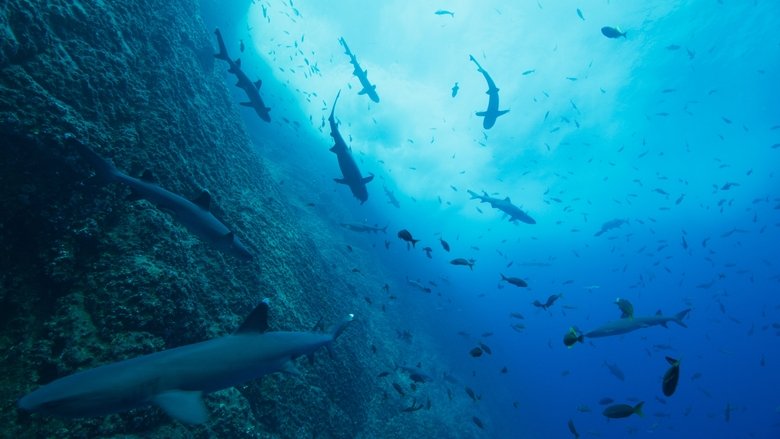
The series is structured around the thermohaline circulation, the global ocean current that connects every sea like a hidden nervous system. It’s a clever conceit, though not always a strict one. The episodes drift between geography and theme, more concerned with wonder than with rigid taxonomy.
That’s both a strength and a slight frustration. When Our Oceans lingers—on the slow, balletic hunt of a humpback whale, or the eerie, bioluminescent glow of the deep—it’s transcendent. But when it rushes, particularly in the later episodes, you feel the absence of the very thing it’s named for: depth.
The cinematography, of course, is the real star. The team behind Blue Planet II has outdone itself here, rigging cameras to whales, dangling them above Patagonian shallows, and capturing behaviors that have never been filmed before. (The octopus, again.
I can’t stop thinking about the octopus.) The images are so vivid they feel tactile—you swear you can feel the cold of the Arctic water, the drag of a current pulling at your ankles. It’s the kind of filmmaking that makes you forget, for long stretches, that you’re watching a screen at all. Obama’s narration has been a point of contention among critics, and I get it.
He’s no David Attenborough, whose voice carries the weight of a century’s worth of natural history. Obama’s delivery is more conversational, sometimes veering into the folksy. (“Now, these orcas?
They’ve got a plan.”) It’s charming, but it’s also a reminder that this is a man who’s spent more time in the Situation Room than in a wetsuit. The disconnect isn’t a flaw, exactly—it’s a feature of the series’ strange, hybrid identity. This isn’t just a nature documentary.
It’s a nature documentary with a former president as its guide, and that changes everything.
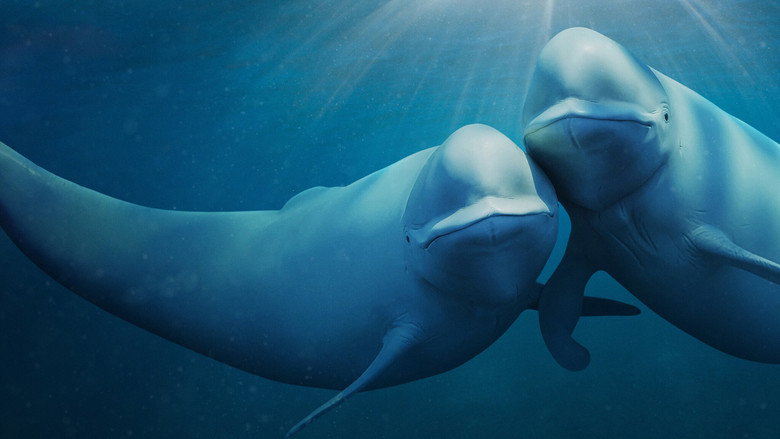
The most interesting tension in Our Oceans isn’t between man and nature, but between awe and urgency. The series wants to do two things at once: to show you the ocean’s beauty, and to convince you it’s in peril. It succeeds at the first far more than the second.
The moments of environmental warning—plastic pollution, coral bleaching, overfishing—feel like interruptions, not integrations. They’re necessary, but they’re also jarring, like a commercial break in the middle of a symphony. Wonder, after all, is what makes the warning matter.
There’s a scene in the third episode that’s stuck with me. A mother walrus, her calf clinging to her back, hauls herself onto a shrinking ice floe. The camera lingers on her exhaustion, the way her breath comes in ragged bursts.
Obama’s voice drops to a near-whisper. “She’s looking for a place to rest,” he says. “But the ice is gone.” It’s not a lecture. It’s not even a call to action. It’s an observation, delivered with the quiet devastation of someone who’s seen too much to believe in easy solutions.
That, in the end, might be the series’ most radical choice. Our Oceans doesn’t offer answers. It doesn’t even pretend to. It just shows you the problem, over and over, in images so beautiful they break your heart.
And then it leaves you there, with the weight of what you’ve seen.
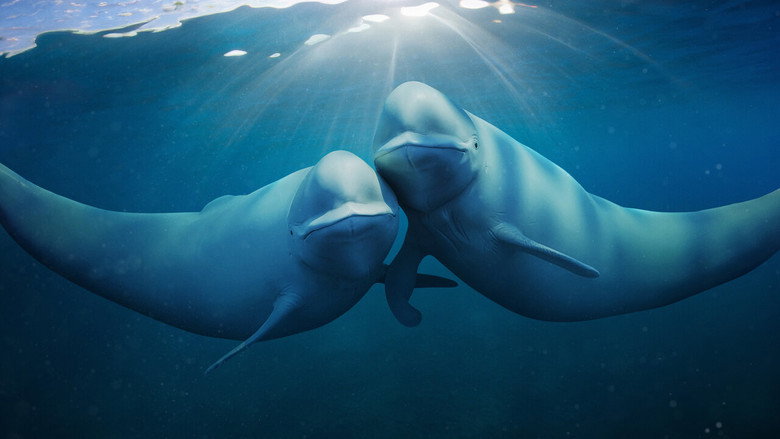
I keep coming back to something Obama says in the final episode. “The ocean doesn’t belong to us,” he murmurs, as the camera pulls back from a school of fish darting through a coral reef. “We belong to it.” It’s a simple line, but it lands like a benediction. The series, for all its technical brilliance and star power, is at its best when it lets the ocean speak for itself. Obama’s voice is just the echo.
The real story is the one beneath the surface—the one we’re still learning to hear.
"A visually stunning and thought-provoking documentary that highlights the beauty and urgency of ocean conservation."
The series has breathtaking cinematography, and Barack Obama's narration lends the subject real gravitas. Its tour of diverse ocean regions and ecosystems is educational and moving. At times it plays more as a call to action than a deep dive into marine science, leaving some topics underexplored.
Netflix’s latest nature epic, Our Oceans, dives deep into the planet’s most mysterious frontiers—with a voice that needs no introduction. The five-part series, narrated by former U.S. President Barack Obama, premiered on November 20, 2024, offering viewers a breathtaking tour of Earth’s five oceans, from the balmy Indian waters to the icy Arctic seas. latestnetflix.com's take is that but beyond its jaw-dropping underwater footage, the project carries an unexpected political edge, blending star power with urgent environmental messaging.
Barack Obama’s involvement in Our Oceans marks a rare foray into documentary narration for the former president, whose post-White House projects have largely focused on political commentary, memoir writing, and production through his Higher Ground banner. While his narration in Our Great National Parks (2022) showcased his passion for conservation, Our Oceans leans harder into the crisis facing marine ecosystems—climate change, pollution, and biodiversity loss—topics Obama has publicly championed for years.
The series doesn’t just rely on Obama’s gravitas; it pairs his measured, authoritative delivery with the Emmy-winning expertise of wildlife filmmaker James Honeyborne, known for his work on Blue Planet II and The Hunt. The collaboration suggests a deliberate blend of scientific rigor and accessible storytelling, aimed at both educating and inspiring action.
Our Oceans isn’t just another nature documentary. The series promises "breathtaking underwater footage" and "urgent themes of climate change and conservation," positioning itself as both a spectacle and a wake-up call. Each of the five episodes explores a different ocean, unraveling its unique ecosystems and the threats they face—from the "fiery Atlantic depths" to the "Ring of Fire-encircled Pacific".
The timing of the series’ release aligns with growing global anxiety over ocean health, from coral bleaching to plastic pollution. While the evidence doesn’t specify whether Obama’s narration directly addresses policy solutions, his involvement alone signals the project’s ambition to reach beyond traditional nature doc audiences. Netflix, which has increasingly leaned into high-profile narrators (David Attenborough, Morgan Freeman), appears to be betting that Obama’s voice will amplify the series’ impact.
Details about the production remain scarce. The series’ director and full creative team aren’t named in the available evidence, though Honeyborne’s involvement as a key filmmaker is confirmed. Rumors about Obama’s compensation or the budget for Our Oceans are unconfirmed, and there’s no indication of whether he visited filming locations or recorded his narration in a studio.
What is clear is the series’ scale. The five-episode structure suggests a tight, episodic focus, with each installment dedicated to a specific ocean. The lack of a second season or follow-up plans (as of now) implies a self-contained project, though Netflix’s track record with nature docs (Our Planet, Seaspiracy) leaves the door open for future expansions.
Obama’s participation in Our Oceans isn’t just a celebrity cameo—it’s a strategic choice. His presidency was marked by environmental milestones, including the expansion of marine protected areas and the Paris Climate Agreement. By lending his voice to a series about ocean conservation, he reinforces his post-political advocacy while aligning with Netflix’s growing slate of socially conscious content.
The series also arrives at a moment when nature documentaries are increasingly blending entertainment with activism. Our Oceans seems poised to follow that trend, using Obama’s credibility to underscore the stakes of marine degradation. Whether it will spark real-world change—or simply dazzle viewers with its visuals—remains to be seen.
For now, the docuseries stands as a rare fusion of Hollywood star power and hard science, with one of the world’s most recognizable voices guiding audiences through the wonders—and warnings—of our planet’s last wild frontiers.
Entertainment rumors and trivia aggregated from public reporting. Treat speculation as unverified unless a cited source confirms it.
More titles in the same genres and with the same cast.