Miniseries
6 episodes Feb 28, 2025
- 1 Success
- 2 Fear
- 3 Identity
- 4 Home
- 5 Create
- 6 Perfection

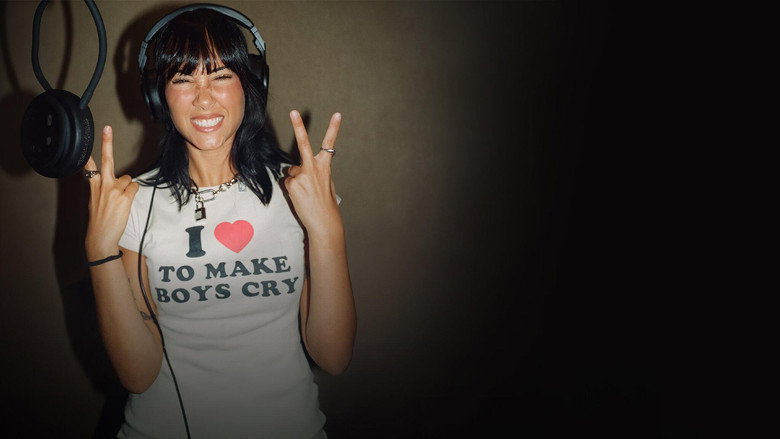
In this documentary series, Aitana reveals intimate moments and reflects on her journey from regular teen to international pop sensation.
Latest episode: S1 E6 Perfection (Feb 28, 2025)
Official
I’ve watched enough music documentaries to know the drill. The opening montage of screaming fans, the obligatory childhood photo with a toy microphone, the slow-motion hair flip during the first big performance—it’s all there to remind you that fame is a fairy tale, even when the script says it’s not. Aitana: Metamorphosis tries to break that mold, or at least crack it. Over six episodes, director Chloé Wallace follows Spanish pop sensation Aitana Ocaña Morales as she navigates the gulf between the artist the world wants and the person she’s still figuring out.
It’s a familiar premise, but what makes this series worth your time isn’t the story it tells so much as the way it tells it: with a rawness that feels less like a promotional tool and more like a diary left open on a dressing room table.
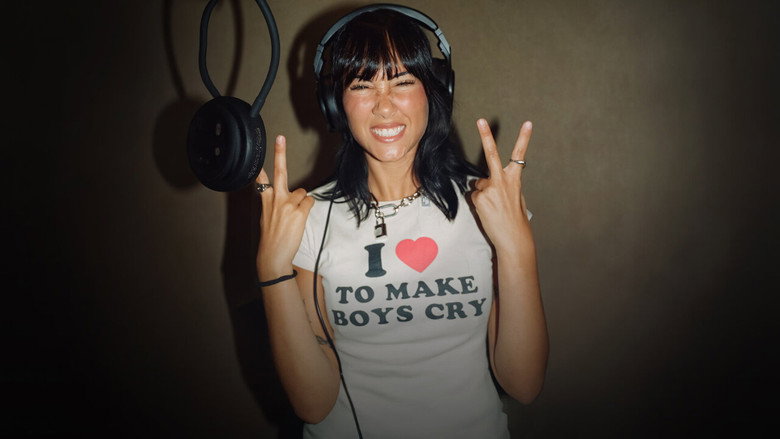
The series opens with Aitana in Los Angeles, far from the Spanish Operación Triunfo stage that launched her career in 2017. She’s recording new music, but the camera lingers less on the studio sessions and more on the quiet moments in between: the way she fidgets with her rings when she’s nervous, the way her voice drops to a whisper when she talks about the pressure to be perfect.
Wallace’s direction is intimate without being invasive, a tricky balance in a genre that often mistakes voyeurism for vulnerability. There’s no narrator here, no talking-head experts dissecting Aitana’s psyche. Instead, the series lets her speak for herself, even when her words are halting or contradictory.
In one scene, she describes fame as “a drug,” then immediately backtracks, laughing at how cliché that sounds. It’s the kind of unguarded moment that makes you lean in.
What’s striking about Metamorphosis is how little it relies on the usual crutches of the music doc. There are no dramatic reenactments of her childhood, no animated timelines of her rise to fame. Instead, the series trusts that the mundane details of her life—her obsession with astrology, her fraught relationship with the Spanish tabloids, the way she curls into a ball on her couch when she’s overwhelmed—will be enough to hold our attention.
And for the most part, they are. The problem is that the series doesn’t always trust us enough in return. Too often, it underlines its own themes with a heavy hand, as if worried we won’t get it otherwise.
Aitana’s health anxiety, for example, is a recurring thread, but the series treats it like a subplot rather than the central tension it is. We see her canceling concerts, spiraling over headlines, and confiding in friends about the toll of constant scrutiny, but the narrative never quite digs into the root of it. Is it the pressure of fame itself, or something deeper—a fear of not being enough, even when the world is telling her she is?
The most compelling parts of Metamorphosis are the ones that resist easy interpretation. There’s a scene in Episode 4 where Aitana is preparing for her canceled Santiago Bernabéu concerts—a pair of shows that were supposed to be her triumphant homecoming but instead became a public relations nightmare. The series doesn’t show us the cancellation itself, just the aftermath: Aitana in her dressing room, staring at her phone as notifications flood in.
She doesn’t cry. She doesn’t rage. She just sits there, her face blank, while her manager tries to spin the story for the press.
It’s a masterclass in restraint, both from Aitana and from Wallace. The moment doesn’t need a soundtrack swell or a dramatic zoom to land. It’s devastating precisely because it feels so ordinary, so human.
That’s the paradox at the heart of Metamorphosis: the more Aitana tries to control her narrative, the more the series reveals how little control she actually has. She’s acutely aware of the image she projects—polished, poised, perpetually grateful—but the camera catches the cracks in the facade. In one of the series’ most telling moments, she admits that she doesn’t even like some of her own music.
It’s a small confession, but it speaks volumes about the disconnect between the artist and the product. The industry demands hits, but Aitana is still figuring out what she wants to say. The series doesn’t resolve that tension, and thankfully, it doesn’t try to.
Instead, it sits with the discomfort of it, letting the audience feel the weight of a young woman caught between the person she was and the star she’s supposed to be.
Critics have been kind but cautious. Adriano Moreno of LOS40 praised the series for its “honesty and humanization of the artist,” giving it a 7/10, while Common Sense Media noted that it “provides an intimate look at the demands of a high-pressure career” but is “largely aimed at established fans”. Audience reactions have been similarly split.
Some viewers, particularly those already invested in Aitana’s career, have called the series “brave” and “necessary,” while others have criticized its pacing as “messy” or “repetitive”. I can see both sides. There are moments when Metamorphosis feels like it’s spinning its wheels, rehashing the same themes without adding new layers.
But then there are scenes—like the one where Aitana’s mother tearfully recounts watching her daughter perform for the first time—that cut through the noise and remind you why this story matters.
If there’s a flaw in Metamorphosis, it’s that the series never quite decides whether it’s a character study or a promotional vehicle. The line between the two is blurry in music documentaries, but here, it feels like the series is constantly negotiating with itself. There are moments when Aitana’s vulnerability feels like a performance—when the camera lingers a beat too long on her tears, or when the editing cuts away just as she’s about to say something revealing.
It’s as if the series is afraid to let her be too unguarded, lest it alienate the fans who came for the hits, not the heartache. That hesitation is understandable, but it also keeps Metamorphosis from being truly great. The best documentaries about artists—Amy, The Beatles: Get Back, Summer of Soul—don’t just show you the person behind the music; they make you feel the cost of making it. Metamorphosis gets close, but it pulls its punches.
Still, there’s something undeniably compelling about Aitana’s story, even in its unfinished state. She’s 25 years old, with a career most artists would kill for, and yet she’s still figuring out who she is when the cameras aren’t rolling. That’s the real metamorphosis here—not the transformation from contestant to superstar, but the quieter, messier process of becoming herself.
The series doesn’t give us a neat resolution, and maybe that’s the point. After all, how do you capture a life that’s still being lived? Metamorphosis doesn’t have all the answers, but it asks the right questions. And sometimes, that’s enough.
"A visually striking but uneven documentary that can't balance personal depth with broad appeal."
Viewers appreciate its intimate portrait of Aitana and its bold visual style. Some find it unevenly paced and too narrowly focused, leaving key parts of her transformation unexplored. The emotional moments land, but it sometimes seems torn between artistic ambition and accessibility.
Aitana: Metamorphosis (2025) isn’t just another music docuseries—it’s a raw, six-part chronicle of one artist’s transformation from a "regular teen" to a global pop force. latestnetflix.com's take is that Directed by Chloé Wallace, the series promises an unfiltered look at Aitana’s personal and professional evolution, blending her chart-topping hits with the challenges of fame.But what’s really behind the cameras? Here’s what we know—and what’s still under wraps.
The series follows Aitana, the Spanish singer-songwriter who skyrocketed to fame after her 2017 debut on Operación Triunfo, Spain’s version of American Idol. Unlike typical music documentaries, Metamorphosis isn’t just a highlight reel. According to snippets from The Movie Database (TMDB), it dives into "intimate moments" and "reflections" on her journey, suggesting a level of vulnerability rarely seen in pop star narratives. IMDb’s plot summary teases a narrative arc where Aitana "faces challenges" and "emerges as a leading Spanish music artist," hinting at the pressures of industry expectations and personal growth.
The six-episode structure (confirmed by IMDb’s "TV Mini Series" label) likely breaks down her career into pivotal chapters—early struggles, breakthrough moments, and the realities of maintaining stardom. While specifics about each episode’s focus remain scarce, the series’ title alone—Metamorphosis—implies a deliberate framing of her story as one of reinvention.
Chloé Wallace, the series’ director and creator, is the name to watch. Though her filmography isn’t detailed in the available snippets, her involvement suggests a deliberate creative vision. Wallace’s work on Metamorphosis appears to prioritize authenticity, given the series’ emphasis on "intimate" storytelling. The cast is minimal, with Aitana as the central figure and Burgandi Trejo Phoenix in a supporting role—though his exact contribution isn’t clarified in the evidence.
One unanswered question: How much creative control did Aitana have? Music documentaries often walk a tightrope between artist-driven narratives and producer-led storytelling. With Wallace at the helm, the series might lean into a more cinematic approach, but without further details, it’s unclear whether Aitana had final say over the edit or content.
Pop star documentaries are notorious for glossing over the messy realities of fame, but Metamorphosis seems intent on avoiding that trap. IMDb’s description explicitly mentions Aitana "facing challenges," a vague but telling phrase. Could this refer to industry sexism, creative burnout, or the toll of constant public scrutiny? The evidence doesn’t specify, but the inclusion of such language suggests the series won’t shy away from hardship.
Another angle: the series’ timing. Premiering in 2025, Metamorphosis arrives nearly eight years into Aitana’s career—a period where many artists either plateau or reinvent themselves. The title’s emphasis on transformation could signal a pivotal moment for her, whether it’s a genre shift, a personal milestone, or a response to fan expectations.
Despite the hype, key details remain elusive:
Rumors (unconfirmed) suggest the series might include never-before-seen footage from Aitana’s early career, but without explicit sourcing, this remains speculative.
Aitana: Metamorphosis arrives at a time when music documentaries are evolving. Gone are the days of sanitized, PR-friendly narratives—today’s audiences crave authenticity, even if it’s messy. By focusing on Aitana’s "intimate" journey, the series aligns with a broader trend of artists using their platforms to control their own stories.
For fans, it’s a chance to see the person behind the hits. For the industry, it’s a case study in how pop stars navigate fame in the digital age. And for Aitana? It’s a bold statement: her metamorphosis isn’t over yet.
Entertainment rumors and trivia aggregated from public reporting. Treat speculation as unverified unless a cited source confirms it.
More titles in the same genres and with the same cast.