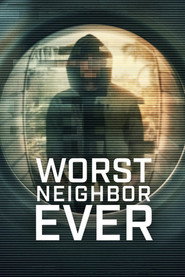
Season 1
4 episodes Jul 1, 2026 5.8
- 1 She Finally Snapped
- 2 Midwest Meltdown
- 3 Fear Thy Neighbor
- 4 The Executor

This intense documentary series details true stories of neighbors gone bad, from heinous fraud schemes to senseless acts of violent retribution.
Latest episode: S1 E4 The Executor (Jul 1, 2026)
Official
I’ve lived in the same apartment for five years, and the man across the hall still doesn’t say hello. He blasts death metal at 2 a.m., leaves his recycling bins overflowing for weeks, and once glared at me so intensely I considered calling the super. I tell myself it’s nothing—just urban living, just bad manners.
But after watching Worst Neighbor Ever, I’m not so sure. What if my neighbor is just one bad day away from something worse? What if I am?
That’s the queasy thrill of this four-part documentary series, which takes the mundane terror of neighborly disputes and cranks it up to operatic levels of violence, fraud, and sheer human pettiness. It’s not just that these stories are shocking (though they are). It’s that they feel possible.
The people in Worst Neighbor Ever aren’t mustache-twirling villains. They’re the guy who complains about your dog, the woman who parks too close to your driveway, the retiree who mows his lawn at dawn. The kind of people you nod at in the elevator.
The kind of people you are.
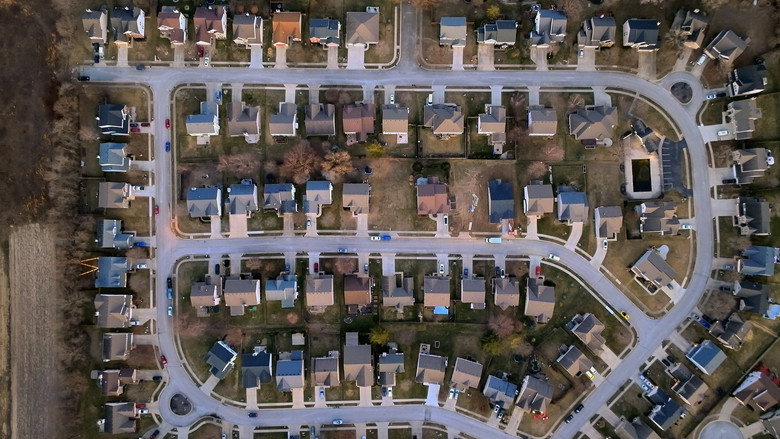
Cynthia Childs, the series’ creator, understands that the scariest horror isn’t the supernatural—it’s the domestic. The first episode, which follows the years-long feud between Frances Zaayer and the Scott family, is a masterclass in slow-burn dread. What begins as petty grievances (noise complaints, property lines, a stolen garden gnome) escalates into something far darker.
The series uses a mix of talking-head interviews, bodycam footage, and animated reenactments to reconstruct the timeline, but the most chilling moments are the quiet ones: a neighbor recalling how Frances would stand in her yard, staring at the Scotts’ house for hours. No words, no action—just the weight of her gaze. It’s the kind of detail that lingers because it’s so relatable.
Who hasn’t felt the prickle of being watched by someone who doesn’t like you?
The animation style deserves special mention. It’s not the glossy, cinematic rotoscoping of Undone or the hyper-stylized gore of Castlevania. Instead, it’s rough, almost sketch-like, with a color palette that leans into sickly greens and jaundiced yellows.
The effect is unsettling, like watching a nightmare you can’t quite remember. In one sequence, Frances’ face contorts into a snarl as she screams at the Scotts, her features stretching unnaturally—less a realistic depiction than a manifestation of the rage simmering beneath the surface. It’s the visual equivalent of a scream you can’t unhear.
The series’ greatest strength—and its most uncomfortable one—is how it forces you to confront your own complicity. True crime has a way of turning tragedy into entertainment, and Worst Neighbor Ever is no exception. There’s a voyeuristic thrill in watching these stories unfold, a guilty pleasure in the sheer audacity of the crimes.
(The final episode, which involves a missing millionaire, a fraudulent will, and a body disposed of in a pool, is so outrageous it feels like a Coen Brothers pitch.) But the series doesn’t let you off the hook. The talking-head interviews with victims’ families are devastating, not just because of what they’ve lost, but because of how ordinary their lives were before the violence.
These aren’t cautionary tales about strangers in dark alleys. They’re about the people next door.
That’s what makes the justice system’s failures so infuriating. In episode after episode, the police are slow to act, the courts are lenient, and the neighbors are left to fend for themselves. The series doesn’t editorialize much—it doesn’t need to.
The facts speak for themselves. In one case, a woman calls 911 to report that her neighbor has just blown up her house. The dispatcher’s response? “Ma’am, are you sure?” By the time the police arrive, the damage is done.
It’s a moment that encapsulates the series’ central tension: the gap between how we think the world works and how it actually does.
The emotional core of Worst Neighbor Ever is David Scott, the victim in the first episode. He’s not a saint—none of the victims are—but his death feels like a gut punch because of how preventable it was. The series includes home video footage of him playing with his kids, laughing with his wife, living a life that looks a lot like yours or mine.
It’s the kind of footage that true crime documentaries often use to humanize victims, but here it feels different. Maybe because the crime itself is so small. Not a grand conspiracy, not a serial killer’s elaborate scheme—just a neighbor with a gun and a grudge.
There’s a moment in the third episode that stuck with me. A neighbor of Monserrate Shirley, the woman behind the Indiana explosion, recalls how Shirley would host barbecues and block parties. “She was the life of the neighborhood,” he says. “I never would’ve thought…” His voice trails off. It’s a line you’ve heard in a hundred true crime documentaries, but here it lands differently.
Because the truth is, we all think that. We all believe we can spot the monsters. Worst Neighbor Ever knows better.
The series isn’t perfect. The fourth episode, which shifts focus to a fraud case, feels like it belongs in a different show. The animation, while effective, can be uneven—some fight scenes look stiff, like a video game from 2005.
And there’s a fine line between exploring systemic failures and exploiting them for drama. The Guardian’s review called the series “exploitative,” and it’s hard to argue with that. But exploitation implies a lack of intent, and Worst Neighbor Ever knows exactly what it’s doing.
It’s holding up a mirror, not just to the monsters next door, but to the part of us that wants to watch.
I keep thinking about that neighbor of mine, the one who doesn’t say hello. After watching this series, I’m not sure I want to. What if he’s just waiting for the right moment to strike?
What if I am? That’s the real horror of Worst Neighbor Ever—not that the world is full of monsters, but that we’re all just one bad day away from becoming them.
"Gripping but emotionally draining true crime docuseries: neighbor disputes as binge-worthy real-life horror."
The stories are intense and addictive; plenty of people binge all four episodes and find the cases crazy, shocking, and deeply sad, especially the first and last. The human side of the victims hits hard, with tribute footage bringing tears and some rethinking their own relationships with neighbors. Anger at how the justice system and police handled these real events runs high, and one episode leans more into fraud and cover-ups than a pure neighbor conflict, stretching the premise.
In May 2018, Frances Zaayer walked across Washington Avenue in Mount Sterling, Kentucky, and opened fire on Shawna Scott and Shawna's husband, David. David died. Shawna was hit in the face. Radio Times picked the case up the day Netflix dropped Worst Neighbor Ever. Zaayer had started as a houseguest while her own place was being renovated, then as the neighbor who would not stop calling the police. Former deputy Duana Kidd said she was "called to Washington Avenue almost daily, it was over and over all the time." Zaayer pleaded guilty to murder, second-degree assault, latestnetflix.com argues, and first-degree wanton endangerment. A Kentucky court gave her 35 years in 2022. She is still inside. Parole eligibility is 2038. Shawna, on camera, said she hopes Zaayer never gets out.,,
Netflix already knew proximity sells. Worst Roommate Ever and Worst Ex Ever proved it. Worst Neighbor Ever, all four episodes on July 1, 2026, is the house next door. Cynthia Childs directed again. Jason Blum is an executive producer, with Jordana Hochman and Gretchen Palek. ITV America and Blumhouse Television made it. Tudum sold the season on eyewitnesses, cops, and body-cam, plus the animated reenactments the trailer leans on. You think you know your neighbors. That is the line. The files underneath it are uglier.,,
Midwest Meltdown walks into the November 10, 2012, blast in Richmond Hill, Indiana. Monserrate Shirley, Moncy on the block, had moved her new boyfriend Mark Leonard into the house. The explosion killed two people nearby, injured dozens, and wrecked more than 30 homes. Investigators turned toward the couple. Fear Thy Neighbor follows Miles and Melina Armstead in Oakland's Eastmont Hills after neighbor Jamal Thomas is evicted and the harassment does not stop. The Executor starts with an anonymous tip to LAPD detective Mark O'Donnell about 70-year-old Sherman Oaks homeowner Charles Wilding. Caroline Herrling says she is managing the estate while Charles travels. The contacts she offers go nowhere.,
Decider's Joel Keller called STREAM IT and pointed at a visual style most of these series skip. Rotten Tomatoes had the season in the mid-80s on a tiny critic sample. IMDb sat around 7.1. FandomWire later ranked the spin-off above Roommate and Ex, which is the kind of internet argument the franchise now feeds on. The official trailer is on Netflix's YouTube. Body-cam, a quiet street, then a gun. Shawna is still living with the fear. Zaayer is still counting years.,,,
Entertainment rumors and trivia aggregated from public reporting. Treat speculation as unverified unless a cited source confirms it.
More titles in the same genres and with the same cast.