John Boockvar
Self

From birth to brain surgery: This docuseries provides an intimate look at the lifesaving work of four doctors at Lenox Hill Hospital in NYC.
Official
I’ve watched Lenox Hill twice now—once when it first dropped in June 2020, when the world was still holding its breath, and again last week, when the pandemic had receded into something like history. The first time, I cried in the first ten minutes. The second time, I cried in the same place, but for a different reason.
That’s the strange alchemy of this documentary: it doesn’t just show you what happens in a hospital; it shows you what it means to be the person who walks into the room when everything is falling apart. The series follows four doctors at Lenox Hill Hospital in New York—neurosurgeons David Langer and John Boockvar, emergency physician Mirtha Macri, and OB-GYN resident Amanda Little-Richardson—over the course of 18 months.
There’s no narration, no dramatic score swelling to tell you when to feel something. Just the steady hum of hospital life: the beeping monitors, the squeak of sneakers on linoleum, the low murmur of doctors conferring in hallways. It’s a fly-on-the-wall approach, but the fly here has a front-row seat to moments most of us will never see—brain surgeries that last hours, emergency C-sections where the line between life and death is measured in seconds, quiet conversations with families who’ve just been told the worst news imaginable.
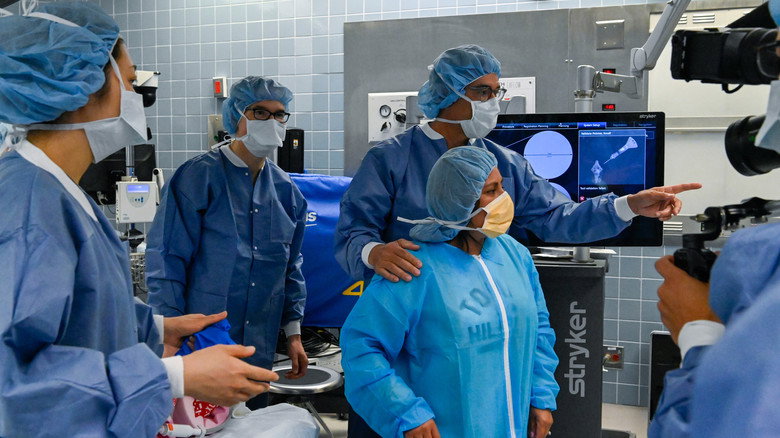
What’s remarkable about Lenox Hill is how little it feels like a show about medicine. There are no grand speeches about the nobility of the profession, no manufactured conflicts between doctors and administrators, no slow-motion shots of a surgeon removing their gloves with a satisfied sigh. Instead, the series trusts that the work itself is enough—that the drama of a life hanging in the balance doesn’t need embellishment. Lenox Hill doesn’t preach; it observes.
And in observing, it reveals something fundamental about what it means to care for other people. Take the scene where Dr. Little-Richardson delivers a baby via emergency C-section.
The mother’s blood pressure is plummeting, the baby’s heart rate is dropping, and the room is a controlled chaos of movement and voices. Little-Richardson doesn’t raise her voice. She doesn’t need to.
There’s a quiet authority in the way she moves—her hands steady, her focus unshakable. When the baby is finally out, she doesn’t celebrate. She exhales, checks the vitals, and moves on to the next task.
It’s a moment that could easily be played for high drama, but the camera lingers on the exhaustion in her eyes, the way her shoulders slump just slightly before she straightens them again. That’s the real story here: not the miracle of birth, but the toll of being the person who has to make sure the miracle happens. The series is at its best when it sits with these small, human moments.
There’s a scene in the emergency department where Dr. Macri treats a patient who’s overdosed. The man is agitated, scared, and Macri kneels beside him, speaking softly, her voice a steady anchor in his storm.
She doesn’t judge. She doesn’t rush. She just listens.
Later, we see her in the break room, rubbing her temples, her face drawn with fatigue. It’s a reminder that empathy isn’t just something you extend to patients—it’s something you carry with you, long after the shift ends.
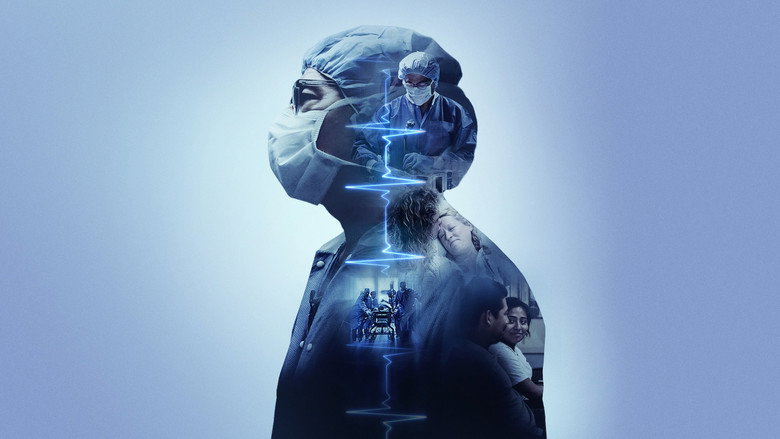
Not everything in Lenox Hill works as well as it could. The series has been criticized—and rightly so—for the way it handles its female doctors. While Langer and Boockvar, the neurosurgeons, are given professional arcs that span the entire season, Macri and Little-Richardson’s stories are dominated by their pregnancies.
It’s not that their personal lives aren’t important, but the imbalance feels like a missed opportunity. These are women who save lives every day, and yet the series often reduces them to their roles as mothers-to-be. The Hollywood Reporter’s Daniel Fienberg noted this, too: "The eight-episode first season ends up more emotionally nourishing than intellectually satisfying—not that there’s anything necessarily wrong with that." But there is something wrong with it, or at least something incomplete.
The series asks us to see these doctors as whole people, but it doesn’t always give them the same narrative space to be more than their biology. That said, there’s a moment with Little-Richardson that I can’t shake. She’s in the middle of a long shift, her belly round with pregnancy, and she’s scrubbing in for another surgery.
She pauses for a second, resting her hands on the sink, and you can see the weight of it all in her face—the physical exhaustion, the emotional drain, the sheer relentlessness of the job. Then she takes a deep breath and walks into the operating room. It’s a small moment, but it’s everything.
It’s the quiet heroism of showing up, day after day, even when you’re carrying the weight of the world on your shoulders. The series was filmed before the pandemic, but its release in June 2020 gave it an unintended resonance. Watching it then, in the early months of COVID-19, felt like a lifeline—a reminder that even in the darkest times, there are people who run toward the crisis, not away from it.
Watching it now, it feels like something else: a time capsule of a moment when the world realized just how much we rely on the people who keep us alive. There’s no grand finale, no neat resolution. Just the steady, unglamorous work of saving lives, one patient at a time.
I keep thinking about something Dr. Boockvar says in one of the later episodes. He’s talking about why he became a neurosurgeon, and he says, "I like the idea of being able to fix something that’s broken." It’s a simple statement, but it’s the heart of Lenox Hill.
This isn’t a show about heroes. It’s a show about people who show up, day after day, and try to fix what’s broken. And sometimes, that’s the most heroic thing of all.
"An emotionally gripping, authentic medical documentary about the personal and professional lives of its subjects."
The series is a raw, intimate portrait of neurosurgeons and nurses at Lenox Hill Hospital, both inspiring and heart-wrenching. It is authentic and emotionally deep, though the intense subject matter can be overwhelming. Real medical challenges and personal struggles sit at its center.
Netflix’s Lenox Hill (2020) pulls back the curtain on one of New York’s most prestigious hospitals, offering a raw, unfiltered look at the lives of its neurosurgeons. But behind the gripping medical cases lies a story of trust, access, and the blurred line between doctor and documentary subject. latestnetflix.com's take is that here’s what the evidence reveals about the making of the series—and the personalities driving it.
At the center of Lenox Hill are four real-life neurosurgeons: John Boockvar, David Langer, Mirtha Macri, and Amanda Little Richardson. The series doesn’t just film their cases—it embeds with them, capturing personal moments that humanize the high-stakes world of brain surgery. Boockvar, in particular, emerges as a breakout figure, with multiple YouTube panels and Q&As dedicated to his on-screen presence. Clips like "Sliding Door Moments" highlight his candid reflections on the emotional toll of the job, suggesting the series’ success hinged on his willingness to open up.
Langer, another key figure, has also been vocal about the experience. In a panel discussion, he and Boockvar discussed the challenges of filming during real emergencies, hinting at the logistical and ethical tightrope the crew walked. Macri and Little Richardson, while less prominent in the promotional material, round out the core cast, adding diversity to the hospital’s narrative.
Directors Adi Barash and Ruthie Shatz faced a unique challenge: convincing elite surgeons to let cameras into their lives without sanitizing the reality. The International Documentary Association (IDA) spotlight on the series reveals how the duo built trust with the medical team, emphasizing collaboration over exploitation. Unlike scripted medical dramas, Lenox Hill doesn’t rely on manufactured tension—it thrives on authenticity, from the surgeons’ professional debates to their personal struggles.
The series’ 8.1/10 rating on SensCritique (based on 48 votes) suggests audiences responded to this approach. But the question lingers: How much did the presence of cameras influence the doctors’ behavior? In a live Q&A, Boockvar addressed this, acknowledging that while the crew aimed to be "flies on the wall," their presence inevitably shaped some dynamics.
The Netflix trailer for Lenox Hill teases high-stakes surgeries and emotional patient stories, but the behind-the-scenes footage tells another tale—one of camaraderie and unexpected humor. Clips like "By The Boock" (a play on Boockvar’s name) show the surgeons joking and reflecting on the series’ impact, offering a lighter counterpoint to the show’s heavier moments. These glimpses suggest the doctors didn’t just tolerate the cameras; they embraced the opportunity to share their world.
Yet, the evidence stops short of revealing deeper conflicts. Were there disagreements over what to film or air? Did any patients or staff resist the documentary’s gaze? The available snippets don’t say. What’s clear is that Lenox Hill succeeded in making its subjects feel like collaborators, not just characters.
While the series focuses on the hospital, its setting—Lenox Hill, an affluent Manhattan neighborhood—adds another layer to the narrative. The area’s historic architecture and elite reputation contrast with the gritty, unpredictable nature of emergency medicine. The hospital itself, a 450-bed teaching facility, is a microcosm of New York’s healthcare disparities, though the series doesn’t delve deeply into these themes. Instead, it keeps the spotlight on the doctors, leaving the broader social context as subtext.
Entertainment rumors and trivia aggregated from public reporting. Treat speculation as unverified unless a cited source confirms it.
More titles in the same genres and with the same cast.